

You've finished packing, the cupboards are empty, and the keys are nearly ready to return. Then you notice the oven door, the cloudy shower screen, dust along the skirting boards and marks around the handles. A quick surface clean may make the property feel tidy, but a final inspection is usually compared with the check-in inventory, not with your effort.
The practical benchmark is to return the home in the condition recorded at the start of the tenancy, allowing for fair wear and tear. A detailed end of tenancy clean checklist helps tenants work to that standard while giving landlords and letting agents a consistent inspection reference. In England and Wales, deposits must be protected in government-backed schemes, and cleaning is repeatedly the leading source of disagreement. The Deposit Protection Service recorded cleaning as 24.57% of claims in 2021, rising each year to 29.38% in 2025 in its reported UK deposit-claim trend.
Work through the property in a sensible order. Empty it first, remove rubbish, clean from high surfaces downwards, leave carpets and treated areas to dry, compare every room with the inventory, and photograph the finished result. Tenants, landlords and agents can use the same process to coordinate a clearer handover in Manchester, Altrincham, Hale, Sale and wider Greater Manchester.
Table of Contents
- 1. Deep Kitchen Cleaning and Degreasing
- 2. Bathroom Sanitisation and Fixture Cleaning
- 3. Carpet and Flooring Deep Cleaning
- 4. Internal Window and Glass Cleaning
- 5. Wall and Ceiling Cleaning and Touch-Ups
- 6. Removal of Rubbish, Debris and House Clearance
- 7. Door, Frame and Hardware Cleaning
- 8. Appliance Interior and Exterior Cleaning
- 9. Skirting Boards, Baseboards and Trim Cleaning
- 10. Specialist Stain Removal and Odour Elimination
- End-of-Tenancy Cleaning: 10-Point Comparison
- Finish With Evidence and a Clear Handover
1. Deep Kitchen Cleaning and Degreasing
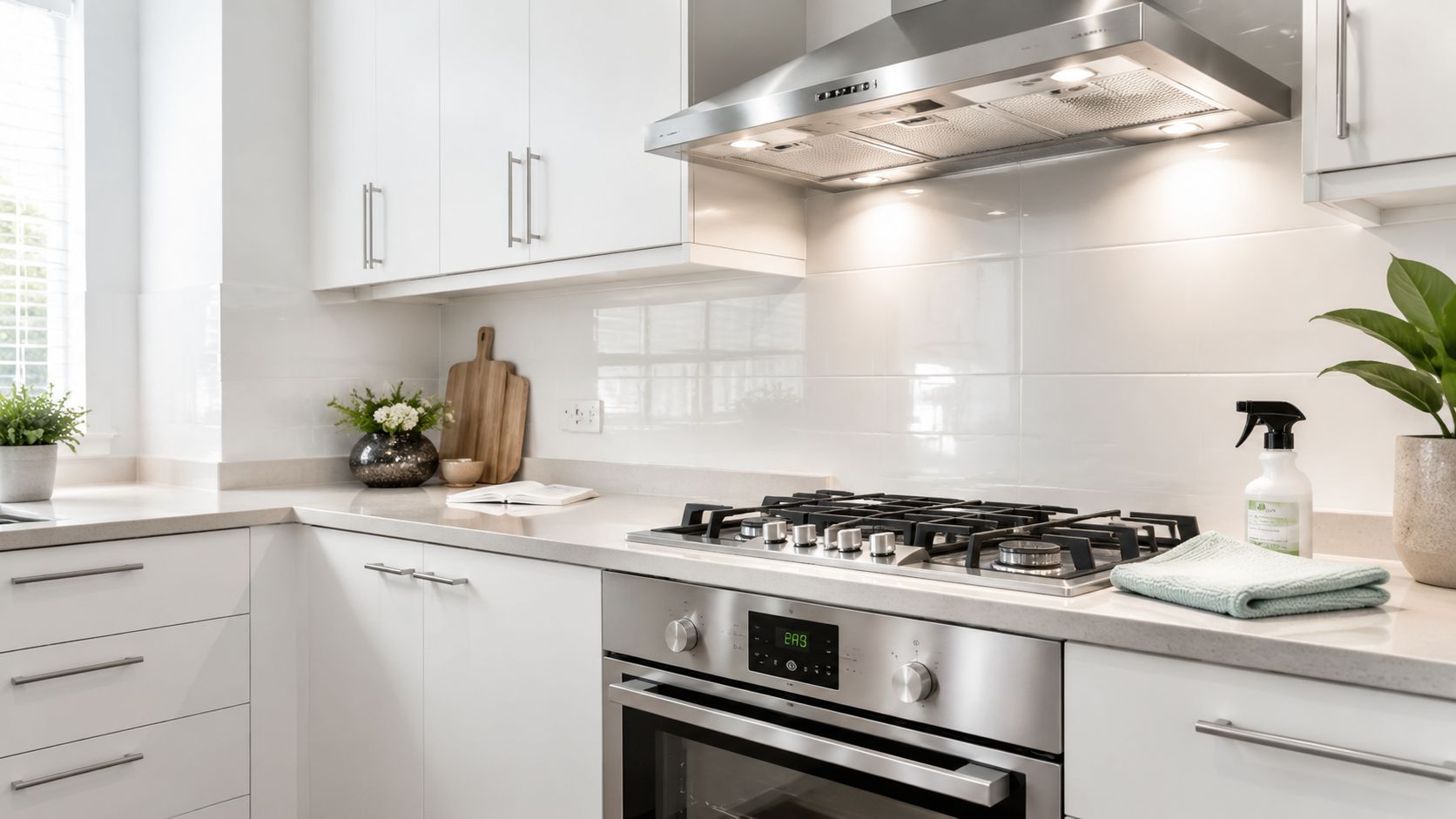
The kitchen needs more than a wipe around the worktops. Empty every cupboard and drawer, vacuum crumbs from corners, then clean the interiors, fronts, handles and tops where accessible. Wipe the splashback, worktops, sink, taps and surrounding sealant, taking care not to damage laminate, painted surfaces or natural stone.
Switch appliances off before cleaning them. Use a surface-appropriate degreaser on the hob, cooker hood, extractor surround and cabinet fronts. The most effective method is controlled rather than aggressive: apply the product, allow its dwell time, agitate with a soft brush or non-abrasive pad, then rinse and dry. Good ventilation matters, particularly in a small flat.
Inspection points that are easy to miss
Clean the oven interior, racks, door glass and seals. Remove and wash extractor filters if the appliance allows it, and check behind and beneath appliances that can be moved safely. A landlord or agent may also look at the gap around the washing machine, the underside of the microwave, the back edge of the worktop and the floor beneath removable appliances.
Use products such as Astonish Oven and Cookware Cleaner or a manufacturer-approved degreaser, but test first. Never mix cleaning chemicals, especially products containing bleach with acidic descalers. Dry stainless steel in the direction of its grain to avoid cloudy smears.
Cleaning is commercially important because it remains the leading cause of end-of-tenancy deposit disputes in the UK. Cleaning represented 29.37% of all UK tenancy deposit disputes in 2025, according to Just Landlords' end-of-tenancy cleaning guidance. That makes the oven, extractor, cupboards and sink sensible priorities when time is limited.

2. Bathroom Sanitisation and Fixture Cleaning
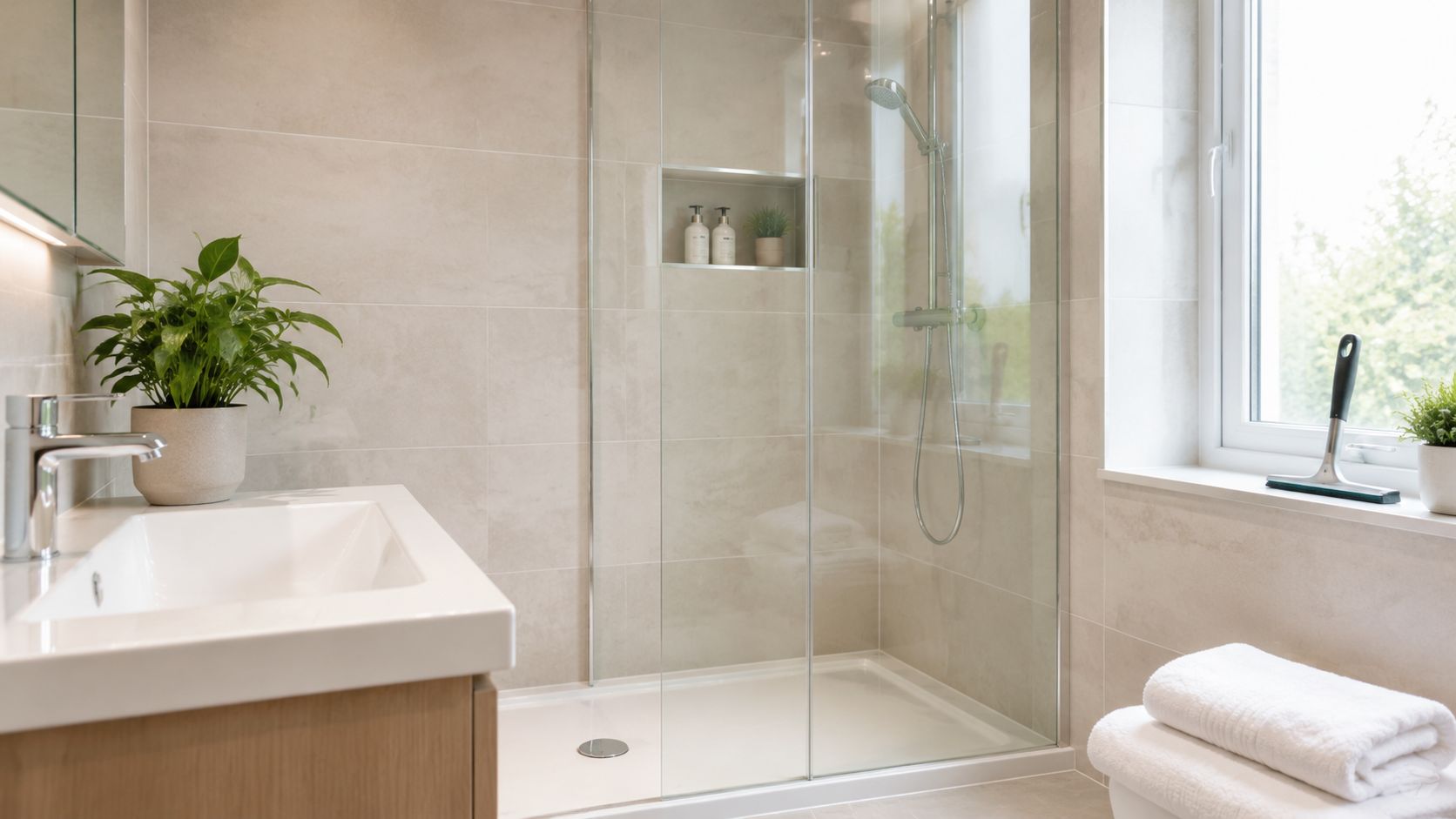
Bathrooms show small omissions quickly. Remove toiletries, mats and shower products, then clean the toilet, basin, bath, shower, tiles, grout, fittings, floor and any storage interiors. Limescale on taps, showerheads and screens should be treated with a suitable descaler and given enough contact time to dissolve deposits before rinsing.
Natural stone needs a different approach. Marble, travertine and some limestone surfaces can etch when exposed to acidic products, so use a pH-neutral cleaner and follow the manufacturer's instructions. For ceramic tiles and standard glass, a dedicated limescale remover may be appropriate, but it still needs careful rinsing.
Make moisture problems visible
Use a microfibre cloth on mirrors and shower glass to reduce streaking. Clean the toilet base, hinges, seat fixings and the floor behind it. Vacuum dust from extractor fan covers where safe, and wipe the tops of doors, shelves and cabinets. Check silicone seals for staining, cracking or separation, but don't treat a damaged seal as a cleaning failure. Report maintenance issues to the landlord or agent.
Mould caused by a building defect, failed ventilation or persistent damp may require repair rather than repeated chemical treatment. A tenant should record it and report it promptly. A landlord or agent should distinguish a maintenance problem from removable surface soil.
Practical rule: Clean the bathroom early enough for surfaces to dry fully, then inspect it again under bright light. Damp glass can hide streaks, residue and missed limescale.
Steam cleaning can help with grout without relying heavily on chemicals, although it won't repair damaged grout or remove every ingrained mark. Ventilate the room during and after cleaning, and avoid leaving moisture trapped in a closed bathroom.
3. Carpet and Flooring Deep Cleaning
Start with a slow, thorough vacuum rather than rushing straight to a machine. Move furniture where the tenancy arrangement permits, vacuum edges and corners, and check beneath beds, sofas and tables. On hard floors, remove grit before mopping because loose debris can scratch some finishes.
Carpet cleaning is best scheduled near the end of the job. Hot-water extraction can lift embedded soil and stains, but using too much water or returning furniture too quickly can leave damp patches, odour or new marks. Test any pre-treatment in an inconspicuous area, follow the carpet manufacturer's guidance and use the least aggressive method that will achieve a clean result.
Choose the method for the floor
A domestic carpet machine may be adequate for light soiling, but heavily used hallways, student accommodation and properties with pet marks often need stronger equipment and better moisture control. Professional operators may combine Sebo vacuuming with hot-water extraction, followed by careful drying and ventilation. Read this practical guide to professional carpet cleaning before deciding whether the work is suitable for DIY.
For hard flooring, use the correct product for vinyl, laminate, sealed wood, tile or stone. Avoid saturating timber and laminate. Remove sticky residue with a compatible spot treatment rather than scraping aggressively.
Carpets need time to dry before the final walk-through. Keep rooms ventilated, avoid walking across wet areas and photograph stains before treatment as well as the finished result. A clean can improve presentation, but it can't erase permanent discolouration, worn fibres or damage that falls within a different responsibility.
4. Internal Window and Glass Cleaning
Internal glass affects how bright and finished a property looks, particularly in empty rooms where every mark is visible. Clean window panes, internal frames, sills, mirrors, shower screens, glazed doors and glass shelves. Vacuum loose dust from tracks first, then wipe with a damp microfibre cloth before applying glass cleaner.
Work from the top down. A squeegee helps remove solution cleanly from larger panes, while a small detailing cloth is useful around corners and seals. On overcast days, the solution stays workable for longer than it does in direct sunlight, which can cause premature drying and streaking.
Don't overlook frames and tracks
Fingerprints on handles, dust in runners and grime along the bottom edge of a frame can undermine an otherwise clean window. Use a soft brush or vacuum attachment for narrow tracks, and don't flood drainage channels. If hard-water deposits remain, use a product suitable for the glass and rinse thoroughly.
Internal windows are a frequent inspection point because they can be checked quickly and show clearly in photographs. Atticus Cleaning Services states that internal window cleaning is included in its end-of-tenancy work, which can help landlords, agents and tenants avoid treating this task as an afterthought.
Avoid using newspaper on delicate painted frames, and don't assume vinegar is safe for every surface. A diluted vinegar solution may be useful on suitable glass, but it isn't appropriate for all stone sills, seals or specialist coatings. Always follow the window and product manufacturer's instructions.
5. Wall and Ceiling Cleaning and Touch-Ups
Walls need careful judgement. A washable painted wall may tolerate a diluted detergent and soft sponge, while a flat matt finish can burnish or lose colour when scrubbed. Test in a hidden area before treating visible scuffs, and never use a strong abrasive pad just because a mark is stubborn.
Remove cobwebs from ceilings and corners with a soft brush or vacuum attachment. Dust vents, light fittings and the tops of picture rails. On walls, work gently from the outside of a mark towards its centre, then dry the area so you can see whether further treatment is needed.
Separate cleaning from redecoration
Magic Erasers can remove some marks, but they're mildly abrasive and can leave a polished patch on matt paint. If a touch-up is necessary, obtain the original paint specification from the landlord or agent. Apply thin layers with a small brush, allowing each layer to dry before judging the colour.
Spot painting often looks worse when the existing paint has faded or the patch is large. In that situation, an agreed repaint of the whole wall or room may produce a more consistent result. Tenants shouldn't repaint without permission, particularly in managed or furnished properties.
Nicotine staining, extensive mould and water marks need more than cosmetic paint. They may indicate contamination, poor ventilation or a leak. Record the condition, report it and keep correspondence. Photographs taken at check-in and checkout help everyone distinguish an old defect, fair wear and tear, accidental damage and cleaning that the occupant could reasonably have completed.
6. Removal of Rubbish, Debris and House Clearance
The property should be empty of personal belongings unless the tenancy agreement or agent has confirmed otherwise. Check lofts, cellars, sheds, balconies, cupboards, under-stair spaces and communal storage. A single abandoned bag or piece of furniture can delay cleaning and create a separate disposal issue.
Sort items before arranging collection. Keep general waste, recyclable material, furniture, electrical items and potentially hazardous waste separate. Paint, batteries, chemicals, sharps and other hazardous materials need appropriate handling, not an ordinary household bin.
Arrange clearance before the final clean
Rubbish removal should happen early enough for cleaners to reach floors, walls and hidden corners. Set aside anything being donated or sold, and confirm with the landlord or agent whether large items can remain temporarily. Photograph the property before clearance if there's any uncertainty about what was present at the start of the tenancy.
A licensed operator can reduce the risk of improper disposal. Atticus describes its Manchester house clearance service as handling rubbish removal in line with government and local authority requirements. Ask for disposal documentation where you need an audit trail, particularly for managed properties, estates or commercial premises.
Don't use a clearance team to decide what belongs to someone else. Confirm ownership before removing furniture, appliances or stored items. For landlords and agents, written instructions and photographs can prevent arguments after a tenant has left.
7. Door, Frame and Hardware Cleaning
Doors are touched constantly, so handles, edges and frames often carry more grime than the room around them. Wipe both sides of internal doors, the top edge, frame, architrave, hinges, handles, locks and thresholds. Clean glazed panels separately, using a dry microfibre cloth for the final polish.
Match the method to the material. Painted timber usually needs a lightly damp cloth and mild detergent, while natural or veneered wood may require a product approved for that finish. Metal hardware can be cleaned gently, but abrasive polish can mark plated surfaces. Test brass or chrome products on a discreet area first.
Check operation as well as appearance
A clean handle that sticks, a loose hinge or a damaged door seal is not just a cleaning issue. Operate each door, latch and lock, and report faults rather than forcing them. A small amount of suitable lubricant can help hinges or mechanisms, but keep oil away from painted surfaces and flooring.
Pay particular attention to entrance doors, kitchen doors and bathroom doors. These areas collect fingerprints, cooking residue and moisture. Clean thresholds and seals without dislodging them, and remove grit that could prevent a door closing properly.
Landlords and agents should record pre-existing chips, swelling, loose hardware and failed seals separately from surface dirt. Tenants should photograph any condition that was already present. This approach keeps the handover factual and avoids trying to solve a maintenance problem with cleaning chemicals.
8. Appliance Interior and Exterior Cleaning
Appliances are inspected from the inside, not just from the front. Empty and clean the fridge, drawers, shelves, door seals and drip areas. Defrost it if required by the manufacturer, dry it thoroughly and leave it in the condition specified by the tenancy instructions, often clean and ventilated rather than sealed while damp.
Clean the washing machine drum, detergent drawer, door seal and exterior. Remove residue from the dishwasher filter and wipe the door edges. For microwaves, clean the ceiling, turntable, interior walls and door. Use the appliance manual as the authority because finishes, filters and removable parts vary.
Degrease without damaging controls
The oven needs its own process. Remove racks and trays, treat baked-on residue with a suitable oven cleaner, rinse carefully and clean the glass without scratching it. Keep liquid away from electrical controls, heating elements and ventilation openings. Unplug appliances where the manufacturer's instructions require it, and don't dismantle parts you can't safely refit.
Baking soda may help with light odours, but fragrance only masks a smell. Persistent odours can come from food trapped in seals, blocked filters, moisture or a fault. Identify the source before adding products.
Test appliances after cleaning, provided they were safe and operational before work began. Photograph interiors after they're dry, with doors open and shelves visible. If an appliance wasn't working at check-in, record that condition rather than implying that cleaning has repaired it.
9. Skirting Boards, Baseboards and Trim Cleaning
Skirting boards form a continuous inspection line around the property, but they're easy to ignore while packing. Begin with a dry microfibre cloth or soft vacuum brush to remove dust from the top edge, corners and joints. Follow with a lightly damp cloth where the paint finish allows it, then dry the surface.
Work room by room and watch for marks behind furniture, near doorways and beside radiators. A soft detailing brush can reach the profile of moulded trim without gouging the paint. Remove scuffs with a mild cleaner before considering touch-up paint.
Look for signs that need reporting
Dark spotting, bubbling paint, swelling or crumbling wood may indicate moisture damage. Cleaning the surface can make the symptom less visible without resolving the cause. Photograph it, report it and preserve any previous maintenance messages.
Pay attention to door architraves, dado rails, window boards, stair spindles and other trim included in the inventory. In an empty property, these details stand out because there's less furniture to interrupt the sightline.
Use clean cloths as you move through the home. A cloth used on a greasy kitchen surface can spread residue onto white-painted trim. This task rewards consistency more than force. Slow wiping, good lighting and a final low-angle check usually work better than harsh products that may strip paint.
10. Specialist Stain Removal and Odour Elimination
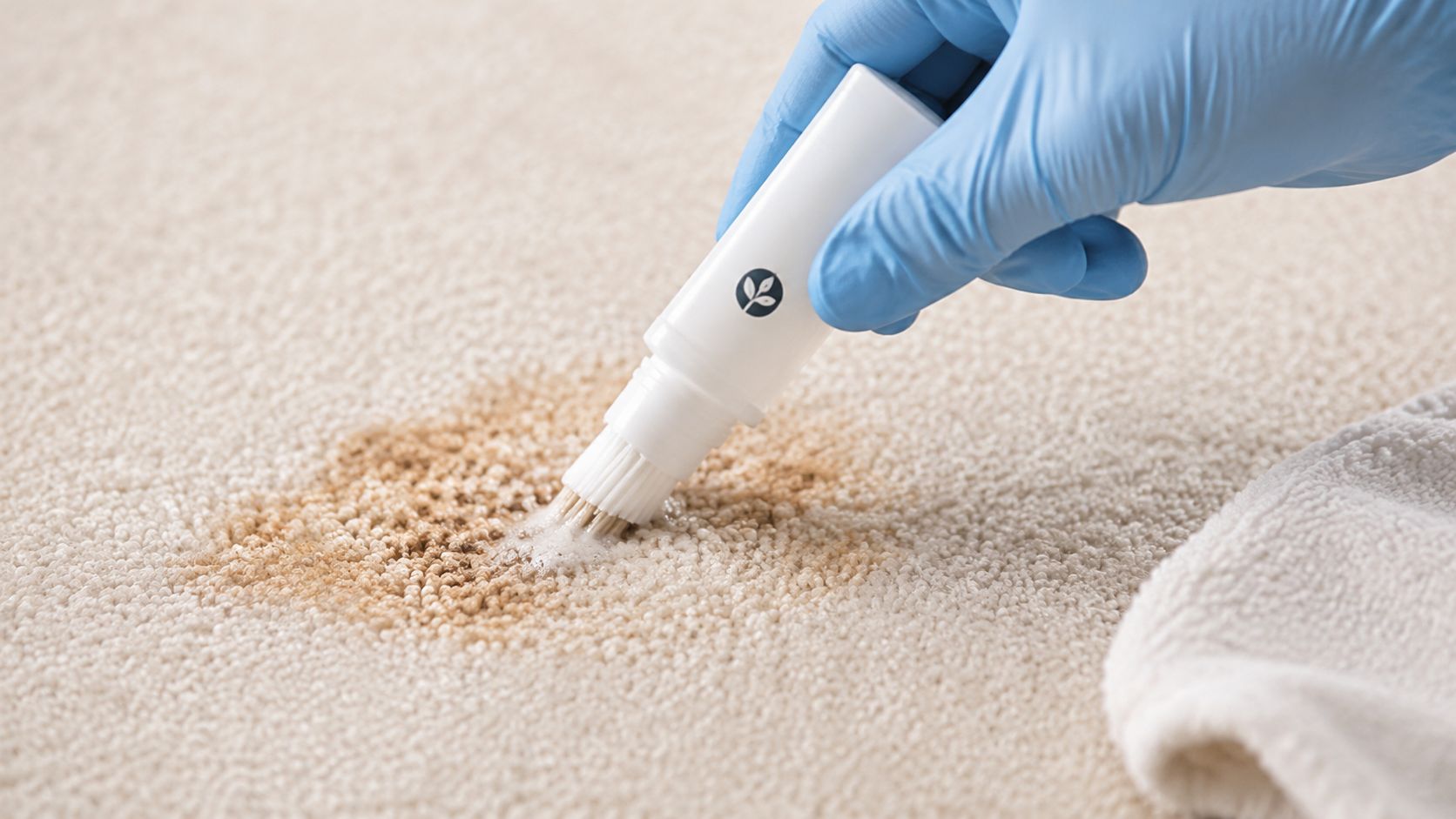
Treat difficult stains according to their source. Enzyme cleaners can be useful on organic residues such as pet accidents, while ink, grease, wine and smoke require different chemistry and methods. Always test on an inconspicuous area, follow the label and avoid saturating carpet, upholstery, plaster or timber.
A stain that has been scrubbed repeatedly may be harder to correct than one treated carefully at the outset. Blot rather than rub where possible, use white cloths to monitor transfer and work from the outside towards the centre. Never mix products to create a stronger treatment.
Know when a stain needs specialist handling
Biological contamination, heavy smoke residue, strong pet odours and staining that has penetrated underlay may need professional remediation. Fragrance sprays rarely solve these problems. Odour-neutralising treatment, extraction, ventilation and source removal are more reliable than masking the smell.
For carpet and upholstery decisions, Atticus' specialist cleaning service information explains why deeper fabric care may be appropriate when ordinary vacuuming isn't enough. Tenants should document the original condition and treatment attempts. Landlords and agents should assess whether the remaining mark is cleanable, damage-related or consistent with fair wear and tear.
The financial concern is real. A UK renter survey reported that 63% of renters had experienced cleaning-related deposit deductions, with an average deduction of £250, while 29% lost more than £500 and 16% lost over £750 according to the survey reported by Landlord Today. Those figures support careful documentation, but they don't guarantee that a professional clean will prevent every deduction.

End-of-Tenancy Cleaning: 10-Point Comparison
| Service | Implementation Complexity 🔄 | Resource & Equipment Needs ⚡ | Expected Outcomes ⭐📊 | Ideal Use Cases 📊 | Key Advantages ⭐ | Quick Tips 💡 |
|---|---|---|---|---|---|---|
| Deep Kitchen Cleaning and Degreasing | High, multi-step degreasing and careful techniques | Industrial degreasers, steam/pressure equipment, brushes, PPE | Deep grease removal, hygienic surfaces, higher deposit recovery | End-of-tenancy kitchens, high-traffic rental units, landlord inspections | Removes baked-on grease; protects appliances; improves lettability | Ventilate, use staged spray→dwell→scrub→rinse; use non-abrasive tools |
| Bathroom Sanitization and Fixture Cleaning | High, chemical and mechanical treatments for mold/limescale | Descalers, steam cleaners, anti-mold agents, grout tools, PPE | Sanitized bathrooms, reduced mold risk, restored appearance | Care homes, rentals, properties failing hygiene checks | Eliminates health hazards and prevents structural damp issues | Use pH-neutral on stone; steam clean grout; ensure ventilation |
| Carpet and Flooring Deep Cleaning | Medium–High, trained equipment operation and drying management | Hot water extraction, professional vacuums, pre-treatments, quick-dry tech | Removes deep dirt/allergens, odor reduction, extends carpet life | Offices, student housing, rental properties, care facilities | 95%+ dirt removal; restores appearance; allergen elimination | Pre-vacuum, test solutions, schedule as last task; allow drying time |
| Internal Window and Glass Cleaning | Low–Medium, technique-sensitive for streak-free finish | Squeegees, microfiber, glass cleaners, safe access gear | Immediate visual brightness, clearer views, improved room perception | Viewings, offices, communal areas, end-of-tenancy packages | Quick, high visual impact; immediate results; included standard | Clean on overcast days; use squeegee top→bottom; microfiber for frames |
| Wall and Ceiling Cleaning and Touch-ups | Medium, spot-care plus occasional paint work | Magic erasers, touch-up paint, small brushes, ladders | Reduced visible damage, fewer deposit deductions, improved aesthetics | High-turnover rentals, student lets, rooms with scuffs/marks | Cost-effective, high impact on inspection outcomes | Obtain original paint codes, document conditions, test materials first |
| Removal of Rubbish, Debris, and House Clearance | Medium, logistical coordination and legal compliance | Licensed waste carrier, vehicles, PPE, disposal documentation | Property returned empty, compliant disposal records, ready for clean/reno | Full clearances, estate clean-ups, large-item removal pre-move | Ensures legal compliance; efficient large-item removal | Separate waste streams, request disposal receipts, schedule early |
| Door, Frame, and Hardware Cleaning | Low, routine but detail-oriented | Microfiber cloths, polishes, lubricants, touch-up paint | Fresh entrance appearance, functional hardware, better first impressions | Entrances, high-visibility rooms, offices, rental viewings | Quick completion with strong visual impact; improves hygiene | Match cleaners to material; lubricate hinges; polish hardware carefully |
| Appliance Interior and Exterior Cleaning | Medium, careful interior work to avoid damage | Appliance-safe cleaners, small tools, manuals, PPE | Hygienic appliances, reduced odors, extended appliance lifespan | Shared kitchens, rentals, student accommodation, care facilities | Prevents mold/bacteria in sealed appliances; reduces disputes | Unplug before cleaning, remove components, consult manuals |
| Skirting Boards, Baseboards, and Trim Cleaning | Low, repetitive detail work throughout property | Dusting cloths, soft brushes, magic eraser, touch-up paint | Noticeable overall cleanliness improvement, reduced dust/allergens | Whole-property cleans, inspections, staged properties | Disproportionate visual impact for low cost and time | Clean top surfaces, use soft brushes, address scuffs before painting |
| Specialist Stain Removal and Odor Elimination | High, requires specialist chemistry and expertise | Enzymatic cleaners, stain-specific treatments, PPE, possible remediation | Targeted stain removal, odor neutralization, improved reletability | Pet stains, biological contamination, smoke damage, severe stains | Treats issues standard cleaning can't; crucial for deposit recovery | Treat immediately, test inconspicuous areas, prefer enzyme/neutralizers |
Finish With Evidence and a Clear Handover
A clean property is only part of a defensible checkout. Remove every personal item, complete each rubbish load, empty storage areas and check that no belongings have been left behind. The final clean should follow clearance, not precede it, otherwise dust and debris will be reintroduced.
Prioritise the areas an inspector can see and test quickly. The kitchen appliances, bathroom fittings, floors, internal glass, handles and skirting boards deserve a final visual pass. Open cupboards and drawers, inspect oven glass, look behind the toilet, check window tracks and run a clean hand over ledges where dust can collect.
Handover sequence: Clear the property, clean high to low, treat carpets and stains, allow surfaces to dry, compare every room with the inventory, test appliances and photograph the result.
Drying time matters. Wet carpets, shower screens and freshly treated surfaces can look different once dry, and moving furniture across damp flooring can create new marks. Keep windows open where safe, use ventilation and arrange specialist work early enough that the final inspection isn't rushed.
Compare the finished property with the check-in inventory, including photographs if they're available. The relevant question isn't whether every surface is new. It's whether the condition is broadly consistent with the documented starting condition, allowing for fair wear and tear. The Tenancy Deposit Scheme briefing described by the NRLA notes that the overall share of disputed protected deposits has remained under 1% in recent years across England, Wales and Northern Ireland, while cleaning remains the largest category when disputes do occur. Evidence still matters because a checklist can't settle a disagreement by itself.
Photograph each room in good light, including appliance interiors, bathrooms, floors, windows and any pre-existing defect. Keep the images with the inventory, cleaning records, receipts and messages sent to the agent. Tenants should report repairs rather than trying to hide them with paint or chemicals. Landlords and agents should separate cleaning, damage, fair wear and tear and maintenance defects when assessing deductions.
The legal position also needs care. A tenant usually doesn't have to purchase a mandatory professional clean because a contract says “professional cleaning”, but a landlord may seek reasonable cleaning costs if the property is returned dirtier than it was at check-in. The practical standard is documented condition, not an unlimited instruction to deep-clean every surface, as explained in this UK deposit and end-of-tenancy cleaning discussion.
For a larger Manchester property, a tight turnaround or specialist requirements such as carpet cleaning, internal windows, rubbish removal or house clearance, professional support can make the handover easier to coordinate. Atticus Cleaning Services serves Manchester and North Cheshire, including Altrincham, Hale and Sale. Its supplied service details state that internal window cleaning is included on end-of-tenancy work, and carpet cleaning may be available at 50% off when booked with the tenancy clean. Request a quote, approve the price, confirm access and arrange the service before the inspection date.
If your Manchester or North Cheshire property needs an end-of-tenancy clean, Atticus Cleaning Services can help with tenancy turnaround cleaning, internal windows, carpet care, rubbish removal and house clearances. Request a quote, approve the agreed price and arrange a punctual team to complete the work before your final handover.