

You've got boxes in the hallway, a checkout report on your phone, and a move-out date that won't wait. In that moment, Manchester end of tenancy cleaning stops being a vague chore and turns into a deposit problem, because the final condition of the property is what the landlord or agent will compare against the check-in inventory. A good clean does more than make the place look decent, it gives you evidence that the flat or house was returned properly, which matters just as much as the cleaning itself.
For Manchester tenants, that pressure usually lands hardest when the kitchen still has oven grease, the bathroom has limescale on the glass, and the bedrooms need one last pass before handover. The practical question isn't whether you can tidy, it's whether the property will pass a checkout inspection without avoidable deductions. That's where a proper, evidence-led approach helps.
Table of Contents
- Introduction to End of Tenancy Cleaning in Manchester
- Understanding Landlord and Agent Standards
- What a Standard End of Tenancy Clean Includes
- Room by Room Cleaning Checklist
- Pricing and Optional Extras
- Legal Requirements and Rubbish Removal
- How to Choose a Reputable Cleaner
- Timeline and Booking Process
- FAQs and Next Steps
Introduction to End of Tenancy Cleaning in Manchester
A move-out in Manchester often feels like several jobs happening at once. You're packing the last plates, chasing a final meter reading, and trying to work out whether the place looks “clean enough” when the only answer that really matters is what the inventory clerk will write down. A professional clean helps because it reduces the number of weak spots, the forgotten skirting board, the greasy hob, the streaky window, the dusty extractor vent, the exact things that can trigger a deduction.
What the pressure really looks like
The tricky part is that end-of-tenancy cleaning isn't just about appearance. It's about matching the property to the condition recorded when you moved in, which is why tenants who rush often miss the small details that inspectors notice first. In Manchester, that usually means kitchens, bathrooms, carpets, and internal windows, plus all the edges and surfaces that collect residue over time.
Practical rule: clean the property for the person who compares it against the inventory, not for the person who lives there. That mindset keeps you focused on evidence, not guesswork.
This guide keeps the process simple. You'll see what landlords and agents check, what a proper clean includes, how pricing works, when carpet cleaning matters, and how to document everything so you're not relying on memory if a dispute comes up. For readers who want a local standard to compare against, Atticus Cleaning Services' guide to what landlords expect from end-of-tenancy cleaning is a useful reference point for checkout expectations in Manchester.
Why this matters before move-out day
A clean done at the right time also lowers stress. If you leave the final clean until after the furniture is gone and the keys are due back, you usually end up working against the clock, which is when people skip cupboard interiors, window tracks, and the last dust pass. The better approach is to treat cleaning like part of the handover, not an afterthought.
Manchester move-outs can be especially unforgiving in terrace-heavy streets and student turnover zones, where vacant-period speed matters as much as presentation. A strong plan gives you both, because you know what to clean, what to document, and what to challenge if the checkout report doesn't match reality.
Understanding Landlord and Agent Standards
Landlords and letting agents don't inspect a property by vibe. They compare it against the check-in inventory, room by room, surface by surface, and they're looking for whether the place was returned in the same condition apart from fair wear and tear. In the UK, end-of-tenancy cleaning is a condition-matching obligation rather than a legal requirement to hire a professional cleaner, so the definitive test is the return condition, not whether you booked a named company. The Clean Space's UK checklist guidance makes that distinction clearly, and it's the key to understanding checkout disputes.
How agents actually judge cleanliness
The inventory is the anchor document. If it says the oven was clean, the taps were polished, or the carpets were freshly maintained when you moved in, those notes become the standard at checkout. That's why photos, dated inventories, and itemised cleaning records matter so much, because they show what was there before and what was left behind after you moved out.
Agents usually focus on the same problem areas again and again. Kitchens, bathrooms, carpets, skirting boards, door frames, switches, sockets, and internal window tracks often get checked before anything else because those are the places where residue builds up fastest. If the kitchen still has baked-on grease or the bathroom still shows limescale, the room fails the simple comparison test.
What to look for in your own inventory
Read the inventory the way an inspector would. Highlight any wording about “clean,” “professionally cleaned,” “no marks,” or “good condition,” then match each phrase to the room it describes. If the inventory notes are detailed, your clean needs to be detailed too.
If you're unsure how a local agent frames those standards, this Manchester landlord checklist reference is worth comparing against your own inventory notes. The important thing is not the exact wording, but the evidence trail behind it.
When a deposit deduction is challenged, the strongest documents usually win, not the loudest argument.
That's why a tenant who keeps before-and-after photos, a dated checklist, and a final invoice is in a much better position than someone who says the property was “clean enough.” The checkout process is evidence-based, so your preparation should be too.
What a Standard End of Tenancy Clean Includes
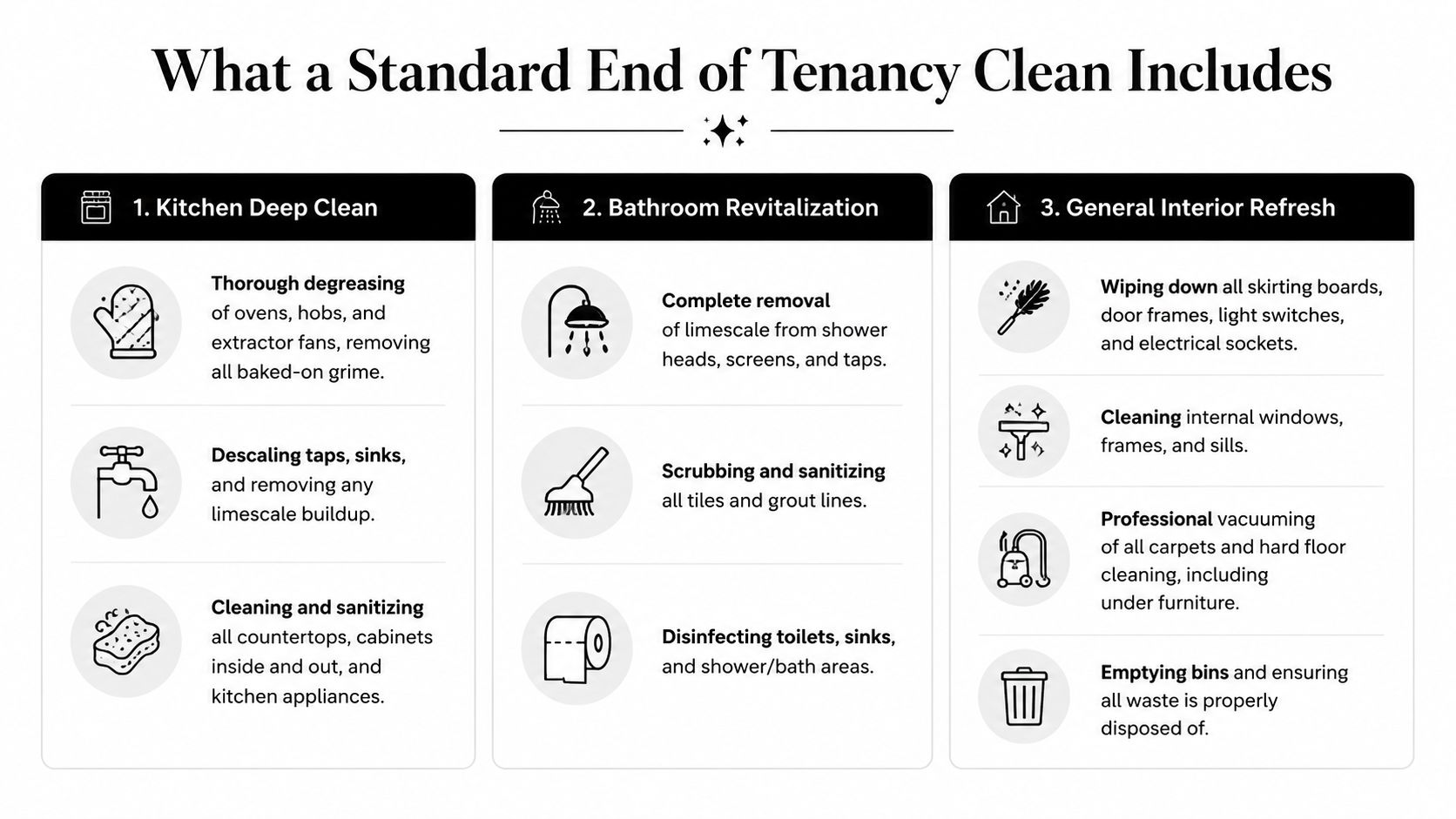

A proper Manchester clean starts where the mess is most likely to fail inspection, not where it's easiest to wipe. Kitchens and bathrooms come first because residue there changes how the room looks and feels very quickly. UK landlord and tenant checklists consistently prioritise those areas, especially ovens, hobs, extractor fans, taps, shower glass, trays, grout, and bathroom vents. Totallandlordinsurance's inventory checklist guidance matches that order.
Kitchen and bathroom first
Think of these rooms as the “high-residue zones.” Grease sticks to oven doors, hob surrounds, and extractor filters, while hard-water marks gather around taps, shower heads, trays, and glass. If those areas are left even slightly dirty, the rest of the property can look tidy and still fail the inspection.
The kitchen clean should include the oven cavity, racks, hob top, extractor hood, splashbacks, cupboard fronts, cupboard interiors, sink, plug hole, and any appliance surfaces recorded on the inventory. In the bathroom, the key jobs are descaling taps and shower fittings, cleaning grout, removing soap scum, and making the toilet, sink, bath, or shower look fully reset rather than just wiped over.
The general interior pass
Once the problem rooms are handled, the cleaner should move through the rest of the property and remove the smaller things that create a poor first impression. That means skirting boards, door frames, light switches, sockets, internal windows, sills, and tracks. It also means cleaning under furniture where possible, emptying bins, and removing dust from shelves, ledges, and corners.
The point of the general pass is simple. You're removing the evidence of occupancy, not just the visible dirt. Fingerprints on switches, dust on frames, and crumbs in cupboard corners are the sort of details that make an otherwise decent property look unfinished.
What a full service should feel like
A complete end-of-tenancy clean should leave the place looking neutral, dry, and inspection-ready. There shouldn't be obvious odours from bins or food residue, and the surfaces should look like they've all been checked in a deliberate order.
Practical rule: if residue can be seen from the doorway, it'll probably be seen in the checkout report too.
Room by Room Cleaning Checklist
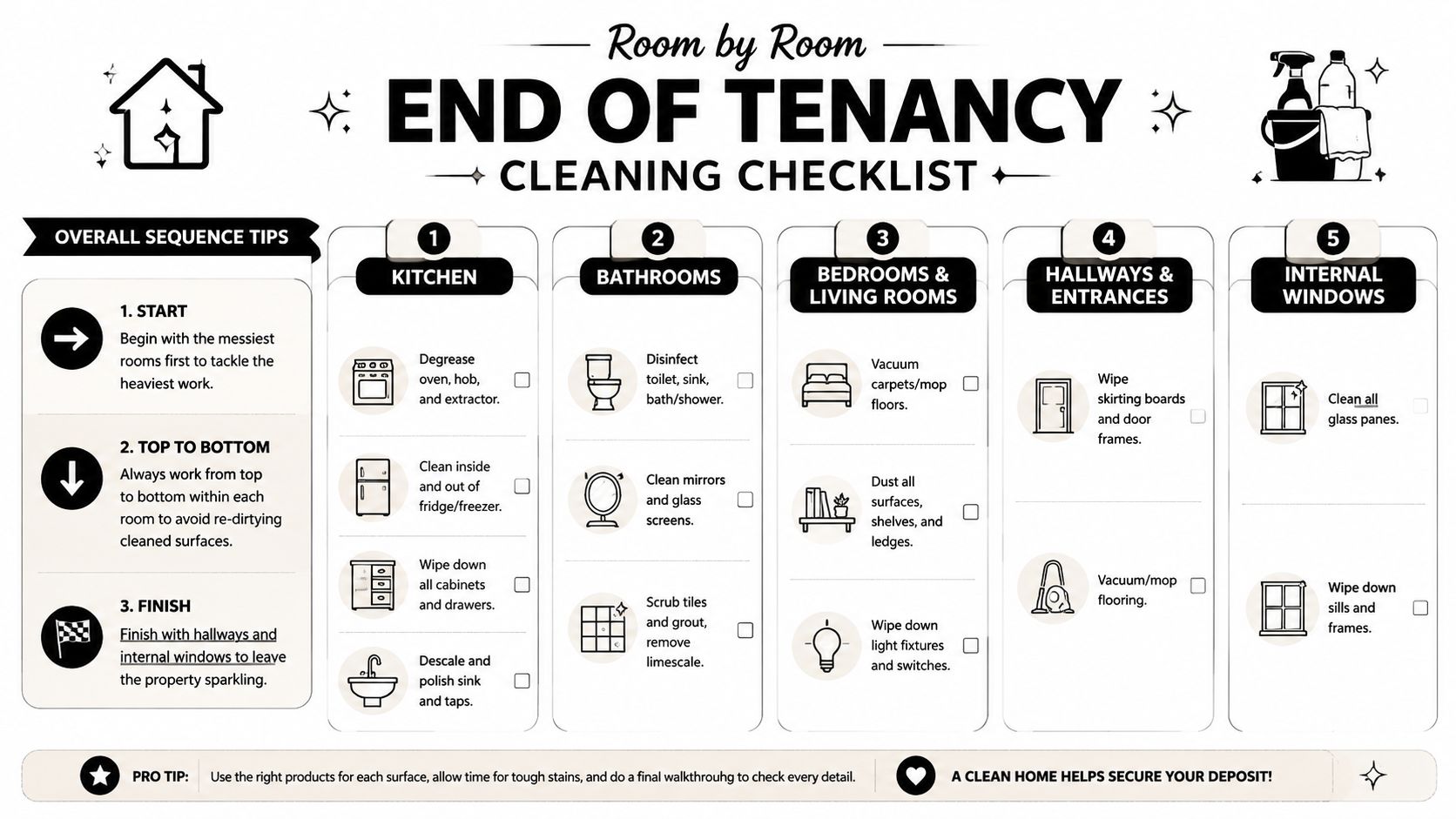
Start with the messiest room and work towards the easiest ones. That saves time because you're tackling grease, dust, and grime before they get dragged around the property on cloths, shoes, or vacuum heads. Work top to bottom inside each room, then finish with vacuuming and a final inspection pass so you don't clean over fresh dust.
Kitchen, then bathrooms
In the kitchen, deal with the oven first, then the hob, extractor, fridge or freezer, cupboards, sink, taps, and worktops. Let degreaser dwell for a few minutes before wiping it away, because scraping too early just spreads the residue around. Use a microfibre cloth for finishes and glass, because it cuts streaks better than a rough cloth.
Bathrooms need the same discipline, only with limescale and soap scum instead of grease. Clean taps, shower heads, screens, trays, tiles, grout, mirrors, toilet bowls, and the extractor fan vent. Test taps and plugs after cleaning so you know nothing's blocked, leaking, or still sitting with grime in the outlet.
Bedrooms and living rooms
These rooms usually look easier, but they still catch tenants out. Dust the top of wardrobes, shelves, skirting boards, door frames, and light switches, then vacuum under beds and along the edges. If there are wardrobes or drawers listed in the inventory, empty them fully and wipe the inside surfaces, not just the visible fronts.
Living rooms often need the same treatment, plus extra attention around media units, radiators, and soft-furnishing areas where crumbs and hair collect. If the property has blinds or curtains that were on the inventory, wipe or dust them carefully, because those are common inspection notes. Internal windows matter here too, especially if daylight shows smears that looked invisible under artificial light.
Hallways and internal windows
Hallways are the final impression zone, so don't leave them until the very last minute. Wipe doors, frames, banisters, skirting boards, and the floors, then come back to internal windows and sills. A clean hallway tells the agent the whole property was handled properly, not just the rooms people notice first.
A useful sequence is below.
- Start with the worst room: Usually the kitchen, because grease is the hardest residue to remove.
- Move to wet areas: Bathrooms come next, so limescale and soap scum don't dry back onto surfaces.
- Finish with presentation areas: Bedrooms, living rooms, hallways, and windows get the final refresh once the heavy work is done.
Practical rule: if you can clean something once, clean it once. Going back and forth between rooms usually creates more mess than it removes.
Pricing and Optional Extras
In Manchester, end-of-tenancy cleaning is rarely a tiny expense. Current market guides place a standard clean at about £195 to £440, with an average of £315, while packages that include carpet cleaning rise to £275 to £535, averaging £390. Manchester pricing guidance shows that pricing sits in a real few-hundred-pound band, not as a minor top-up.
What changes the quote
Three things usually move the price. Property size matters, condition matters, and add-ons matter. A small flat in decent shape is a very different job from a larger house with built-up grease, bathroom scale, and carpets that need more than a vacuum.
Carpet cleaning is the main optional extra tenants ask about. A thorough vacuum is often enough when the carpets are only lightly used and the inventory doesn't require anything more. When carpets show stains beyond fair wear and tear, or when the check-in report records them as professionally cleaned, the calculation changes and the add-on becomes more sensible.
| Manchester Clean Pricing Guide | Price Range | Average Cost |
|---|---|---|
| Standard end-of-tenancy clean | £195 to £440 | £315 |
| Clean with carpet cleaning included | £275 to £535 | £390 |
If you're comparing package pricing and want to understand how carpet work is typically quoted, Atticus Cleaning Services' carpet cleaning pricing page is a useful reference for bundled budgeting.
When the extra makes sense
The carpet question should be evidence-led, not automatic. If the tenancy agreement doesn't require a specific carpet finish, and the inventory doesn't show a professional clean at move-in, a solid vacuum may be enough. If there are visible marks, pet traffic, or heavier wear, professional carpet cleaning becomes a stronger bet because it helps close the gap between “looks tidy” and “matches inventory standard.”
That's the main budgeting lesson. Don't pay for extras just because they sound official, but don't skip them if the record of the property suggests they'll matter at checkout.
Legal Requirements and Rubbish Removal
The legal shift that changed this area came in 2019 under the Tenant Fees Act. Landlords can't make professional cleaning a mandatory fee for renting, but they can still deduct cleaning costs from the deposit if the property is returned in a worse condition than at check-in. UK tenancy law guidance captures that change clearly, and it's why move-out cleaning is now tied to evidence, not blanket charges.
What that means in practice
You don't have to hire a professional cleaner just because a tenancy ends. You do have to return the property to the same standard recorded at check-in, and if you don't, the landlord can seek a reasonable deduction through the deposit scheme. That's the practical difference tenants need to understand.
Rubbish removal is part of that same discipline. Any leftover bags, broken items, food waste, or unwanted clutter should be cleared before the final clean, because a spotless room with a full bin still looks unfinished. If a cleaner is licensed and insured to remove rubbish, that helps with compliance, but you still need to tell them what's being left behind and what should be taken away.
What to do before collection or disposal
Sort items into what's staying, what's being binned, and what needs lawful removal. Keep sharp objects, liquids, and bulky waste separate if the cleaner or removal team asks for it. The cleaner should not be left guessing what's intended for disposal, especially if the property includes mixed waste from a long tenancy.
If you need a compliant clear-out alongside the clean, Atticus Cleaning Services' house clearance and waste removal information shows the kind of licensed removal support that can sit alongside a tenancy turnaround job. That matters because rubbish handled properly avoids delays, complaints, and avoidable mess on handover day.
Dispose of waste before the checkout, not during the argument about the checkout. It's much easier to prove the property was cleared when there's nothing left to dispute.
How to Choose a Reputable Cleaner
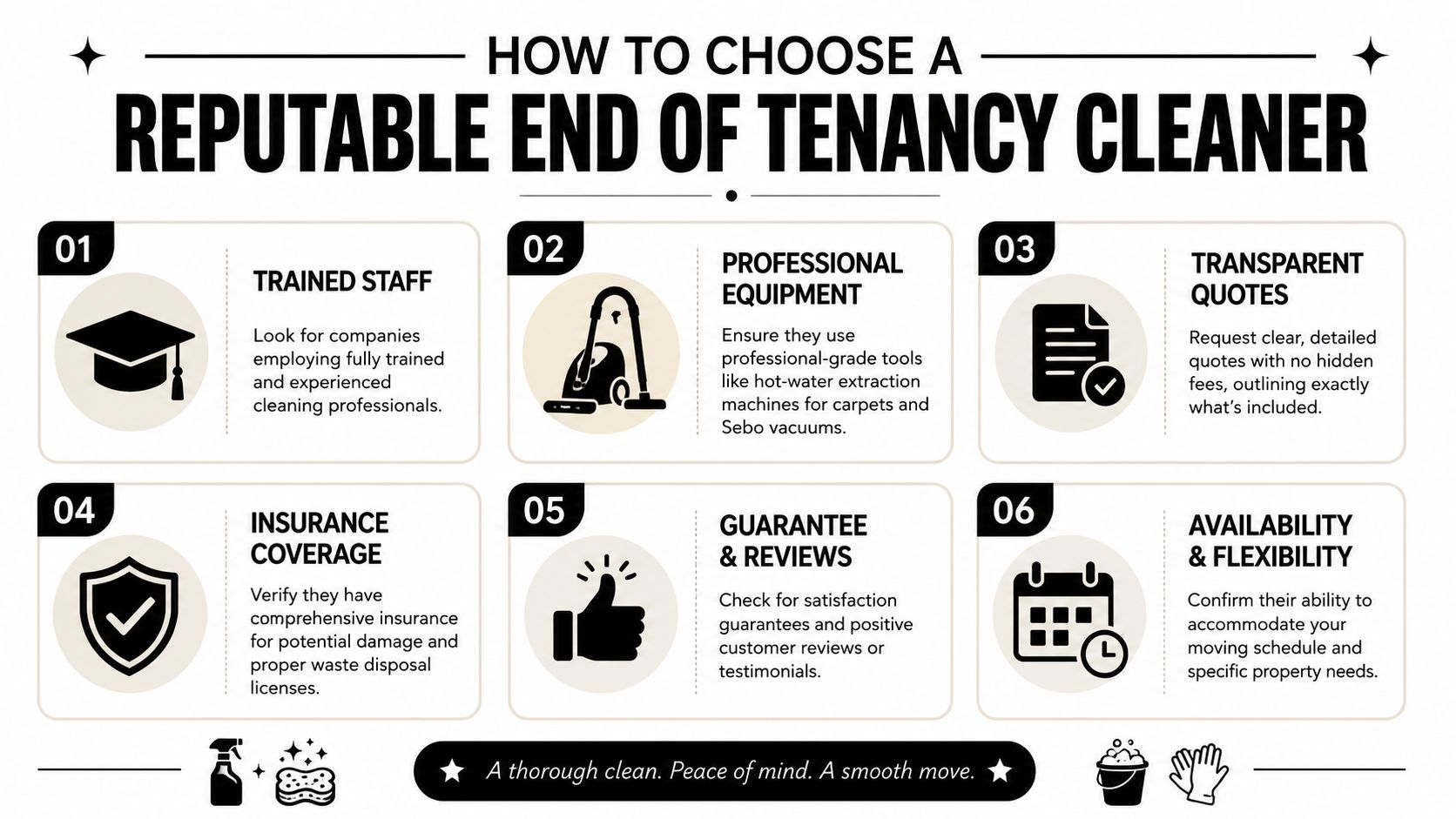
A good cleaner should be able to explain what they'll clean, what they won't, and what evidence they leave behind. Look for fully trained staff, proper tools like Sebo vacuums and hot-water extraction machines for carpets, clear pricing, and insurance that covers both damage and waste disposal. A local Manchester team is useful too, because they understand the kinds of inventories, property styles, and turnaround pressures common in the city.
What to ask before you book
Ask for a written quote that spells out the rooms, appliances, internal windows, and extras included. Ask whether the cleaner uses professional carpet equipment if carpets are part of the job. Ask how they handle rubbish, what their insurance covers, and whether they've worked with Manchester landlords or letting agents before.
Reviews matter because they tell you how the company behaves when the property is complicated, not just when it's easy. A cleaner who arrives on time, brings the right tools, and leaves a documented result is usually a safer choice than one who promises a cheap price.
A sensible shortlist
A reliable option in Manchester should be able to turn a tenancy property around without making the process feel vague. That's where local experience, transparent scope, and proper equipment all come together. You're not buying a slogan, you're buying a result that has to survive an inspection.
If two quotes look similar, choose the one that explains the evidence side of the job more clearly. That usually tells you more about the actual quality than a polished website does.
Timeline and Booking Process
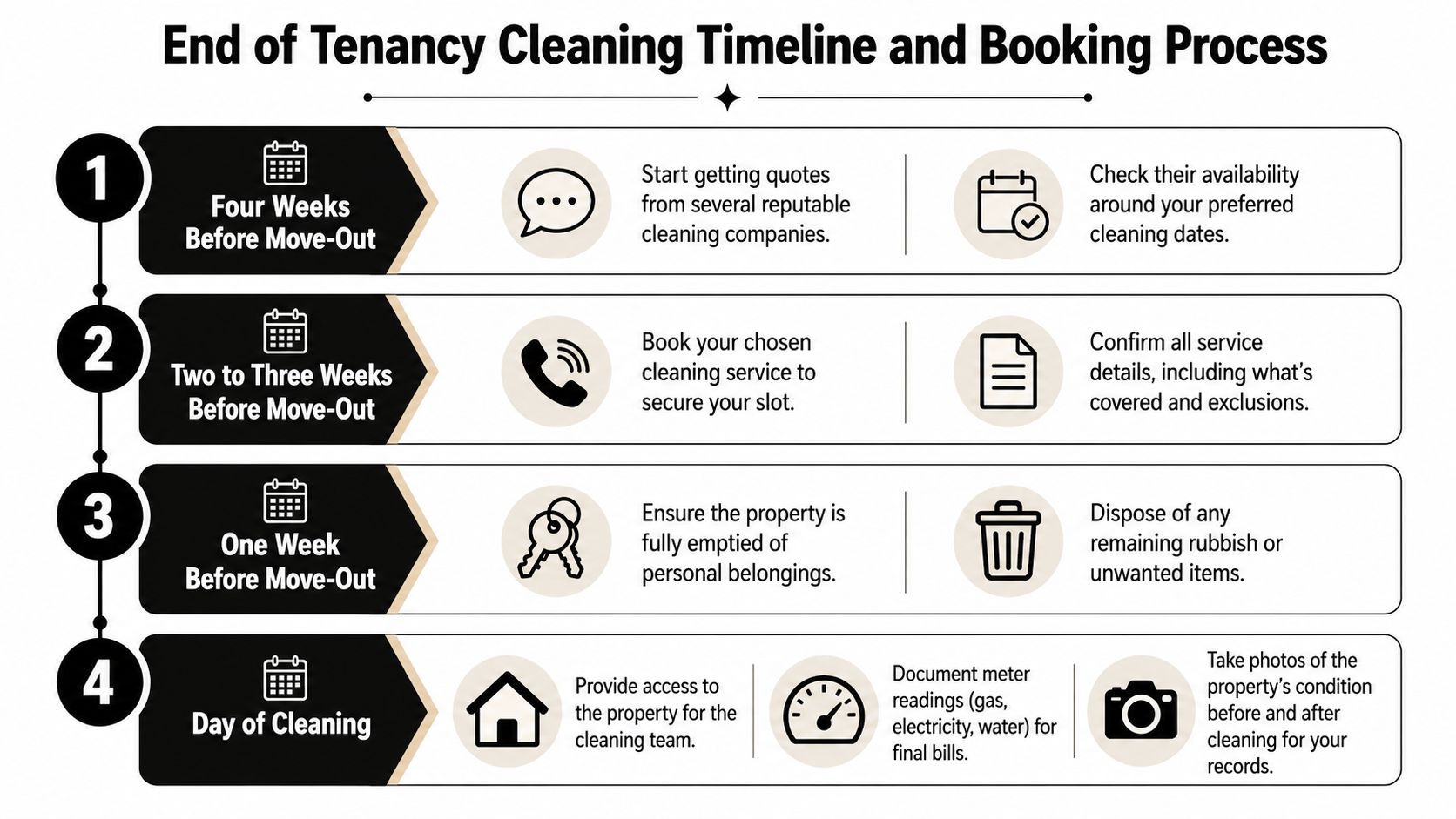
Most Manchester tenants who book during peak summer or student turnover periods find that last-minute bookings can raise prices by up to 20% and limit access to top-rated cleaners, so early scheduling is important. Peak booking guidance makes the cost of waiting very clear. If you want the best choice of slots, book before the final week.
Four weeks before move-out
Get quotes from a few reputable companies and check what each one includes. Ask about carpets, internal windows, appliances, and rubbish removal while there's still time to compare properly. This is also the right moment to check whether the cleaner can work around your handover date.
Two to three weeks before move-out
Lock in the service and confirm the exact scope. If carpet cleaning, oven detailing, or waste removal is needed, make sure it appears in writing so there's no confusion on the day. If your mover or landlord has a fixed checkout time, give the cleaner that information early.
One week before and cleaning day
By a week out, the property should be emptied and all unwanted items should be gone. On the day itself, take meter readings, photograph each room before and after the clean, and keep the invoice with your inventory notes. That evidence is what helps if the landlord later questions a deduction.
The same booking logic applies whether you use a standalone cleaner or a full tenancy turnaround service. The earlier you book, the less you're forced into panic decisions that cost more and leave less room for careful documentation.

FAQs and Next Steps
Do I need to hire a professional cleaner by law? Not always. The legal test is usually the tenancy agreement and the condition report, not a blanket rule that every tenant must book a full service. If the contract says the property must be returned to a certain standard, that standard is the one you need to meet. A practical way to judge it is to read the inventory like a checklist, because that document shows what the landlord can reasonably compare against at checkout.
What if the landlord disputes the clean after I've left? Keep your evidence organised in a simple timeline. Before cleaning, save the inventory and take dated photos of any existing marks. After cleaning, photograph each room again, keep the invoice, and note meter readings if you are handling those yourself. If a dispute comes later, the deposit scheme usually cares more about that paper trail than about memory or opinion.
What if the checkout report arrives after the deposit deadline? Treat that report as a late piece of evidence, not the whole story. Send your own photos, inventory notes, and invoice as soon as the issue is raised, then ask for the specific area of disagreement in writing. If the report is delayed, do not assume silence means approval, because a late report can still trigger a deduction discussion. The safest approach is to keep your records in order from the start, so you can show what the property looked like before you handed back the keys.
How long does a Manchester end-of-tenancy clean take? It depends on access, the amount of work needed, and whether the property is empty. A vacant flat with clear access is quicker to prepare than one with leftover items, restricted parking, or last-minute key delays. If you are coordinating movers, cleaners, and checkout time on the same day, give each one a clear window so they do not interfere with one another like people trying to use the same doorway at once.
A tenant can supervise the clean, but the main job is to make the evidence easy to verify. Keep the inventory, photos, meter readings, and invoice together in one place, then save copies where you can reach them after moving. That way, if the landlord raises a deduction, you are responding with records instead of trying to reconstruct the day from memory.
A simple rule helps here. Match the inventory, document the result, and book early enough that the clean is not rushed. That gives you a clearer handover and a cleaner record if anyone questions the deposit later.
A CTA for Atticus Cleaning Services.