
You're probably dealing with one of two situations right now. Either the office looks acceptable at first glance but the details keep slipping, bins missed, fingerprints on glass, washrooms running short, kitchens never quite reset. Or you're comparing quotes from office cleaners in Manchester and trying to work out which company will turn up consistently, clean to a proper standard, and not leave you chasing every week.
That reliability question matters more than most buyers realise. A cleaning contract only works when the service is steady, supervised, and built to cope with staff absence. Without that, even a reasonable price quickly becomes poor value because your team starts noticing what hasn't been done, visitors notice the basics, and the office manager ends up doing quality control instead of their actual job.
Table of Contents
- Why Your Manchester Office Deserves Professional Cleaning
- What Standard Office Cleaning Really Includes
- Daily Contract and Deep Cleans Compared
- Beyond the Basics Specialist Cleaning Services
- Understanding Office Cleaning Costs in Manchester
- A Practical Checklist for Vetting Providers
- FAQs and Getting Your Free Quote
Why Your Manchester Office Deserves Professional Cleaning
Most office cleaning problems don't start with a disaster. They start with drift. The carpet edges don't get picked up properly. Tea stains sit in the sink until mid-morning. The washroom smells fine one day and neglected the next. Over time, staff stop believing the office is being looked after.
That's why professional cleaning isn't just about making a space presentable. It's about consistency, hygiene, and trust. When cleaning is organised properly, people notice the absence of friction. The reception feels ready before visitors arrive. Meeting rooms reset properly. Kitchens don't become a source of low-level frustration for everyone using them.
The market itself reflects how specialised this work is. The commercial cleaning segment makes up 73.3% of the overall market, covering facilities such as offices, and more than three million people work in cleaning occupations in the US, which shows both the scale of the sector and the reality that workforce management matters in cleaning operations (commercial cleaning market overview and workforce scale).
A clean office is easy to take for granted until standards slip. Then everyone notices at once.
For office managers, the bigger issue is what poor cleaning says about the business. Staff read it as lack of care. Clients read it as lack of control. Prospective hires notice the condition of the workplace before they hear the culture pitch. If you want a practical view of that knock-on effect, this piece on how dirty offices affect employee wellbeing and business reputation is worth reading.
Professional office cleaners in Manchester should remove uncertainty, not create it. You shouldn't need to inspect every room, send reminder emails, or keep a mental list of recurring misses. The right contractor gives you a standard, follows it, and has enough structure behind the scenes to keep delivering it every week.
What Standard Office Cleaning Really Includes
A proper office cleaning specification should be clear enough that both sides know what “done” looks like. Vague promises such as “full office clean” or “general tidy” usually lead to mismatched expectations. Good contracts break tasks down by area, frequency, and finish.
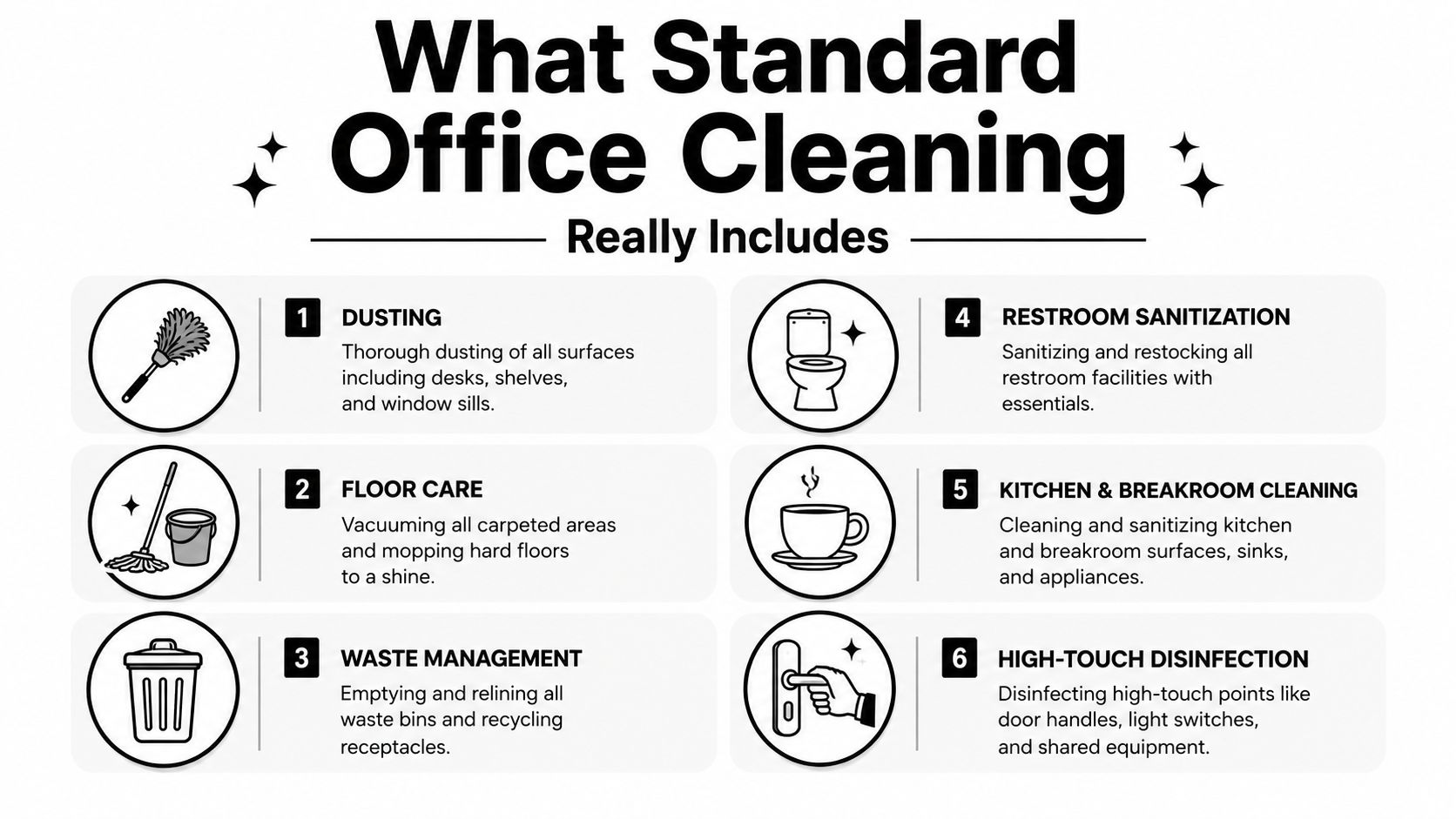

Reception and shared spaces
Reception sets the tone. It doesn't need theatrical polishing, but it does need to feel under control every day.
A standard professional clean in this area usually includes:
- Entrance floors and mats cleaned according to surface type, with debris removed before it gets tracked further into the building
- Reception desks and ledges dusted and wiped, especially where visitors lean, sign in, or place bags
- Glass touchpoints such as internal door glass cleaned where marks are obvious
- Bins and recycling points emptied and relined
- High-touch points disinfected, including door handles, push plates, lift buttons, and shared switches
Open-plan office areas follow a similar logic. Cleaners should vacuum carpeted traffic lanes properly, not just the visible centre of the room. Hard floors should be mopped with the right product for the surface, not left streaked or sticky. Desks are usually cleaned according to client policy, especially where confidential paperwork or personal equipment is involved.
Workstations kitchens and washrooms
Workstations are where cheap cleaning often shows first. A rushed operative might empty bins and vacuum around chairs but miss the details that make an office feel maintained.
The baseline should usually include:
- Desk-level dusting on accessible surfaces
- Skirting boards and low ledges kept free from visible dust build-up
- Meeting rooms reset, table surfaces wiped, chairs straightened, and presentation points checked
- Shared equipment points sanitised, such as printer controls and door releases
Kitchens and break areas need more than a quick wipe. They carry odours, spills, crumbs, and shared-contact hygiene issues. Good cleaners wipe external appliance surfaces, clean sinks and draining areas, sanitise worktops, spot-clean cupboard fronts, and deal with floor spills properly.
Washrooms are where standards are paramount. You want sanitary fittings cleaned and disinfected, basins polished, mirrors checked, floors mopped, and consumables monitored before they run out. A contractor with solid systems will also report issues such as leaking taps, blocked dispensers, or damaged fixtures rather than ignoring them.
Practical rule: If a quote doesn't state what happens in the kitchen, the washrooms, and on high-touch points, it isn't detailed enough.
If you want a useful benchmark for comparing specifications, review what to expect from a professional office cleaning service. It helps separate a genuine cleaning schedule from a generic sales promise.
Daily Contract and Deep Cleans Compared
Not every office needs the same model. The mistake is assuming all cleaning should be daily, or that a periodic intensive clean can replace routine maintenance. They solve different problems.
Where daily contract cleaning works best
A daily or frequent contract clean is designed to hold the office at a reliable operating standard. It's best for workplaces with regular footfall, shared kitchens, active washrooms, frequent meetings, or client visits. The goal isn't to make the office look freshly refurbished every night. The goal is to stop standards sliding between cleans.
This model suits businesses that need predictability. Staff arrive to the same baseline each morning. Bins are emptied. Floors are maintained. Touchpoints are dealt with. Consumables are checked. The office manager doesn't have to keep escalating the same issues.
For most established offices, contract cleaning is the model that works best over time because it turns cleaning into a managed routine rather than a reactive fix.
When a deep clean makes more sense
A deep clean goes further into the detail and the build-up that routine visits don't always cover in one pass. It may include edge work, detailed washroom descaling, inside-fridge cleaning by agreement, carpet treatment, upholstery work, internal glass, and more intensive sanitation in neglected areas.
Deep cleans are useful when:
- An office has been under-cleaned for a period and needs a reset
- Seasonal hygiene demands rise, particularly in shared environments
- A business is preparing for visitors, audits, or a workspace relaunch
- Refurbishment or layout changes leave dust and residue behind
A one-off clean sits somewhere else again. It's usually event-led. Before a move, after works, before a handover, or to recover from a specific issue. It can be effective, but it won't maintain standards on its own.
Daily cleaning maintains. Deep cleaning restores. One-off cleaning solves a specific moment.
Office Cleaning Service Levels in Manchester
| Service Level | Typical Frequency | Key Focus | Best For |
|---|---|---|---|
| Daily or frequent contract cleaning | Daily, several times weekly, or on a fixed routine | Routine hygiene, presentation, washrooms, kitchens, bins, floors, touchpoints | Busy offices that need steady standards |
| Periodic deep cleaning | Scheduled periodically | Detailed build-up removal, hygiene reset, neglected areas, intensive floor and washroom work | Offices needing a reset or support alongside routine cleaning |
| One-off cleaning | As needed | Event-based cleanup, pre-occupation, post-works, handover readiness | Moves, special events, refurbishments, short-notice issues |
The right choice depends on how your office is used, not just how large it is. A smaller office with heavy kitchen use and daily visitors may need more frequent attention than a larger but quieter admin site. That's why strong providers ask about occupancy patterns, working hours, and pressure points before recommending a schedule.
Beyond the Basics Specialist Cleaning Services
Routine contract cleaning covers the daily operating standard. Specialist services deal with the surfaces and situations that need different equipment, different chemistry, or more time on site.
Carpets upholstery and internal glass
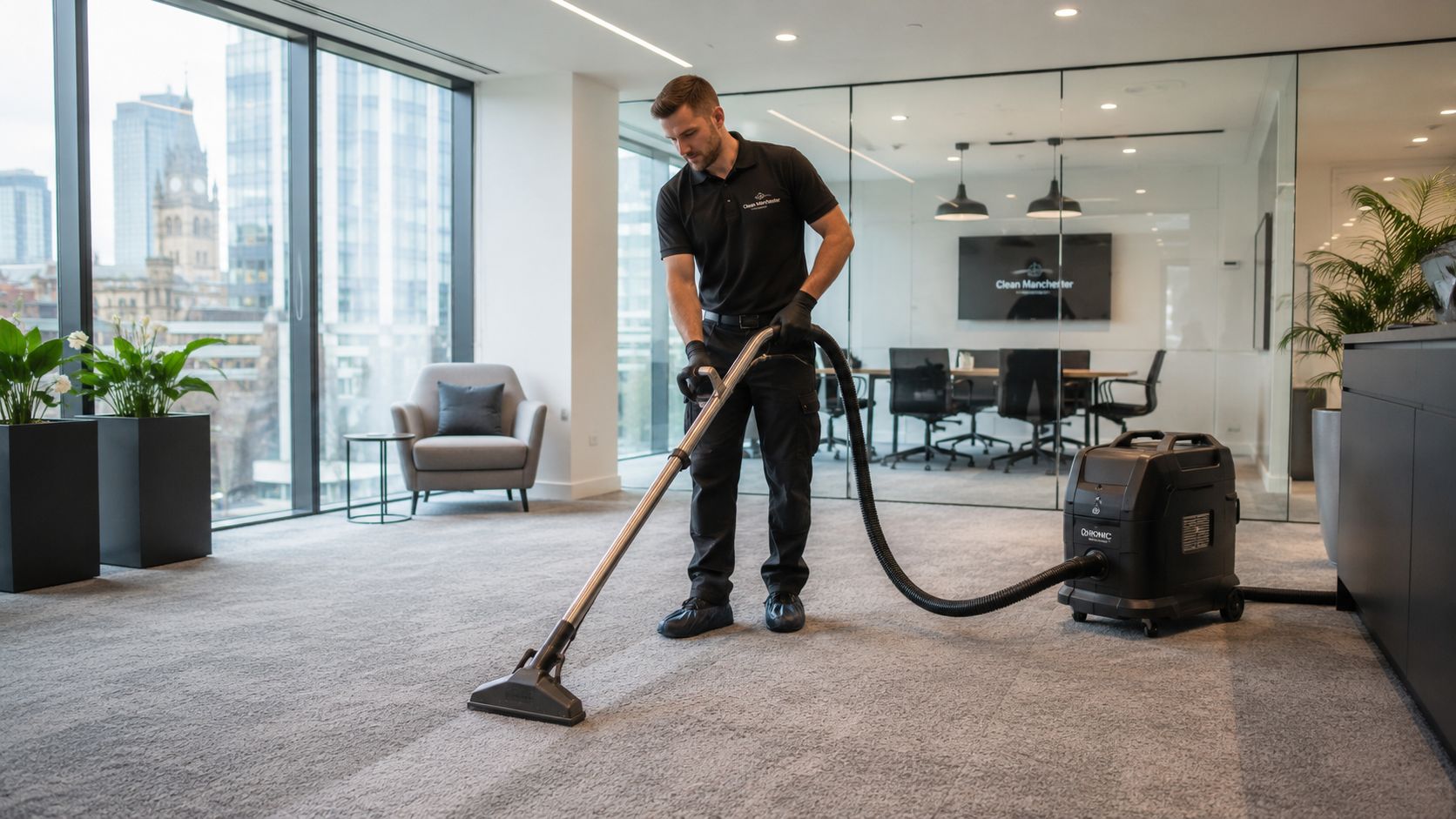
Carpets hold more than visible dirt. They collect dust, tracked-in debris, spills, and odours that slowly flatten the feel of an office. Professional carpet cleaning, often using hot water extraction, helps lift embedded soil and refresh heavy-traffic areas properly. It's not just about appearance. Cleaner carpets generally help the whole office feel lighter and better maintained.
Upholstery cleaning does something similar for reception seating, meeting room chairs, and breakout furniture. Fabric surfaces can make an otherwise tidy office feel tired if they're marked or stale. Periodic treatment extends the life of those items and avoids replacing furniture before you need to.
Internal glass cleaning is another service that gets overlooked until it matters. Partition glass, meeting room glass, and internal entrance panels gather smears quickly in busy offices. Keeping them clear changes how bright and orderly the space feels.
A provider such as Atticus Cleaning Services uses Sebo professional vacuums and hot water extraction equipment for office, carpet, and upholstery work, which is the sort of equipment detail worth asking any contractor about because it tells you whether they're set up for specialist tasks or improvising with basic tools.
Property handovers and sensitive specialist work
Some jobs need far more than a standard office team with a mop and vacuum. End-of-tenancy cleaning for commercial property handovers is one example. Landlords, facilities managers, and agents often need a space brought back to a lettable, workable condition quickly, with kitchens, washrooms, internal windows, floors, and accumulated grime handled thoroughly.
There are also sensitive specialist cleans, including trauma cleaning and contamination-led work. Most offices won't need that service often, but it's a sign of a serious operator when a company understands controlled processes, risk, and discretion in higher-stakes environments.
Other specialist support can include:
- Post-build cleaning after maintenance or refurbishment
- Targeted washroom descaling where hard water leaves persistent deposits
- Machine floor cleaning for larger hard-floor areas
- Waste clearance where offices need bulky items or rubbish removed lawfully
The practical point is simple. If your contractor only offers a vague “general clean”, you may end up sourcing separate suppliers every time the office needs something more demanding. A broader-capability provider usually makes life easier, especially during property changes, office refreshes, or unexpected incidents.
Understanding Office Cleaning Costs in Manchester
Price matters, but office cleaning quotes only make sense when you know what sits behind them. Two suppliers can quote for the same building and be offering very different staffing levels, supervision standards, task frequencies, and response arrangements.
What Manchester pricing usually looks like
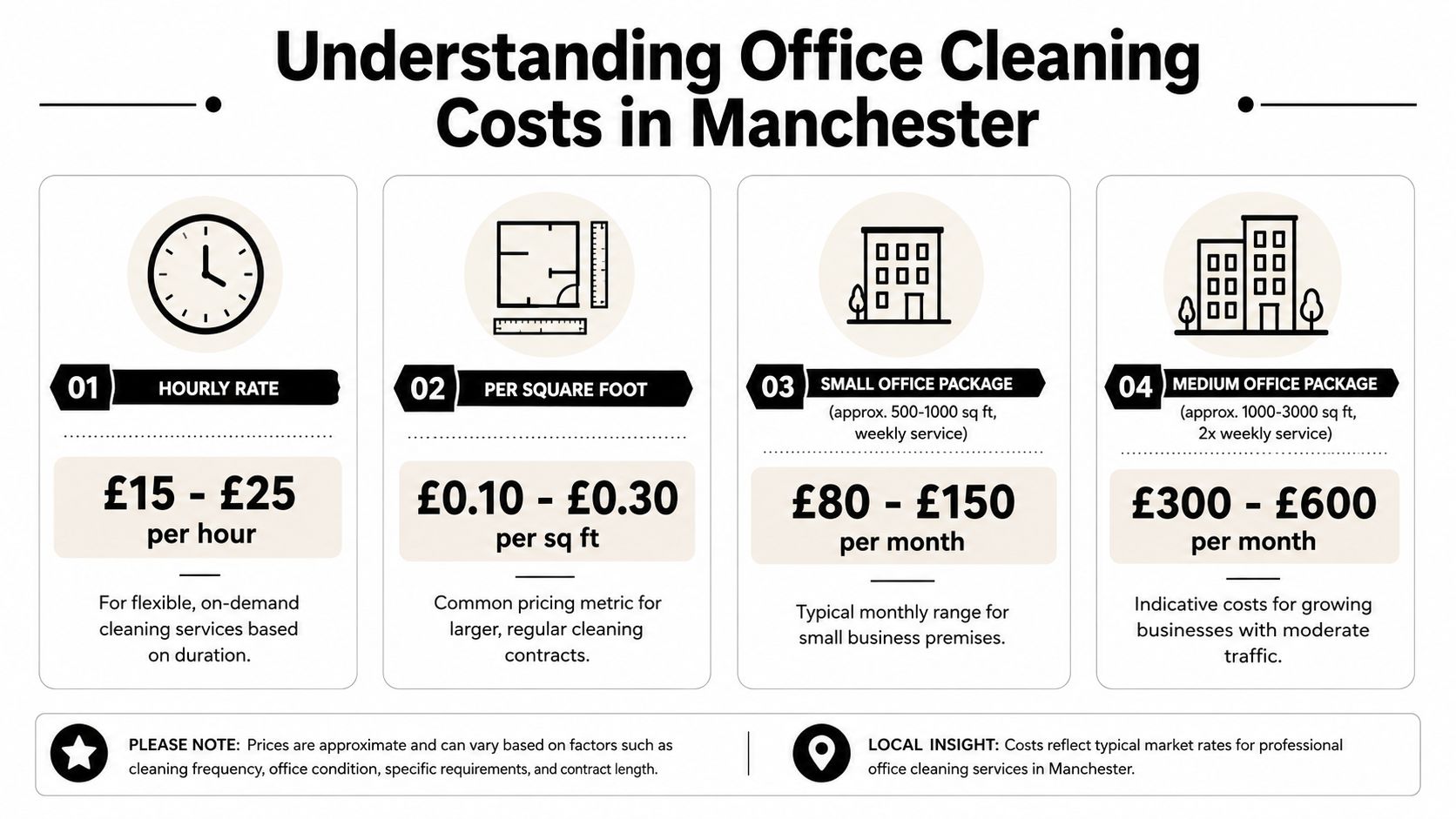
For commercial offices in Greater Manchester, contract cleaning hourly rates typically range from £16 to £22, and monthly contracts for small to mid-sized offices can average between £800 to £2,500. Accurate pricing requires a site survey because building size, frequency, and hygiene requirements all affect the final figure (Greater Manchester contract cleaning cost guide).
That range is useful as a benchmark, not a shortcut. If a quote comes in well below the local norm, ask what has been removed to get there. It may be less supervision, less time on site, fewer consumable checks, lower flexibility, or no realistic absence cover. Cheap cleaning often looks acceptable in the first week and strained by the fourth.
What changes the final quote
A realistic office cleaning quote usually moves on these factors:
- Office size and layout. More square footage usually means more labour, but awkward layouts, stair access, and multiple washrooms matter too.
- Cleaning frequency. A site cleaned daily needs a different staffing plan from one visited twice a week.
- Use intensity. An office with a busy kitchen, frequent guests, and packed meeting rooms creates more repeat work than a quiet back-office operation.
- Timing. Out-of-hours access can be efficient, but some schedules cost more depending on supervision and keyholding arrangements.
- Specialist tasks. Carpet cleaning, upholstery work, internal glass, or handover cleaning will usually sit outside the routine contract price.
The cheapest quote is only cheaper on paper. The real cost shows up in complaints, missed tasks, and time spent managing the contractor.
A good site survey should feel detailed. The cleaner or manager should ask how the office functions, where standards matter most, who uses the space, and what “good” looks like to your team. If they only measure rooms and send a number, you still don't know what service you're buying.
A Practical Checklist for Vetting Providers
Most office managers don't struggle to find cleaners. They struggle to find cleaners who stay reliable after the first month. Vetting properly at the start saves far more hassle than switching providers later.
Check compliance before you compare polish
Start with the basics that should never be vague.
UK office cleaning work needs to align with the Health and Safety at Work etc. Act 1974, COSHH, and the Management of Health and Safety at Work Regulations 1999. In practice, that means the contractor should carry out risk assessments, use risk-reduction measures, and operate with clear cleaning schedules and SOPs. Institutional clients also expect documented standards and performance monitoring (UK workplace cleaning compliance and SOP requirements).
Ask to see how the provider handles:
- Risk assessments for the site and the tasks
- COSHH procedures for chemicals and storage
- Training records for cleaners and supervisors
- Insurance details including public liability
- Quality checks such as inspections or reporting routines
If those answers are hesitant, the rest of the sales pitch doesn't matter much.
Ask direct questions about continuity
This is the part many buyers miss. Reliability isn't just whether the assigned cleaner is good. It's whether the company can keep the service running when someone is ill, on holiday, delayed, or leaves.
78% of UK businesses cite staff reliability as a top concern in commercial services, while only 12% of Manchester cleaning providers explicitly detail backup staffing protocols in public-facing content, according to the UK Contractors Group survey on reliability questions for commercial cleaning providers. That gap is exactly why you should ask for specifics.
Use questions like these:
- Who covers sickness? Ask whether there's a named backup system or just an intention to “try to cover it”.
- How quickly do you inform clients? Late notice is sometimes unavoidable. Silence isn't.
- Is there local supervision? A manager who knows the site can solve problems faster than a remote office that's guessing.
- How is the standard maintained with relief staff? A relief cleaner needs a site file, task list, and access notes. Otherwise standards drop immediately.
- What happens if a clean is missed? You want a clear corrective process, not a vague apology.
If a provider can't explain absence cover in two or three clear sentences, they probably don't have a strong system.
For a buyer-focused set of questions, this guide on how to choose your ideal office cleaners in Manchester is useful alongside your quote comparisons.
Review the contract like an operator
Once you're satisfied on compliance and continuity, read the service agreement closely. The important parts aren't always the headline price.
Look for:
- A defined scope. Which rooms, which tasks, and how often.
- A practical specification. Not broad wording, but an actual cleaning schedule.
- Supply arrangements. Who provides washroom consumables, bin liners, and specialist products.
- Complaint handling. How issues are reported, acknowledged, and corrected.
- Flexibility. Can the service scale up for busier periods, events, or short-term changes.
References matter too, but ask better questions than “Are they good?” Ask whether they arrive consistently, whether supervision is visible, and how they handle problems when things go wrong. Any contractor can perform on a stable week. The useful test is how they respond on a difficult one.
FAQs and Getting Your Free Quote
A few practical questions usually come up before an office manager is ready to request a quote.
Do we need to provide cleaning products and equipment?
Usually not. Most professional contractors bring their own equipment and cleaning materials, though consumables such as hand soap, paper products, and bin liners should be clarified in the quote.
Can cleaning be done outside office hours?
Yes. Many Manchester offices prefer early morning, evening, or other low-traffic times to avoid disruption.
Do we need a long contract?
That depends on the provider. Some offer fixed terms, while others allow more flexibility. What matters is that the scope and service levels are written clearly.
Can we add carpet or upholstery cleaning later?
In most cases, yes. Many businesses keep routine cleaning on contract and book specialist work separately as needed.

If you're reviewing office cleaners in Manchester and want a quote based on your actual site, service frequency, and continuity needs, Atticus Cleaning Services is one option to consider. The company provides commercial office cleaning across Manchester and North Cheshire, along with specialist support such as carpet, upholstery, and end-of-tenancy cleaning. You can request a no-obligation quote, review the proposed scope properly, and decide whether the service fits your building, schedule, and standards.