
That “sale” email usually lands when you're already juggling too much. Someone's off sick, the kitchen bins are somehow overflowing again by 10am, and finance wants a sharper grip on overheads. A discounted cleaning quote looks like an easy win.
Sometimes it is. Often it isn't.
Office cleaning sits in a market that's large enough to hide a lot of variation in service quality, contract terms, and pricing behaviour. The UK commercial cleaning market is worth about £12.5 billion a year, and a standard office cleaning contract for a 5,000-square-foot workspace typically ranges from £18,000 to £24,000 per year, according to the UK Department for Business and Trade's 2025 Industry Report on Cleaning Services. That means this isn't a minor admin purchase. It affects budget control, staff experience, presentation, and day-to-day operational risk.
The problem with many office cleaning sale offers is simple. The headline sounds cheap, but the contract underneath may not be. Introductory rates can distract from exclusions, short-lived discounts, weak supervision, chemical compliance gaps, or add-on charges that only appear once the service starts. A decent deal should lower cost without lowering standards.
Table of Contents
- Introduction Navigating the Promise of an Office Cleaning Sale
- Decoding Discounts What an Office Cleaning Sale Really Means
- Define Your Needs Before You Seek Quotes
- Compare Quotes Beyond the Bottom Line Price
- Smart Negotiation and Avoiding Contract Traps
- Maximise Your Trial Period for a Smooth Start
- Conclusion Your Partner for a Genuinely Great Deal
Introduction Navigating the Promise of an Office Cleaning Sale
An office manager rarely shops for cleaning from a position of leisure. Usually, there's a trigger. The current cleaner is inconsistent. A lease renewal has pushed cost reviews higher up the agenda. Leadership wants better standards in the washrooms and meeting rooms without approving a bigger spend.
That's why an office cleaning sale gets attention. It promises relief on both fronts. Lower cost and better service. The trouble is that those two things only arrive together when the provider is transparent about scope, staffing, supervision, and contract terms.
A sale can be useful when it's structured as a clear introductory incentive tied to a properly defined service. It becomes risky when the discount is doing all the talking and the detail is missing. In practice, offices don't suffer because a cleaner charged a little more. They suffer because the contract was vague, communication was poor, and no one clarified what “standard cleaning” included.
Practical rule: If the offer looks simple but the quote doesn't explain timing, tasks, materials, and exclusions, you're not looking at a bargain. You're looking at uncertainty.
The right approach is to treat any office cleaning sale as a commercial proposal, not a marketing message. Judge it on total value, operational fit, and the likelihood that the service will still work once the sale period ends.
Decoding Discounts What an Office Cleaning Sale Really Means
Not every sale means the same thing. In cleaning, the headline offer is often just the front door into a longer commercial arrangement.
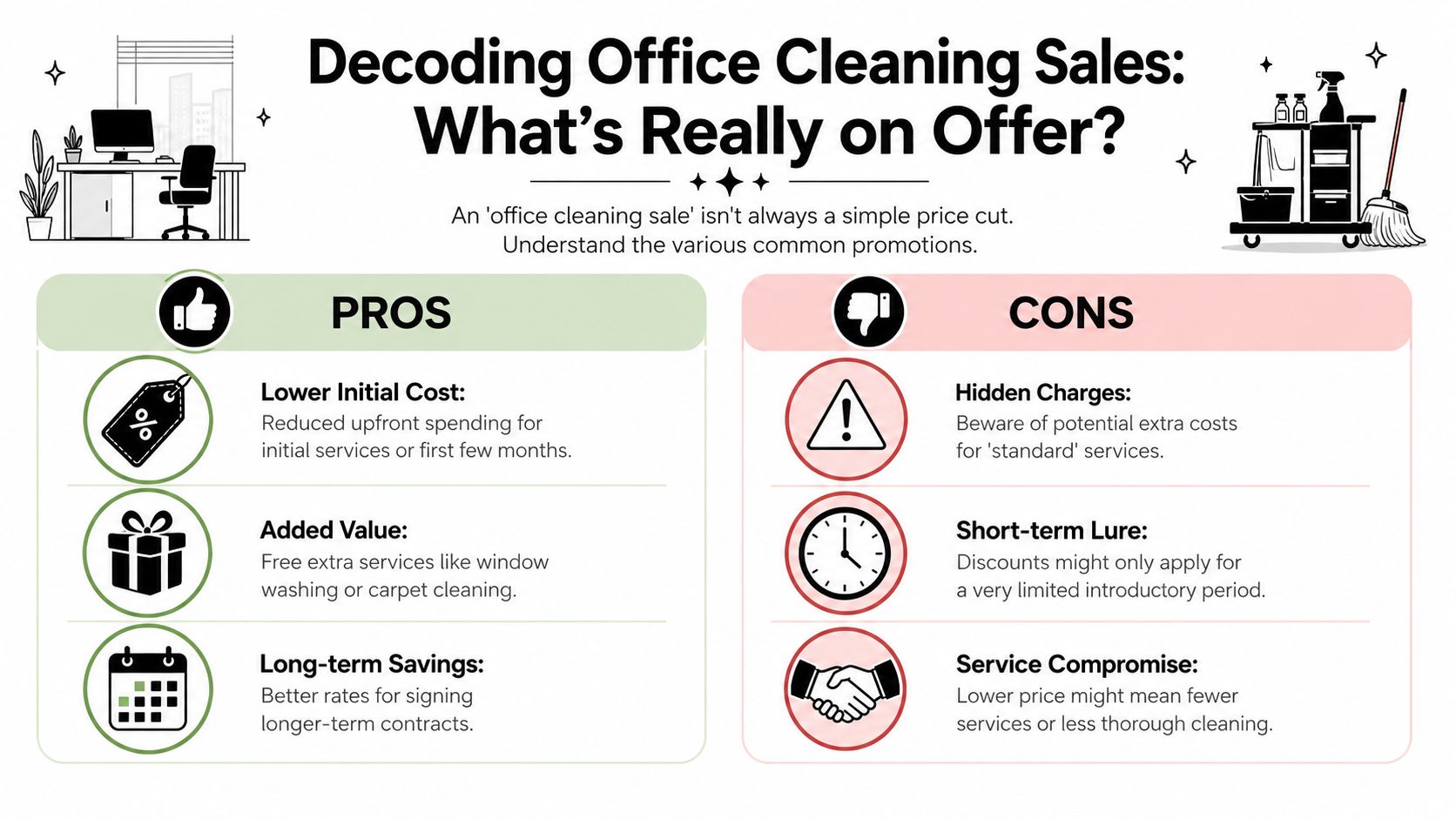

If you've seen local promotions such as introductory office cleaning offers in Manchester, you'll know the wording can vary a lot. The useful question isn't “Is this discounted?” It's “What exactly is discounted, for how long, and what happens after that?”
The common sale formats you'll see
Some offers reduce the first few invoices. That can help cash flow, especially when you're changing supplier and managing overlap with the old one. But this format only works in your favour if the post-introductory rate is written down in advance.
Other deals bundle in a one-off extra, such as carpet work, kitchen detailing, or an initial deep clean. Those can be worthwhile because they reset the building to a better baseline. They're less valuable if the ongoing specification is too thin to maintain that standard.
Then there are discounts tied to a longer contract term. Here, many buyers get caught. The supplier is trading margin now for commitment later. That isn't automatically bad. It can be sensible if the service is dependable, the review process is clear, and the exit terms are fair.
A quick way to decode any offer is to classify it:
| Offer type | What it can be worth | Where to be careful |
|---|---|---|
| Introductory monthly discount | Useful for short-term budget relief | Full rate after the sale period |
| Free add-on service | Good if it solves a real need | Add-on may distract from weak routine cleaning |
| Contract-length discount | Better long-term rate in some cases | Notice periods and price review clauses |
| Discounted specialist work | Helpful for occasional tasks | Core office cleaning may still be overpriced |
What the discount is really buying
Cleaning companies don't run sales out of generosity. Usually, they're trying to reduce the barrier to switching, fill route capacity, secure a longer term, or win a foothold in a target area. Knowing that helps you ask sharper questions.
Ask these before you get excited about the number:
- What changes after the sale period ends? Ask for the normal monthly charge in writing.
- Which tasks are included during the sale? Don't assume a “full clean” means consumables, internal glass, or kitchen appliances.
- Is the team size fixed? A low offer can depend on fewer labour hours than your site really needs.
- Are specialist products or equipment extra? Some providers charge separately for things buyers assume are routine.
- What service standard applies in writing? A discount shouldn't mean a softer scope.
A sale is only as good as the specification attached to it.
The strongest offers are boring on paper. That's a good sign. They spell out frequency, areas, consumables, supervision, complaint handling, and review points. The weak ones lean on the word “premium” while avoiding specifics.
When you read a cleaning proposal, look for plain language, not polished language. A provider that can explain the service clearly usually manages it clearly too.
Define Your Needs Before You Seek Quotes
Most quote comparisons go wrong before the first supplier even visits the site. The buyer hasn't written down what the office needs, so every bidder fills in the blanks differently.
That creates fake competition. One company prices a proper evening service with washroom checks and kitchen sanitising. Another prices a lighter package with less frequent detail work. The cheaper quote wins on paper, but not in practice.
A useful starting point is a simple internal brief. If you want a stronger framework, this guide to choosing office cleaners in Manchester helps you think through the operational fit before pricing enters the conversation.
Write a scope before you speak to anyone
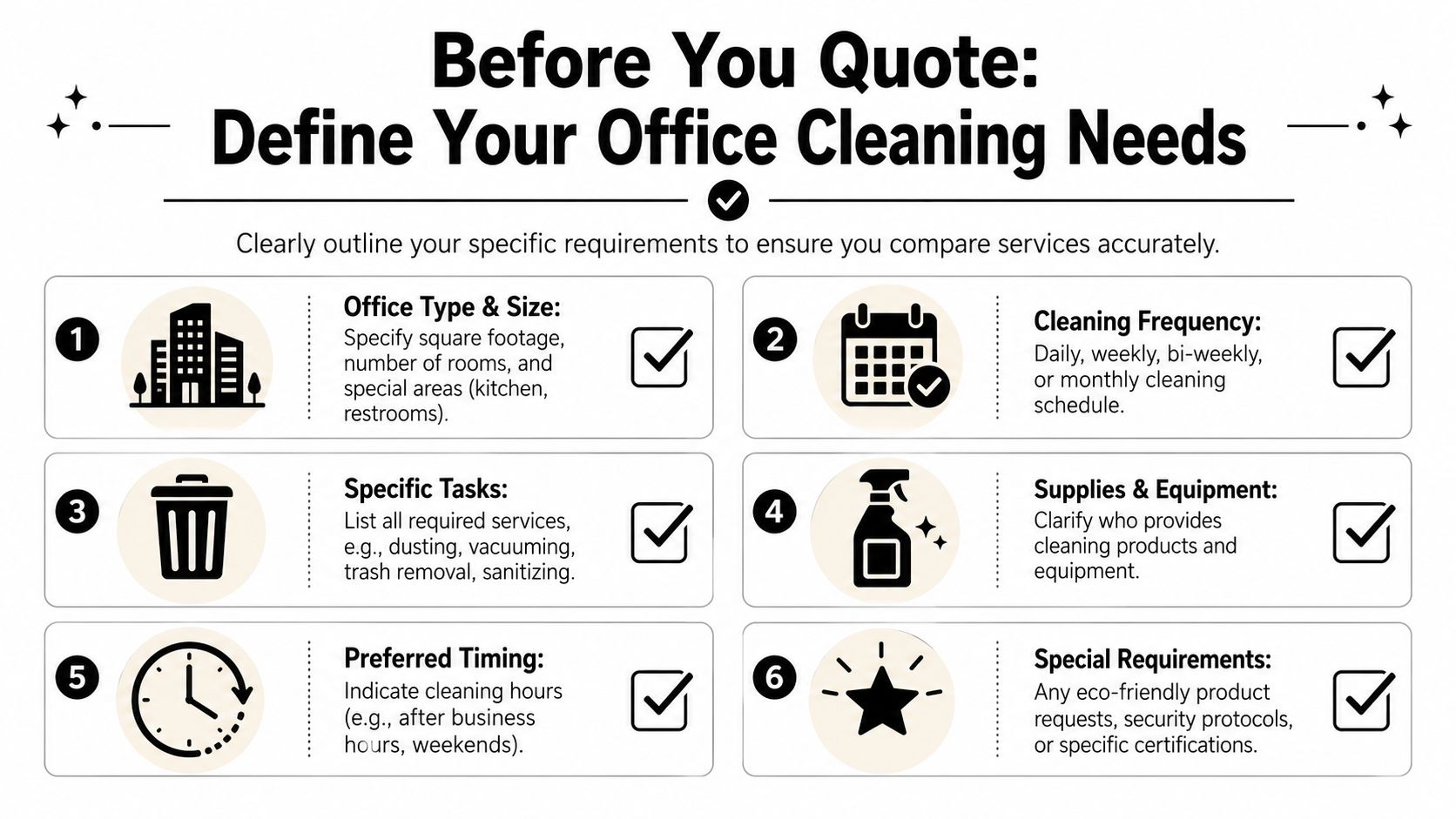
Your scope of work doesn't need to be fancy. A clean spreadsheet or one-page document is enough if it covers the essentials.
Include:
- Areas to be cleaned: Reception, open-plan desks, meeting rooms, toilets, kitchen, stairwells, lifts, store rooms.
- Required frequency: Daily, alternate days, weekly, periodic.
- Task detail: Vacuuming, mopping, desk wipe-down policy, bin emptying, touchpoint sanitising, washroom checks, internal glass.
- Cleaning hours: Before staff arrive, after hours, or during daytime support windows.
- Site restrictions: Alarm procedure, keys, access cards, confidentiality rules, no-go zones.
- Supply responsibility: Who provides consumables, liners, soap, paper products, and specialist materials.
If you skip this, suppliers will make assumptions. Some assumptions help them. Few help you.
The details that stop quote drift
There are certain points that regularly cause disagreement later because they weren't pinned down at quote stage.
List high-traffic trouble spots. Kitchens and washrooms nearly always need more attention than quiet offices. Reception floors, glass entry points, and shared meeting rooms also wear hard. If your office has client-facing areas, say so clearly. Standards in those spaces are usually absolute.
Clarify whether desks are to be cleaned around personal items or left untouched. The same goes for monitor screens, keyboard areas, and cables. Good cleaners will ask. Weak proposals gloss over it and leave the site team to improvise.
A few practical prompts help:
If a visitor walked through your office at 9am tomorrow, which three areas would you care about most? Put those in the scope first.
Also decide what “good” means on your site. Some managers want a spotless visual finish above all. Others care most about hygiene, smell control, washroom presentation, and reliable replenishment. There's no universal answer, but there must be your answer.
When your brief is clear, suppliers can price the same job. That makes every later conversation easier, including negotiations, trial reviews, and contract checks.
Compare Quotes Beyond the Bottom Line Price
A low quote looks tidy in a budget meeting. Three months later, it can turn into extra invoices, missed washroom checks, patchy cover during holidays, and a reception area that never quite looks ready for visitors.
That pattern is common in cleaning sales. The opening price gets attention. The full cost shows up in the parts of the service that were left vague, omitted, or pushed into terms most buyers do not have time to pick apart line by line.
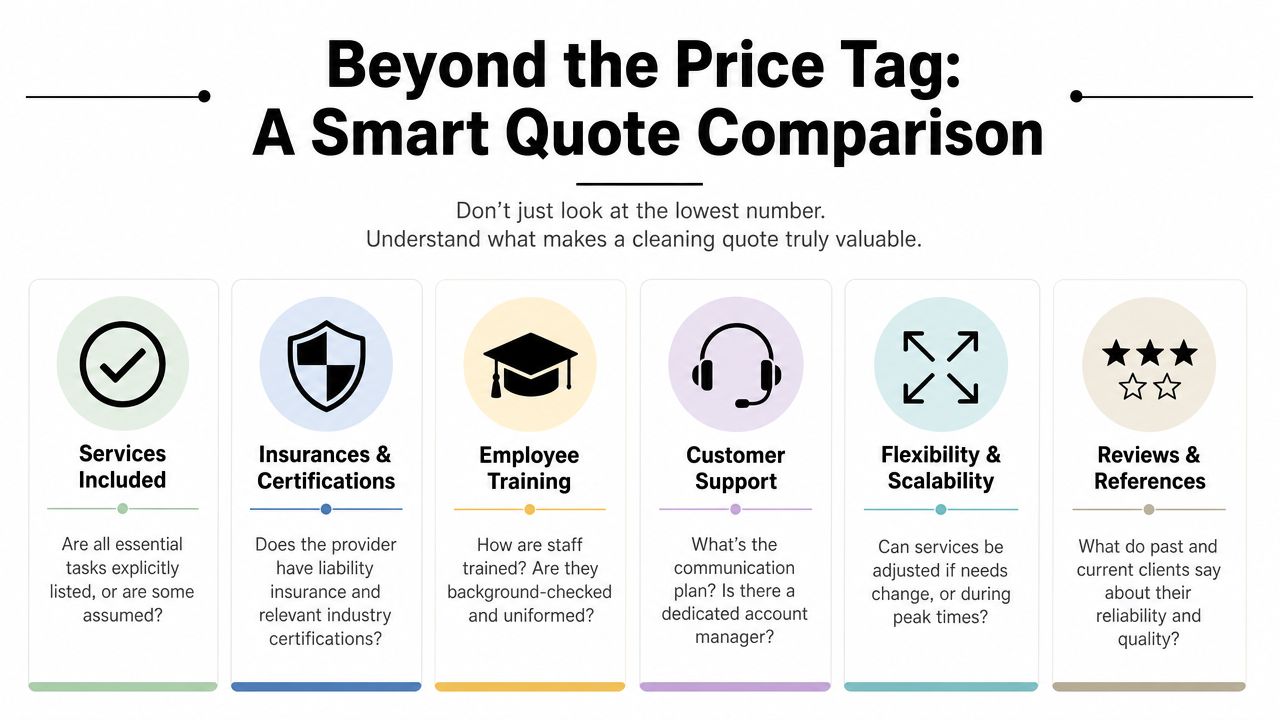

The safest way to compare quotes is to treat each one as an operating plan, not a price tag. Good proposals explain how the service will run on your site, who checks standards, what happens when staff are absent, and which tasks fall outside the monthly fee. Poor ones hide behind broad wording and a tempting headline number. If you want a useful benchmark, review what a professional office cleaning service should include in practice and hold every bidder against the same standard.
Where cheap quotes usually hide the catch
The first trick is scope trimming. A proposal may cover routine cleaning but leave out internal glass, fridge cleaning, washroom consumable checks, sanitary disposal liaison, carpet spot treatment, or periodic machine work. None of that looks expensive until each item comes back as an add-on.
The second is labour compression. On paper, the service exists. On site, there are not enough hours to do it properly. That is usually when cleaners start skipping edges, touchpoints, and lower-priority rooms just to get through the shift.
Another problem is variable charging buried in the small print. Out-of-hours access fees, holiday cover uplifts, one-off deep clean rates, and equipment surcharges can turn a cheap monthly rate into an expensive contract very quickly.
There is also a compliance angle. If a quote is far below the market without a clear reason, ask what has been cut to get there. Sometimes it is supervision. Sometimes it is training. Sometimes it is safer chemicals, proper COSHH controls, or enough time to clean washrooms to a standard you can stand behind.
A practical quote comparison grid
Put every bidder into the same side-by-side table. If one supplier will not answer clearly, that tells you something useful before the contract starts.
| Checkpoint | What to confirm |
|---|---|
| Scope | Every room, task, and frequency listed plainly |
| Exclusions | Anything not covered stated in writing |
| Materials | Whether chemicals, cloths, liners, and consumables are included |
| Equipment | Whether machinery is included or billed separately |
| Supervision | Who inspects the work and how issues are escalated |
| Staffing | Named service structure, cover for sickness and holidays |
| Insurance | Public liability and relevant operational cover |
| Safeguarding | Access control, key handling, confidentiality process |
| Price changes | Whether the rate can change and under what conditions |
| Exit terms | Notice period, early termination fees, handover expectations |
I always advise office managers to test each quote against a normal working week. Ask simple questions. What happens if the usual cleaner calls in sick? How are complaints logged and closed? If your boardroom needs attention before a client meeting, is that part of the service or an extra charge? Practical answers are far more useful than polished sales language.
Watch for these warning signs:
- Vague wording: “General clean” and “full service” mean very little without task detail.
- No written exclusions: If exclusions are missing, you are likely to discover them later.
- Consumables left unclear: Buyers often assume liners, soap, and paper products are included.
- Thin supervision: Without inspections and a named account lead, standards slip fast.
- Flexible pricing language: Terms that allow charges to change without a clear trigger create problems later.
Cheap is only cheap when the service level, staffing, and compliance standards are clear in writing.
A proper comparison protects your time as much as your budget. It reduces arguments, exposes bait-and-switch pricing early, and helps you choose a contractor who can keep the office presentable without constant chasing from your side.
Smart Negotiation and Avoiding Contract Traps
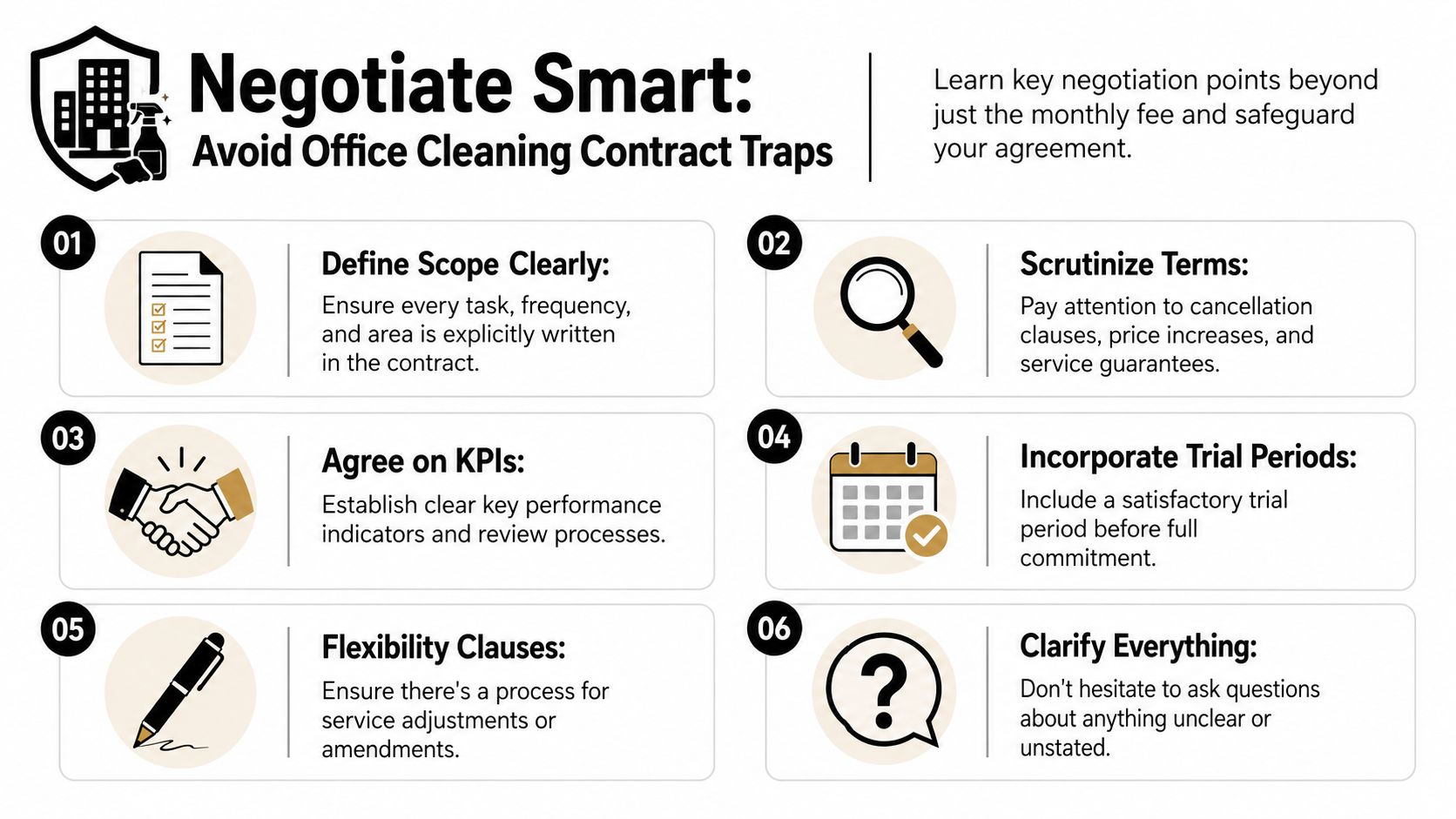
Most office managers think negotiation starts with the monthly fee. In practice, the more valuable negotiation is about what happens when the service disappoints, the site changes, or the provider tries to alter the commercial terms.
That matters because cleaning isn't static. Headcount changes. Meeting rooms get busier. A refit creates new finishes and new risks. If the contract is rigid, even a decent supplier becomes difficult to work with.
One issue should sit near the top of your checklist. The HSE Workplace Illness Statistics 2024 report states that 19% of workplace illness cases in 2024 were linked to improper cleaning chemical usage. A very low sale price can be a warning sign that a contractor is saving money on training, supervision, or HSE-compliant materials.
Negotiate terms before you negotiate pennies
You'll usually get more practical value by negotiating the operating terms than by squeezing the final monthly figure.
Push for a sensible trial or review period. That gives both sides room to fix early problems before positions harden. Ask how service amendments are handled if your office layout or occupancy changes. Confirm whether extra works require pre-approval or can be added automatically.
Price review wording matters too. A fair contract explains when charges can change and why. An unfair one gives the supplier broad discretion.
Focus your negotiation on these areas:
- Scope certainty: Attach the cleaning specification to the contract.
- Inspection routine: Agree how standards will be checked and recorded.
- Rectification process: Set a response process for missed items or complaints.
- Variation control: Require approval before non-routine charges are added.
- Termination rights: Keep an exit route if the service repeatedly fails.
- Chemical compliance: Ask what products are used, where records are kept, and how staff are trained.
This short video is a useful prompt when you're reviewing commercial cleaning commitments and expectations:

Questions worth asking before you sign
These questions save time because they force specifics.
Under what circumstances can the price change during the contract term?
What notice period applies if service quality drops and isn't corrected?
Which chemicals are used in washrooms, kitchens, and touchpoint cleaning, and how is staff training evidenced?
What happens if the regular cleaner is absent on a key service day?
Which tasks are periodic rather than routine, and how are they charged?
A cleaner contract shouldn't read like a trap you hope never springs. It should read like a working agreement between adults who know what the building needs.
If a provider becomes evasive when you ask straightforward questions, take that as operational evidence, not just poor sales technique.
Maximise Your Trial Period for a Smooth Start
The opening weeks tell you more than the pitch ever will. A discounted start should be treated as a live service test, not just a cheaper invoice.

Treat the opening weeks like a live test
Start with a walkthrough. Show the team leader or account contact the areas that matter most, the standards you expect, and any site-specific rules that won't be obvious from the quote. Mention recurring pressure points such as washroom replenishment, kitchen build-up, glass at the entrance, or boardroom turnaround before early meetings.
Keep feedback simple and fast. A shared log, email thread, or agreed messaging channel works better than saving up a month's worth of irritation for a review call. The aim is course correction, not point scoring.
Use the trial period to assess things buyers often miss:
- Reliability: Do cleaners attend consistently and on time?
- Presentation: Are visible areas ready for staff and visitors each morning?
- Communication: Do issues get acknowledged and resolved quickly?
- Adaptability: Can the team respond when the office has an unusually busy week?
How to give feedback that improves service
Be specific. “The cleaning wasn't good” is hard to action. “Kitchen floor still greasy by the sink after the Thursday clean” gives the team something they can fix that night.
A short weekly review helps. Keep it practical. What improved, what slipped, and what needs extra attention next week. If a supplier responds well during the trial, that's often a stronger sign of long-term quality than a flawless first week.
Early feedback should be routine, not emotional. Good providers don't need perfection on day one. They need clarity.
By the end of the opening period, you should know whether the service is organised, responsive, and worth retaining at the standard rate.
Conclusion Your Partner for a Genuinely Great Deal
A worthwhile office cleaning sale doesn't just cut cost. It protects standards, avoids billing surprises, and gives you confidence that the office will be looked after properly when you're focused on everything else.
The strongest buying decisions usually come from a few simple habits. Define your scope first. Compare quotes line by line. Push hard on contract terms. Use the opening weeks to test reliability, communication, and follow-through. That's how you separate a real deal from a discount that creates more work than it saves.
If you're reviewing providers in Manchester or North Cheshire, it's worth speaking to a company that treats introductory pricing as a transparent way to earn long-term trust, not hide long-term problems.
If you want a no-nonsense quote from Atticus Cleaning Services, you can request one directly and compare it against your current provider or any office cleaning sale you're considering. Atticus offers bespoke commercial cleaning across Manchester and North Cheshire, with introductory savings of up to 50% on the first three months of a contract, backed by trained staff, insured operations, flexible scheduling, and a satisfaction-led approach that prioritises clear scope and consistent standards.