
Top Carpet Cleaning Near Me: Atticus Experts 2026
June 10, 2026
Expert Office Cleaning Hale: Pristine Workspaces 2026
June 17, 2026
You're probably reading this with boxes half-packed, a tenancy end date coming up, and a growing suspicion that the clean will decide whether your deposit comes back in full. That suspicion is usually right. The final clean isn't the last easy job on the list. It's the one that gets inspected closely, compared against the inventory, and turned into deductions if grease, limescale, dust, pet hair, or marked carpets are left behind.
In Altrincham, that pressure is common. A large share of local homes are rented, so move-out cleaning isn't a niche problem. It's a routine part of handing a property back in a way that a landlord or letting agent will accept. The problem is that many tenants still get vague pricing, vague promises, and vague checklists. What matters is service scope. What's included, what costs extra, and which add-ons reduce the risk of a failed checkout.
Table of Contents
- Moving Out in Altrincham Your Deposit Depends On It
- What an End of Tenancy Clean Actually Includes
- How Professional Cleaning Protects Your Deposit
- End of Tenancy Cleaning Costs and Special Offers in Altrincham
- Your Tenant Checkout Checklist and How to Book
- Common End of Tenancy Cleaning Questions
Moving Out in Altrincham Your Deposit Depends On It
The pressure usually hits once the van is loaded. The property is empty, the keys are due back, and every missed detail becomes obvious. Dust along skirting boards, grease on the splashback, limescale around taps, pet hair caught at carpet edges. In an occupied home, some of that blends into the background. In a checkout inspection, it does not.

Altrincham has a busy rental market, and that shows in how agents and landlords handle handovers. Trafford Council's housing data on tenure and private renting gives useful local context. The practical point for tenants is simpler. Checkout standards here are familiar, consistent, and usually stricter than people expect once the property is unfurnished.
I see the same mistake every week. Tenants plan for a general tidy-up and assume that will be enough. It often is not. Deposit deductions are regularly driven by cleaning issues that sit in the grey area between "good enough to live in" and "clean enough to re-let without extra work."
Price matters as well, and so does knowing what changes it. A small flat with no carpet cleaning, no internal windows, and no heavy grease takes far less time than a house with pet hair, stained carpets, oven build-up, and glass that needs detailing. Those add-ons do not just raise the quote. They often decide whether the property passes first time or whether the landlord asks for further cleaning after checkout.
Atticus handles move-out cleans in Altrincham with that inspection standard in mind. Scope needs to be clear before the team arrives. If carpets need extraction, if pet odour is an issue, or if inside windows and appliances are part of the handover requirement, those details should be priced and scheduled from the start. That avoids last-minute surprises and gives tenants a better chance of getting the deposit back without argument.
For a broader explanation of how cleaning, evidence, and timing affect the handover, this guide on moving out in Manchester and getting your full deposit back is a useful reference before checkout day.
Practical rule: Empty properties show every shortcut. If the clean is rushed or the scope is incomplete, the inventory will usually pick it up.
What an End of Tenancy Clean Actually Includes
A weekly clean makes a home feel tidy. An end of tenancy clean has a different job. It has to remove build-up, deal with hidden areas, and leave the property in the condition the inventory clerk expects to see when they open cupboards, check appliance interiors, and run a finger along ledges.
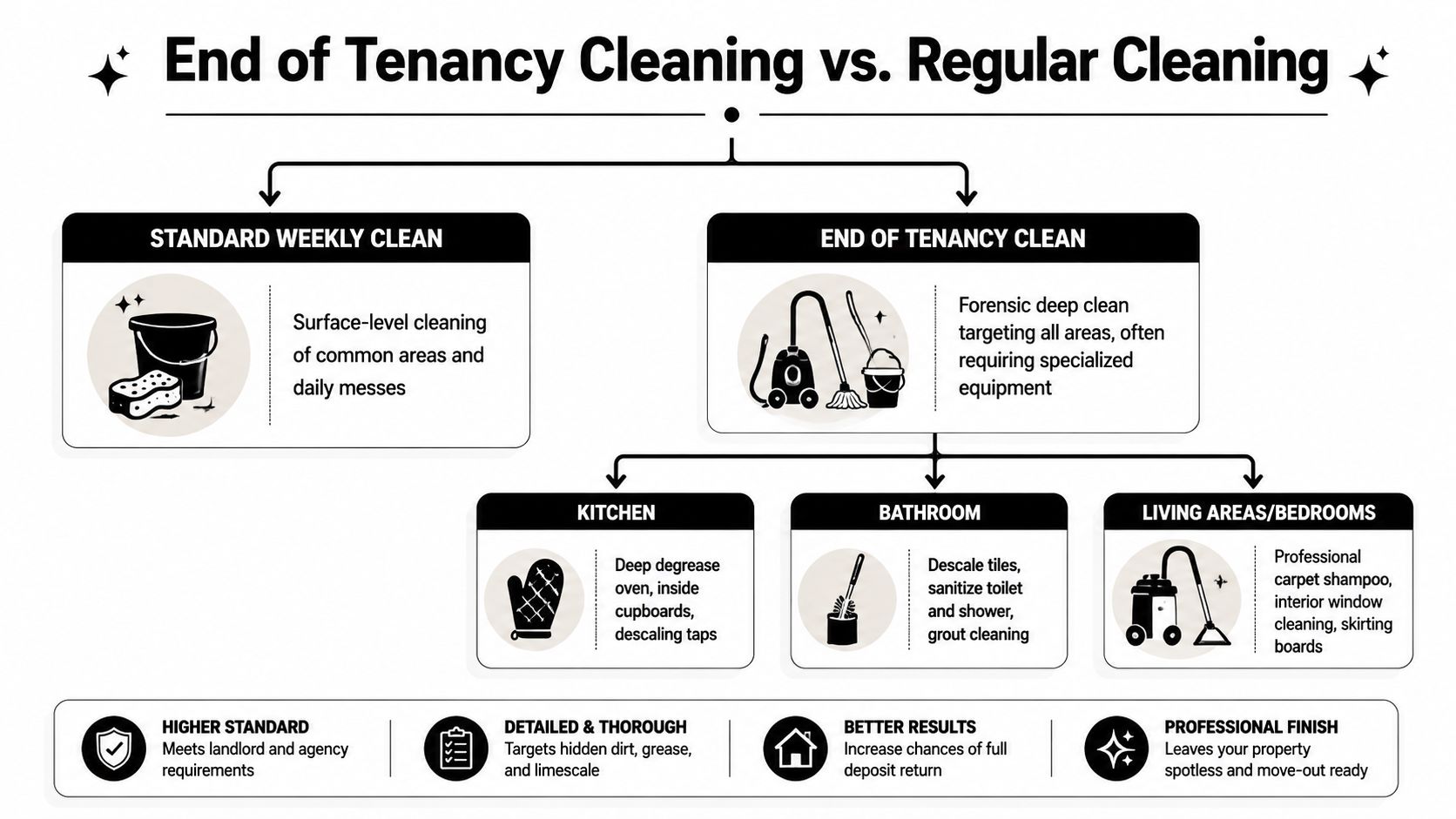
If you want a room-by-room breakdown of typical scope, this explanation of what end of tenancy cleaning involves gives a useful starting point. The important distinction is that proper move-out cleaning goes beyond visible surfaces.
Kitchen work that decides most inspections
Kitchens cause more trouble than tenants expect. The issue isn't usually crumbs on the worktop. It's baked-on grease in the oven, residue inside the extractor area, food debris in drawer runners, and sticky cupboard interiors.
A proper kitchen clean usually means:
- Oven and hob degreasing: not a quick wipe, but removal of carbon, grease film, and burnt residue.
- Cupboards and drawers inside and out: especially edges, handles, and the base panels where crumbs collect.
- Sink and taps descaled: because water marks and limescale are easy to spot under bright light.
- Appliance interiors cleaned: fridge shelves, microwave interiors, washing machine drawers, and seals.
If the kitchen smells clean but the extractor fan is still greasy, the job isn't finished.
Bathroom cleaning that removes dispute triggers
Bathrooms fail on detail. A shower tray can look acceptable until dried soap residue shows up. Chrome can look polished until limescale catches the light. Grout can look fine until the inventory photos are compared closely.
The legally relevant benchmark in the UK is the condition required by the tenancy agreement, not whether someone has paid for a branded “professional clean”. Since the Tenant Fees Act 2019, landlords can't require tenants to hire a professional cleaner, and trying to do so can trigger penalties starting at £5,000, as explained in this landlord guide on end of tenancy cleaning and the Tenant Fees Act.
That's why bathroom work needs to target the defects that cause deductions:
- Limescale on taps and screens
- Soap residue on tiles and trays
- Toilet and basin sanitising
- Grout lines and corners
- Extractor covers and high dusting
Bathrooms rarely fail because someone forgot the mirror. They fail because residue was left behind in the places people don't clean weekly.
Living areas bedrooms and internal windows
Bedrooms and living rooms look simpler, but they can be slower. Fine dust settles after furniture is moved. Skirting boards, door tops, sockets, and wardrobe interiors suddenly need attention. Carpets often need more than vacuuming, especially where traffic lanes, drink spots, or pet hair are involved.
Internal window cleaning also matters more than many tenants expect. Marks on inside glass, dusty frames, and dirty sills stand out in an empty room and make the whole property look unfinished.
A thorough end of tenancy clean should cover the detail areas that normal domestic cleaning skips. That includes:
| Area | What gets checked closely |
|---|---|
| Skirting boards | Dust, scuffs, settled debris |
| Wardrobes and cupboards | Shelves, corners, tops, handles |
| Internal glass | Smears, fingerprints, dusty frames |
| Carpets and edges | Hair, staining, traffic marks, dust build-up |
How Professional Cleaning Protects Your Deposit
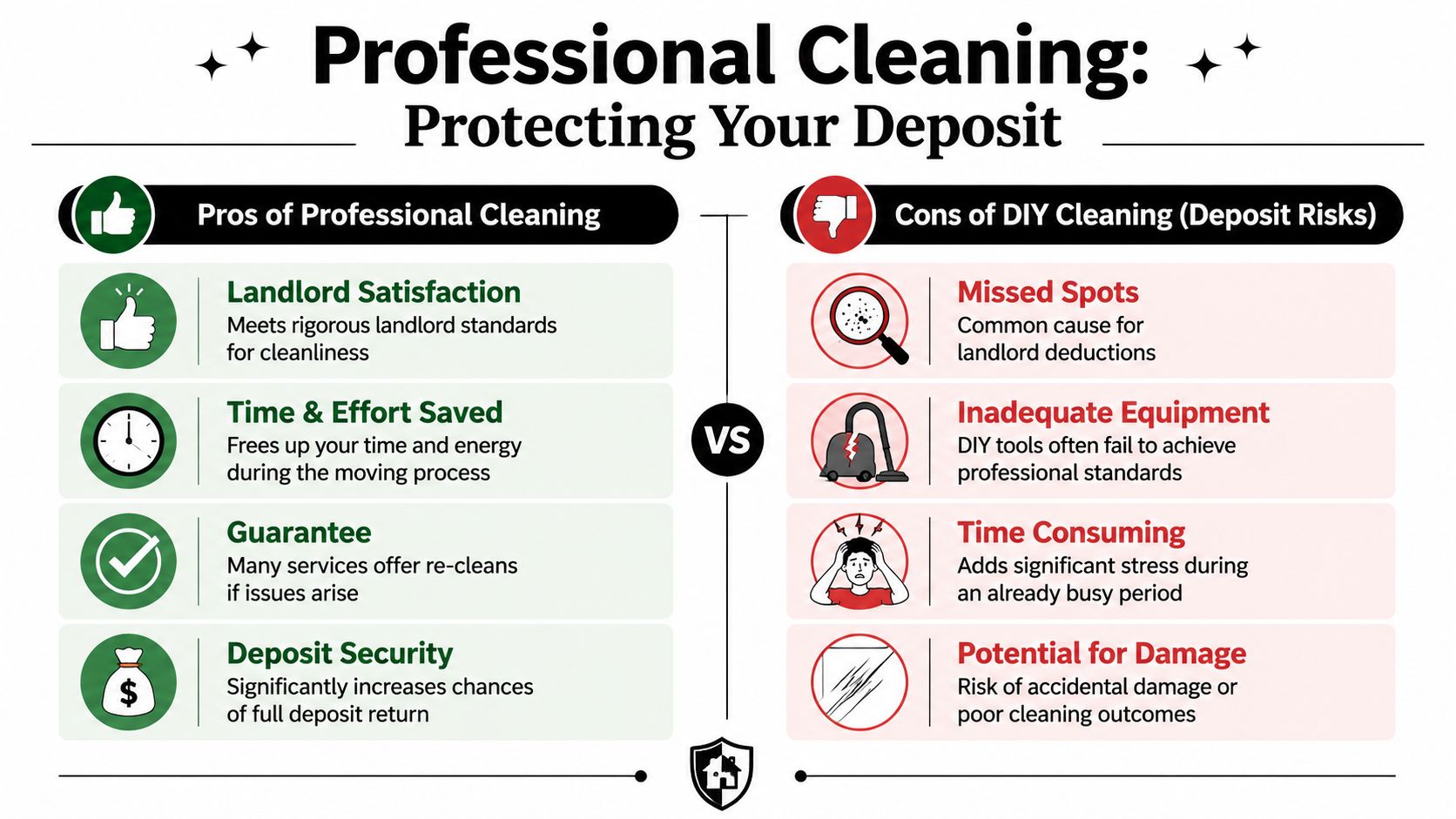
Most tenants ask the same question at some point. Do I need a professional cleaner, or can I do it myself? Legally, hiring a cleaning company isn't compulsory. Practically, it's often the safer route when the deposit is at stake.
To see the contrast clearly, look at the common trade-offs below.
What the law says and what it means in practice
The law is straightforward. Landlords can't force you to pay for a professional cleaner as a tenancy term. What they can require is that the property is returned to the cleanliness standard set by the agreement and supported by the check-in condition.
That sounds simple until checkout. The dispute usually turns on evidence and missed detail. A strong clean helps, but so does proof of what was done.
Here's a useful visual overview of common move-out cleaning expectations:
Where DIY cleans usually go wrong
DIY cleaning tends to fail in the same places:
- Time runs out: packing and key return take priority, so the clean becomes rushed.
- Equipment is limited: domestic vacuums struggle with embedded debris and pet hair in carpets.
- Standards vary by room: kitchens and bathrooms need deep defect removal, not just fresh-smelling surfaces.
- No paper trail: if a dispute starts, a receipt and scope of work carry more weight than saying you spent all Sunday cleaning.
One recurring gap in move-out advice is what happens after a failed inventory check. That's where documentation matters. Guidance for UK tenancies stresses that deductions must reflect actual cleaning needed beyond fair wear and tear, and a receipt for a professional clean is one of the strongest pieces of evidence a tenant can produce if the checkout report is challenged later.
End of Tenancy Cleaning Costs and Special Offers in Altrincham
Price should be simple, but it often isn't. Tenants are shown a low starting figure, then find out later that oven cleaning, internal windows, carpet work, heavy grease, or pet hair shift the job into a different bracket. The better question isn't “what's the cheapest clean?” It's “what scope gets the property through checkout without needing a second visit?”
The local benchmark is clear. A thorough end-of-tenancy clean in the Altrincham area starts at around £150 and can reach £250 for larger or more demanding jobs, with a 7-day re-clean promise often included, according to Atticus Cleaning's end of tenancy pricing information.
What changes the price
Three things usually move the final quote most.
First is property size and layout. More bedrooms and bathrooms mean more fixtures, more internal glass, more skirting, and more surfaces to detail.
Second is condition. Heavy limescale, oven grease, pet hair, and neglected bathrooms slow everything down. A property that's been cleaned regularly is much quicker than one where the deep clean has effectively been postponed until move-out week.
Third is add-ons, especially carpet cleaning. This is one of the most important choices because carpets are a common sticking point at checkout. Vacuuming removes loose debris. It doesn't remove embedded dirt, odours, or the visual dullness that shows once furniture is gone.
When tenants ask what changed their quote, the answer is usually condition or specialist add-ons, not the postcode.
Example pricing tiers for Altrincham
The table below shows how tenants often compare a standard clean against a package that includes discounted carpet work.
| Property Type | Standard Clean (Estimate) | With Carpet Cleaning (50% Off) |
|---|---|---|
| Studio or 1-bed | From the lower end of the local range | Higher than standard clean, but reduced when booked together |
| 2-bed property | Mid-range depending on condition | Mid-range plus discounted carpet add-on |
| 3-bed or larger | Toward the upper end where more labour is needed | Upper range with better protection for carpet-related checkout issues |
If the carpets show traffic marks, pet hair, or odour, the cheaper quote isn't always the lower-risk one. In practice, the package that deals with the carpets at the same time often gives the smoother handover.
Your Tenant Checkout Checklist and How to Book
A cleaning team can only clean what they can reach. If rooms are still full, rubbish is left behind, or the freezer is iced over, time gets wasted on access problems instead of inspection-level cleaning.
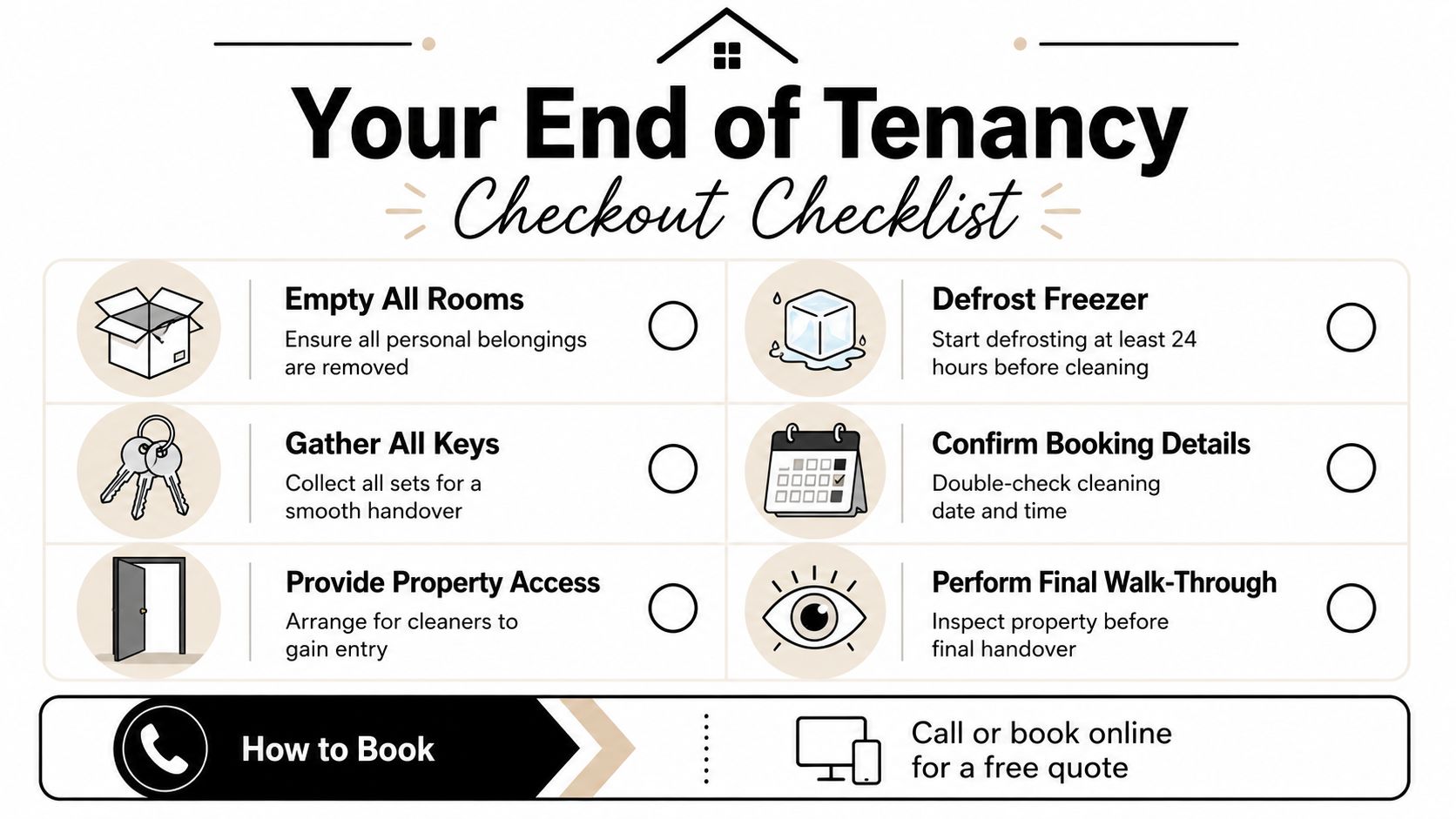
What to do before the cleaners arrive
Use this checklist before the appointment:
- Empty every room: remove bags, boxes, food, and anything stored in cupboards.
- Clear the fridge and start defrosting: do it early enough that water and ice don't disrupt the clean.
- Take out rubbish: bin bags left in kitchens, yards, or hallways can affect the final result.
- Leave utilities on: cleaners need running water, power, and lighting to finish properly.
- Check access arrangements: keys, alarm codes, parking, and entry instructions need to be confirmed in advance.
- Photograph the property after you've emptied it: clear photos help if the inventory report is disputed later.
Booking the clean without delays
The booking process should be simple. Request a quote, confirm the scope, then schedule the clean for the point when the property is fully empty but before key handover.
For tenants and landlords who need specialist equipment, it helps to ask what the team uses. Professional setups often include Sebo vacuums for reliable dry soil removal and hot water extraction machines for carpet cleaning. If there's leftover waste or unwanted furniture, it also matters whether the company is properly licensed to remove rubbish.
One option in the area is Atticus Cleaning Services, which handles end of tenancy work across Manchester and North Cheshire, includes internal window cleaning as standard, and offers optional discounted carpet cleaning when booked with the main move-out clean.
Common End of Tenancy Cleaning Questions
A common Altrincham checkout problem looks like this. The flat seems clean, the keys are handed over, then the inventory report flags pet hair on the stairs, grease in the oven, or marks on the inside of the windows. That is where deposit deductions start. The issue is rarely the whole property. It is usually a few missed items, or a mismatch between what was quoted and what was cleaned.
UK tenancy guidance is clear that deposit deductions must reflect cleaning needed beyond fair wear and tear. For tenants, the strongest position is a clear quote, a written scope, dated photos, and a receipt that matches the work ordered. For landlords, the same paperwork makes disputes shorter and easier to resolve.
What if the inventory clerk still raises an issue
Ask for the issue in writing.
Then compare it against the check-in report, your move-out photos, and the cleaning invoice. If the item sits inside the agreed scope, such as an oven clean, bathroom descaling, or internal window cleaning, a return visit may be reasonable. If the report mixes wear and tear with dirt, respond with evidence and keep the language factual.
Do I need to stay at the property during the clean
Usually, no. The better approach is to leave clear access, keep water and electricity on, and return for a final check if timing allows.
Where jobs go wrong, it is often due to access problems rather than cleaning standards. Locked rooms, no parking, no hot water, or a freezer that has not been defrosted can slow the team down and leave parts unfinished.
Can rubbish removal and carpet cleaning be arranged together
Yes, but they should be priced separately at quote stage. That is where cost transparency matters.
In Altrincham, the final price often changes for specific reasons. Carpet cleaning adds time, equipment, and drying considerations. Pet hair can turn a standard vacuum job into detailed edge work across skirting boards, stairs, and upholstery. Internal windows are usually straightforward unless there are heavy marks, stickers, or limited access. Rubbish removal changes matters again because it affects labour, vehicle space, and disposal rules.
If a quote looks low, check what has been excluded. A cheap basic clean that leaves carpets, pet odour treatment, or rubbish untouched can cost more once deductions are made.
How long does an end of tenancy clean take
Time depends on condition and scope, not just bedroom count.
A well-kept one-bed flat may be completed far faster than a tidy-looking three-bed house with scaled bathrooms, heavy kitchen grease, and carpets that need hot water extraction. The practical way to estimate is room by room, with the add-ons listed in writing before the booking is confirmed.
If you are booking Atticus Cleaning Services for a move-out, ask for the scope line by line. Confirm whether carpets, internal windows, oven cleaning, pet hair removal, and rubbish clearance are included, and make sure the paperwork matches the checkout standard your landlord or agent will inspect against.