
End of Tenancy Cleaning Altrincham: Get Your Full Deposit
June 15, 2026
End of Tenancy Cleaning Trafford: Secure Your Full Deposit
June 22, 2026
If you're managing an office in Hale, you probably know the pattern. The reception looks fine at a glance, but fingerprints build up on the glass, the kitchen starts to feel tired by midweek, and someone mentions the washrooms before a client visit. The bigger frustration isn't usually dirt alone. It's inconsistency, missed tasks, and having to think about cleaning when you've already got enough on your desk.
A reliable office cleaning service should take work off your plate, not add another layer of checking and chasing. Good office cleaning in Hale protects the way your workplace feels, how your team functions, and the impression your business gives the moment someone walks through the door. It also needs to fit how offices operate today, especially where attendance changes across the week.
Table of Contents
- A Clean Office is More Than Just Tidy
- Our Hale Office Cleaning Services Explained
- Bespoke Cleaning Schedules for the Modern Hale Office
- Our Commitment to Unbeatable Standards and Trust
- Transparent Pricing and Introductory Offers
- Getting Started with Your Hale Office Clean
A Clean Office is More Than Just Tidy
For most office managers, the problem starts small. A bin wasn't emptied. Meeting room tables were wiped but not properly finished. Dust sits along skirting boards and monitor stands where nobody notices it until they suddenly do. Then a visitor arrives, or the team starts asking whether the cleaners came in.

That kind of inconsistency creates more than irritation. It affects trust in your suppliers, confidence in your workspace, and the amount of time you spend managing complaints that shouldn't exist in the first place. A clean office supports morale because people notice when shared spaces are looked after. It supports brand image because clients read the room quickly. It supports productivity because staff can get on with their work instead of working around mess, smells, or neglected facilities.
I've seen that the offices that feel calm and well-run usually aren't the ones with the flashiest fit-out. They're the ones where standards are steady. Reception stays presentable. Kitchens are reset properly. Washrooms don't drift downhill between visits. That's what office cleaning in Hale should really deliver.
A dependable cleaning partner also helps you deal with the less visible side of workplace standards. If you're already thinking about how cleanliness affects staff wellbeing and how visitors judge your business, this guide on dirty offices, employee wellbeing, and business reputation is worth a look.
A tidy-looking office can still be poorly maintained. Office managers usually need reliability more than a surface-level shine.
Our Hale Office Cleaning Services Explained
Office cleaning works best when it's organised by zone, not treated as one generic job. Different spaces create different problems, and each one needs a slightly different standard.
What gets cleaned and why it matters
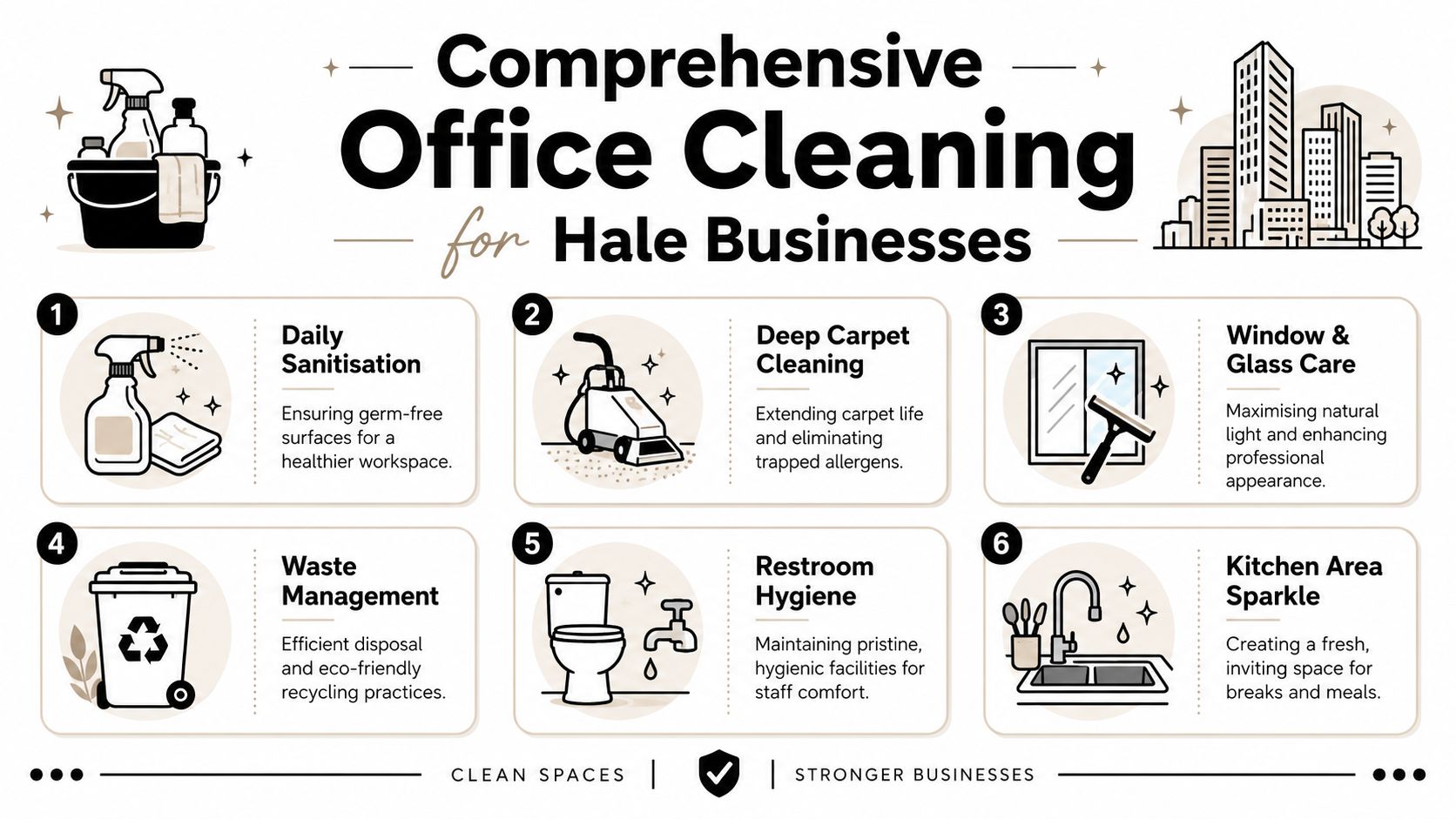
Reception areas set the tone first. Floors, entrance glass, desks, seating areas, and touchpoints need regular attention due to the frequent overlap of staff, clients, and deliveries. If this space feels neglected, the rest of the office usually does too.
Workstations need a practical approach. That means vacuuming with professional machines such as Sebo vacuums, removing dust from accessible surfaces, wiping shared desks, and paying close attention to touchpoints like door handles and switches. The point isn't just appearance. High-contact surfaces and heavily used areas need cleaner, more consistent intervention than quiet corners do.
Communal spaces often cause the most complaints, especially kitchens and break areas. These zones need proper wiping and sanitisation of counters, sinks, cupboard fronts, tables, and appliance exteriors, plus sensible waste handling. A kitchen that looks clean but smells stale hasn't been cleaned properly.
The equipment and methods behind the result
Washrooms need methodical work every visit. Toilets, sinks, taps, dispensers, mirrors, floors, and contact points all matter. People judge workplace standards hard in washrooms, and once standards slip there, staff confidence drops quickly.
Meeting rooms deserve more attention than many schedules give them. These rooms carry a lot of visibility. A polished table, clean chairs, smudge-free glass, and an empty bin make the room usable at short notice and avoid that last-minute scramble before a client arrives.
Indoor air quality matters too. UK health guidance emphasises that poor indoor environments can worsen respiratory symptoms like asthma, and cleaning methods that use HEPA or vacuum filtration and microfiber systems are important not just for appearance but for reducing airborne irritants and improving indoor air quality, as noted in this guidance on indoor environments, asthma, and cleaning methods.
A sensible service mix often includes:
- Routine vacuuming and dust control so dust is removed rather than pushed around.
- Glass and internal window cleaning to improve light and keep front-facing areas sharp.
- Carpet and upholstery care where buildup affects appearance and freshness.
- Waste removal and recycling support so bins don't become a daily visual problem.
- Targeted sanitisation of shared touchpoints for the places everyone uses and nobody owns.
For Hale businesses comparing providers, Atticus Cleaning Services offers office cleaning alongside carpet and upholstery care, using Sebo professional vacuums and hot water extraction equipment. What's relevant for an office manager is the combination of regular maintenance and specialist support when heavier cleaning is needed.
Bespoke Cleaning Schedules for the Modern Hale Office
Many offices don't need the same level of cleaning every day across every room. That's one of the biggest changes in commercial cleaning. Hybrid working has shifted how space gets used, so the old model of cleaning every area on a fixed pattern often misses the point.
Why fixed schedules often waste money
As many UK employees continue to split time between home and the workplace, office usage patterns have changed. Dirt loads and contamination in washrooms, kitchens, and high-touch areas can vary sharply by day. Matching cleaning frequency to real usage is a smarter approach than uniformly cleaning every space every day, as discussed in this article on overlooked office cleaning areas and usage patterns.
That matters in Hale offices where one day might bring a full leadership meeting, client appointments, and a busy kitchen, while another day leaves half the desks untouched. If you're paying for the same clean regardless of occupancy, you may be over-cleaning quiet zones and under-supporting the spaces that experience heavy use.
Practical rule: Clean for actual use, not for habit.
How a usage based plan works
A better schedule usually starts with a site visit and a straightforward conversation. Which days are busiest. Which rooms are front-facing. Where do complaints happen first. Which areas can flex, and which ones must always be at presentation standard.
From there, the cleaning plan can be built around real patterns such as:
- Front-of-house always maintained because visitors and staff see it every day.
- Kitchens and washrooms prioritised on peak attendance days when they take the heaviest use.
- Meeting rooms reset around booking patterns rather than left to chance.
- Low-use zones cleaned less often but still checked so standards don't drift.
That approach usually gives office managers more control, not less. You're not locked into a rigid daily template that no longer reflects how your workplace runs. You're buying the right level of cleaning in the right places at the right times.
If you're weighing up frequency options, this guide on daily vs weekly office cleaning can help you decide what fits your office best.
Our Commitment to Unbeatable Standards and Trust
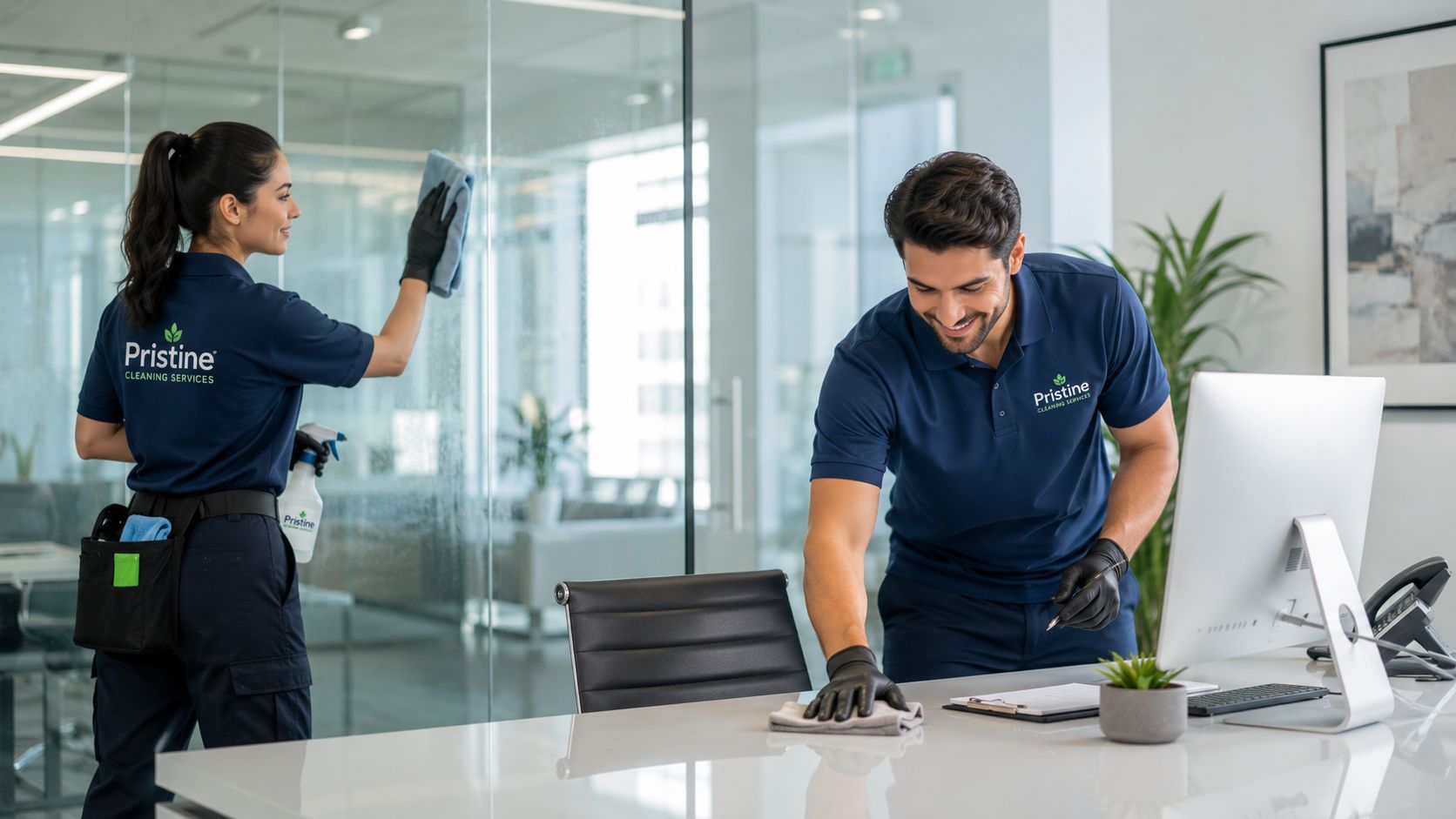
When office managers say they want high standards, they usually mean something very specific. They want cleaners to arrive when expected, follow the brief properly, and leave the office consistently ready for the next day. Trust comes from process, not promises.
What consistency looks like in practice
A key factor in professional cleaning is the verification loop. Using detailed task schedules, zone-based frequency planning, and completion audits helps reduce missed work and makes sure high-traffic and high-touch areas receive the attention they need, improving accountability and service quality according to this guide on cleaning standards for office buildings.
That sounds technical, but the practical value is simple. There should be a clear specification for what gets cleaned, how often, and how completion is checked. Without that, office cleaning becomes vague. Vague cleaning is where tasks get skipped, standards drift, and the office manager ends up doing the quality control.
Reliable providers also make staffing standards clear. Cleaners should be trained, vetted, and supported properly. If the team is rushed, under-briefed, or constantly changing, quality drops fast.
What office managers usually want to know
Most trust questions come down to a short list:
| Question | What a good answer looks like |
|---|---|
| Who is attending the site | A trained, vetted team with clear responsibility |
| How do you avoid missed tasks | Written schedules, checklists, and audits |
| What happens if something isn't right | Fast reporting and a clear route to resolve it |
| Are you covered properly | Licensed and insured operations |
Cleaners don't create confidence by saying they're thorough. They create it by leaving a trail of accountability.
Trade membership can help too, especially if you're checking whether a company takes standards seriously. You can review Atticus joining the Federation of Master Cleaners as part of your due diligence when comparing options.
Transparent Pricing and Introductory Offers
Price matters, but most office managers are not solely after the cheapest quote. They want to know what they're paying for, what affects the cost, and whether the service will stay manageable over time.
What your quote is based on
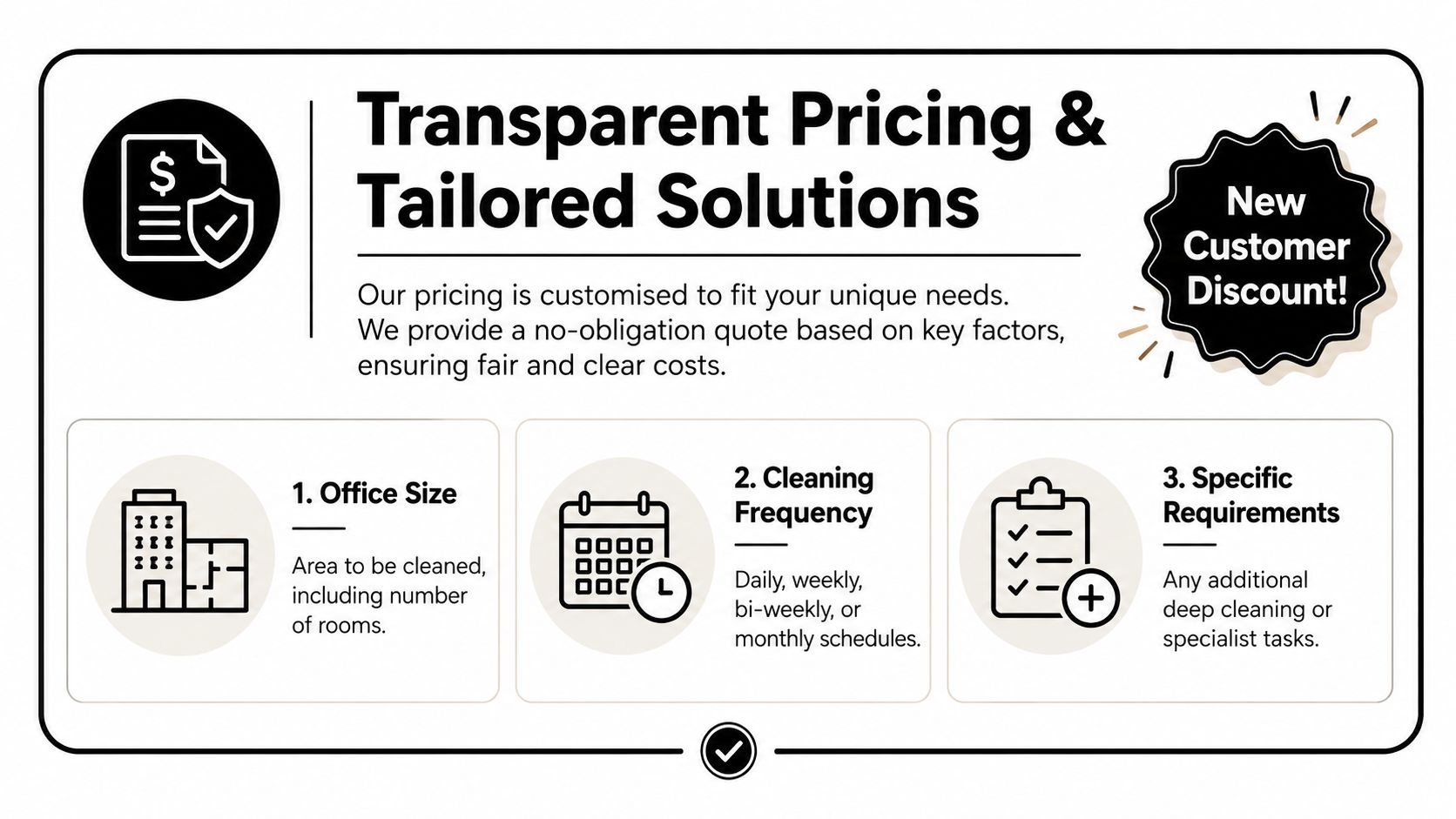
A proper office cleaning quote should be bespoke. It normally depends on the size of the office, how often cleaning is needed, and whether there are specific requirements such as carpet work, internal glass, washroom focus, or heavier kitchen maintenance.
The right process is simple:
- You request a no-obligation quote and explain the basics.
- The site and scope are reviewed so the work matches the building.
- You receive a clear price based on the agreed schedule and requirements.
What matters here is transparency. No hidden extras for routine expectations. No vague wording that leaves room for corners to be cut. If something sits outside the agreed scope, that should be stated plainly before work starts.
Contract cleaning compared with one off work
A one-off deep clean can reset an office that has slipped. Ongoing contract cleaning keeps it from slipping back. For most working offices, regular service is what protects presentation, staff comfort, and day-to-day usability.
For businesses in Hale that want to test a regular service before committing fully, there's a practical trial route. New contract clients can save up to 50% on the first three months. That gives office managers a chance to assess reliability, communication, and finish quality under normal working conditions, not just after a single visit.
Getting Started with Your Hale Office Clean
Busy office managers don't need a drawn-out sales process. Starting should be quick, clear, and easy to hand over.
A simple three step process
The process usually works best in three steps:
- Request your free quote with a few details about your office, location, and preferred cleaning frequency.
- Review your bespoke plan and price so you can see exactly what's included.
- Schedule your first clean on the days and times that fit your team and building access.
That structure works because it removes ambiguity. You know what you're buying, when it will happen, and what standard is expected.
What happens after you enquire
After the initial enquiry, the useful part is the conversation about how your office runs. A good provider will want to know when footfall is highest, which spaces matter most, and whether your current arrangement has any weak points. That's where better schedules and better results usually start.
If you're comparing office cleaning in Hale, ask direct questions. Who checks quality. How issues are logged. Whether the plan can flex with hybrid attendance. Whether specialist carpet or upholstery cleaning is available when needed. Clear answers save a lot of headaches later.
For most offices, the goal isn't just a cleaner building. It's a workplace that feels looked after, supports staff wellbeing, and reflects well on the business without requiring constant oversight from you.
If you're ready to make office cleaning in Hale simpler to manage, Atticus Cleaning Services offers bespoke commercial cleaning across Manchester and North Cheshire with flexible scheduling, clear quotes, and a straightforward start. Request a quote, review the plan, and book the first clean when it suits your office.