
Expert Office Cleaning Hale: Pristine Workspaces 2026
June 17, 2026
Office Cleaning Sale 2026: Compare & Save in Manchester
June 24, 2026
The last few days of a move in Trafford are rarely tidy. You've got boxes stacked in the hallway, cupboards that looked empty until you opened them, and a check-out date that suddenly feels very close. In Altrincham, Sale, Hale and the surrounding areas, the final clean is often the job people leave too late, then regret rushing.
Most tenants don't lose sleep over whether they can wipe a worktop. They worry about the deposit. They want to know what a landlord or letting agent will accept, what gets flagged at check-out, and whether paying for end of tenancy cleaning in Trafford is worth it.
That's the point most articles miss. A generic checklist helps, but it doesn't answer the fundamental question. What counts as clean enough to avoid a dispute? The answer isn't “spotless” in a vague marketing sense. It's whether the property can stand up against the move-in inventory, the photos, and the check-out inspection.

A quick tidy usually doesn't get you there. The missed areas are nearly always the same. Grease above the hob, limescale around taps, crumbs in drawers, dust on skirting boards, marks on internal glass, and carpets that look acceptable until daylight hits them. As this Trafford-focused guide on deposit protection and inventory standards explains, the key isn't cosmetic cleaning alone. It's meeting the check-in inventory standard with evidence in mind.
Table of Contents
- Your Guide to a Stress-Free Move in Trafford
- Meeting Landlord and Letting Agent Standards
- The Ultimate End of Tenancy Cleaning Checklist
- End of Tenancy Cleaning Costs in Trafford
- How to Prepare Your Property for a Professional Clean
- Booking Your Clean with Atticus Cleaning Services
- Trafford End of Tenancy Cleaning FAQs
Your Guide to a Stress-Free Move in Trafford
Moving out tends to turn sensible people into gamblers. They tell themselves the oven “isn't that bad”, the shower screen “will probably pass”, and the inside of the fridge “just needs a quick wipe”. Then the check-out report comes back with a list of avoidable issues.
The smoother approach is to treat the clean as part of the handover, not as an afterthought. If the property was well presented when you moved in, it needs to be returned to the same general standard, allowing for normal use. That means cleaning for inspection, not cleaning for appearances.
What tenants usually get wrong
Initial cleaning often targets visible surfaces. This involves vacuuming the middle of the carpet, wiping kitchen sides, and emptying bins. Those jobs matter, but they're rarely the reason a clean passes. Inspectors look at the edges and the hidden areas because those tell them whether the whole property has been properly done.
Common problem spots include:
- Appliance interiors that still hold grease, crumbs or food residue
- Bathroom fittings with limescale around the base or on chrome
- Cupboards and drawers that have been emptied but not washed inside
- Skirting boards and door tops carrying settled dust
- Internal windows and sills with marks, dead insects or residue
- Carpets that hold odour, pet hair or staining even after vacuuming
A clean that protects a deposit is usually less about effort and more about detail.
What actually reduces stress
The tenants who have the easiest handovers usually do three things well. First, they check their move-in inventory before the final week. Second, they clear the property fully so every surface can be reached. Third, they judge the clean by check-out standards, not by whether the place “looks fine”.
That's especially important in Trafford where many handovers move quickly between tenancies. Landlords want the property ready to remarket or re-let without delays, and agents want clear evidence if they're assessing condition. If you line your clean up with that reality, the whole process becomes far more manageable.
Meeting Landlord and Letting Agent Standards
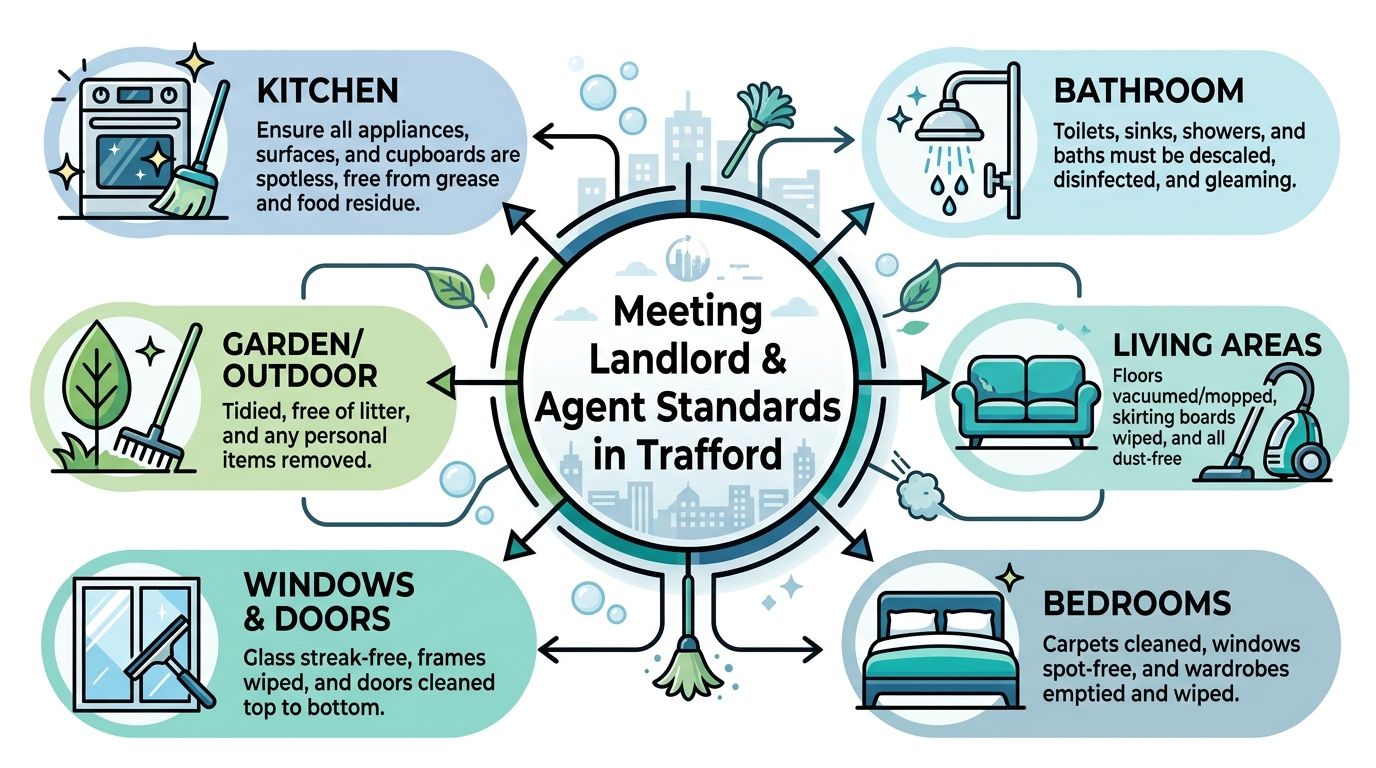
The standard in Trafford is simpler than many tenants think, but it's also stricter than a casual clean. You don't have to return a property in better condition than it was at move-in. You do have to return it to the cleanliness level shown by the inventory and check-in evidence, except for fair wear and tear.
What the law actually requires
Under the Tenant Fees Act 2019, landlords in Trafford can't require tenants to pay for professional end of tenancy cleaning as a contract condition. They can only deduct cleaning costs from the deposit if they can show, with evidence such as inventories and photos, that the property was returned below the move-in standard, excluding fair wear and tear.
That point matters because many tenants still think they must book a named contractor to stay safe. They don't. They're responsible for the result, not for using a particular company. If you want a practical benchmark of the room-by-room outcome agents expect, this guide to what landlords expect from end of tenancy cleaning is useful.
Fair wear and tear versus chargeable cleaning issues
Disputes often revolve around these aspects. Fair wear and tear covers normal deterioration from ordinary living. Cleaning deductions relate to dirt, neglect, or residue that shouldn't be there at handover.
A simple comparison helps:
| Condition | Usually fair wear and tear | Usually a cleaning issue |
|---|---|---|
| Carpet | Light ageing or general flattening | Heavy soiling, visible debris, fresh staining, pet hair |
| Curtains | Mild fading from daylight | Dust build-up, marks, odour from smoke or cooking |
| Bathroom | Minor ageing of sealant | Limescale, soap scum, hair, mould caused by lack of cleaning |
| Kitchen | General use marks to worktops | Grease on units, dirty oven, food residue in cupboards |
The key is evidence. If a carpet has ordinary age-related marks but no unusual soiling, charging for a more intensive treatment wouldn't usually stand up without proof that the condition goes beyond normal use.
Practical rule: Clean for comparison. If the inventory says “clean”, “good condition”, or “professionally cleaned”, your handover needs to match what those words were backed up by in the original photos.
What landlords and agents actually notice
In real check-outs, the same standards come up again and again:
- Kitchen detail: grease removal from ovens, hobs, extractor areas, cupboard fronts and splashbacks
- Bathroom finish: descaled taps, showerheads, screens, tiles and sanitaryware
- Full-surface cleaning: not just visible floor space, but edges, corners, skirtings and high dusting
- Glass and frames: internal windows, sills and ledges cleaned properly
- Property reset: cobwebs removed, personal items gone, and every room ready for inspection
This is why a quick cosmetic clean often fails. It improves first impressions, but it doesn't answer the inventory.
The Ultimate End of Tenancy Cleaning Checklist
A proper checklist should match how a check-out is done. Start with the rooms most likely to trigger comments, then work from top to bottom so you're not re-soiling cleaned areas later.
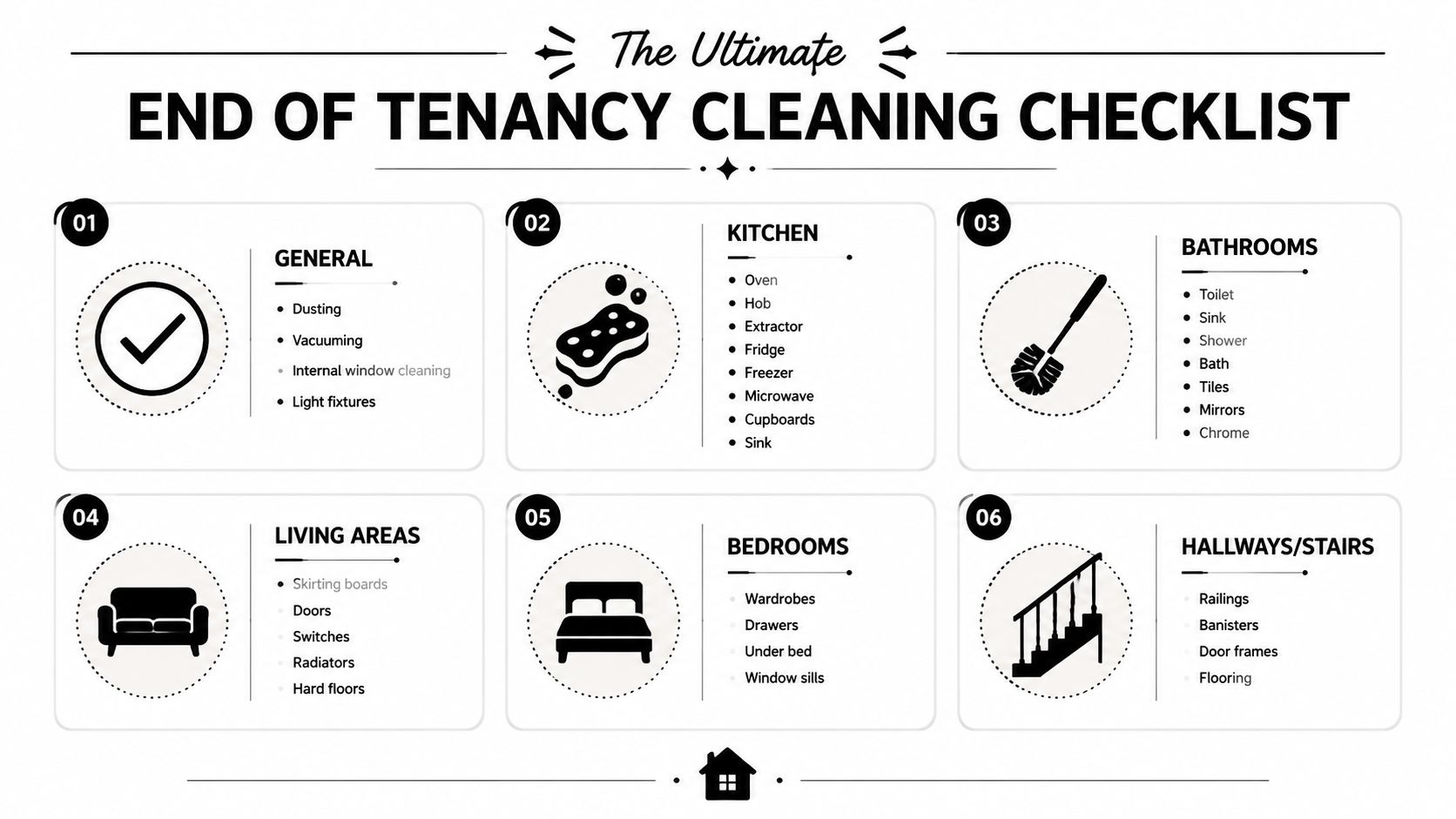
For a visual walk-through of what a thorough service covers, this breakdown of what end of tenancy cleaning involves is a useful companion.
Kitchen
The kitchen usually decides whether a clean feels serious or rushed. Grease spreads further than people realise, and agents check inside appliances because that's where poor handovers show up fastest.
- Oven and grill: remove baked-on grease, carbon residue, crumbs, and marks on trays, racks and interior glass.
- Hob and control knobs: clean around burner caps, ignition points and the edges where grease hardens.
- Extractor and splashback: degrease the fan cover, underside, filters if accessible, and the wall area around cooking zones.
- Cupboards and drawers: wipe inside and out, including handles, corners and shelf edges.
- Fridge and freezer: clean seals, shelves, drawers and door compartments once emptied and defrosted.
- Sink and taps: descale, disinfect and polish. Don't leave food residue in strainers.
- Small appliances left in the property: clean kettles, toasters and microwaves thoroughly if they're part of the tenancy.
- Floor edges: vacuum and mop right into corners, especially around appliances.
Bathrooms
Bathrooms fail checks for one reason more than any other. Limescale. A bathroom can smell fresh and still be marked down if the chrome, shower area or toilet base hasn't been properly detailed.
- Shower and bath: remove soap scum, residue, hair and limescale from panels, trays, tiles and fittings.
- Taps and showerheads: descale the base, undersides and nozzles.
- Toilet: clean the pan, seat hinges, base, cistern and the floor around it.
- Sink and vanity unit: wash the basin, plughole, taps, overflow and cupboard fronts.
- Mirrors and glass: leave them smear-free under natural light, not just bathroom light.
- Grout and sealant: remove surface grime and check for neglected build-up.
- Extractor covers and vents: wipe away dust where accessible.
A quick reference video can help when you're planning the order of work:
Living Areas and Bedrooms
These rooms often look easier than they are. They don't hold oven grease or bathroom scale, but they collect dust in all the places a check-out clerk notices.
- Carpets: vacuum thoroughly, including edges, under radiators and inside wardrobes. Treat stains where appropriate.
- Hard floors: sweep, wash and dry properly. Don't leave residue along skirtings.
- Skirting boards: wipe all the way through the room, not just the visible sections.
- Internal glass: clean windows, frames, ledges and sills.
- Wardrobes and drawers: empty fully and wipe inside.
- Doors and handles: remove finger marks, dust and grime from edges and tops.
- Switches and sockets: wipe carefully to remove visible marks.
- Radiators: dust the tops, fronts and reachable sides.
- Under furniture areas: if any landlord-owned furniture remains, clean beneath and behind it where accessible.
General and Throughout
The jobs that pull everything together are the ones people leave until they're exhausted. That's exactly why they get missed.
- High dusting: remove cobwebs from walls and ceilings.
- Light fittings: wipe exterior surfaces where safe to access.
- Hallways and stairs: clean banisters, rails, corners and traffic-marked areas.
- Bins: empty and wipe inside if they remain in the property.
- Final check: open every cupboard, look behind every door, and inspect at window light rather than artificial light.
If you're doing the clean yourself, take your own handover photos after finishing. Clear, dated images won't replace the inventory, but they can help if the condition is later questioned.
End of Tenancy Cleaning Costs in Trafford
A low quote can look attractive on moving week. Then the check-out report comes back with comments on the oven, bathroom scale, or carpet marks, and the cheap price stops looking cheap.
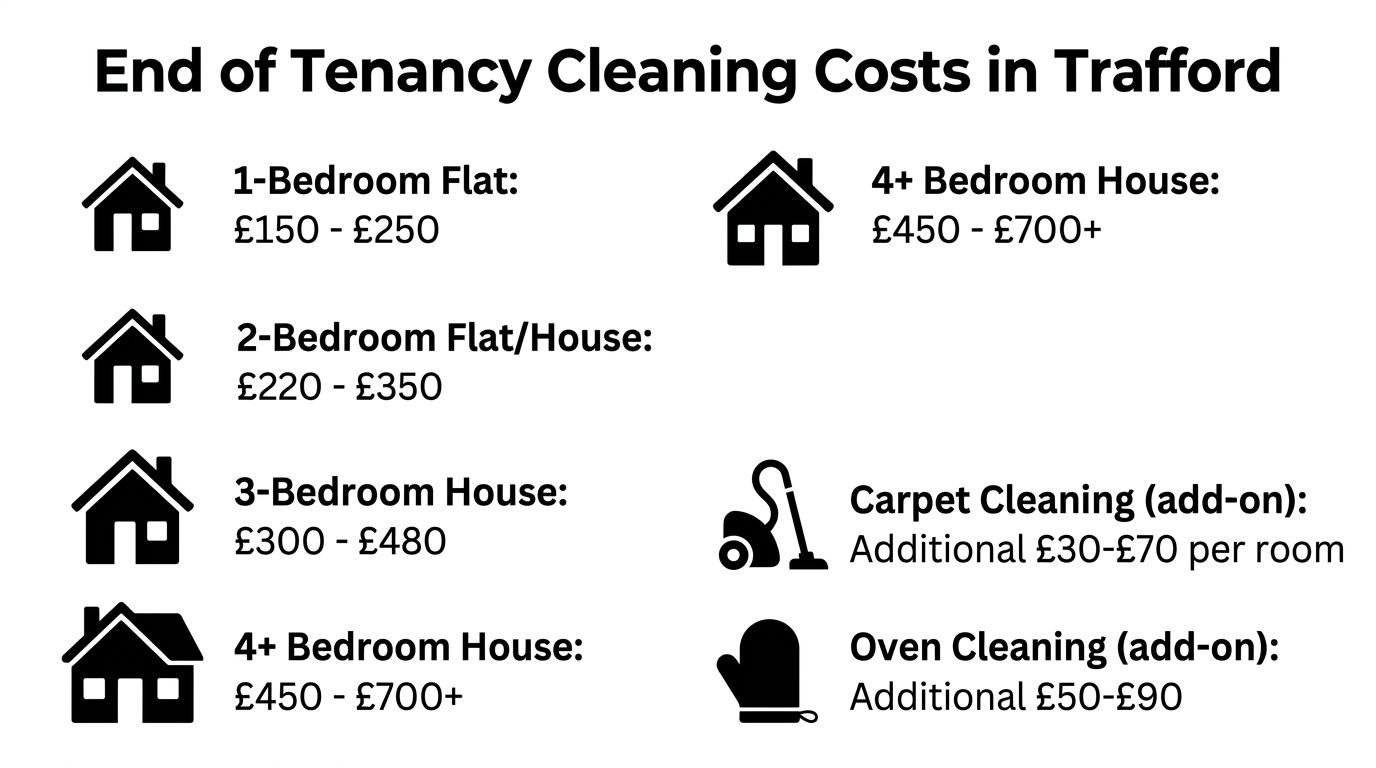
For end of tenancy cleaning in Trafford, cost usually comes down to three things. Property size, current condition, and whether carpets or appliance work are included. What landlords and letting agents care about is whether the finish matches the inventory standard. That is what decides whether a price is fair.
What realistic pricing looks like
Nationally, end-of-tenancy cleaning is typically priced at £180 to £415+, with an average of £260 for a two-bedroom property, and hourly rates are usually £20 to £25 nationwide and £22 to £27 in London according to Checkatrade's end-of-tenancy cleaning price guide. Trafford pricing is broadly comparable, with local jobs commonly falling between £100 and £400 depending on size and condition.
That range is normal. A one-bed flat that has been kept in decent order and emptied properly can be turned around much faster than a larger rental with built-up grease, bathroom residue, and neglected floors. Good quoting should reflect labour, time on site, and the likelihood of re-cleans if an agent rejects part of the job.
Hourly rates can be misleading here.
Many end of tenancy cleans are priced as a job because the standard is the issue, not just the time spent. Landlords are not paying for cleaners to be present. They are judging whether cupboards, extractor fans, tile lines, taps, internal glass, and floor edges meet handover condition.
Add-ons that change the final bill
Carpet cleaning is the extra that changes the total most often. In Trafford, carpet cleaning is commonly priced at around £40 to £80 per room when booked separately. If there is pet hair, staining, or dark traffic lanes, general cleaning alone will not be enough to satisfy a careful inventory clerk.
Oven cleaning has a similar effect on price and on outcome. Agents inspect ovens closely because grease, carbon and baked-on food are obvious. If the door glass, shelves and interior panels are still dirty, it raises doubts about the rest of the property too.
If you are comparing packages, this guide on how much carpet cleaning costs is useful for working out whether a bundled service is better value than booking it separately.
Cost versus deposit risk
The best way to judge value is to compare the quote against the standard you need to meet. A slightly higher price can make sense if it includes the areas that regularly trigger deductions in Trafford properties, especially kitchens, bathrooms, appliances and carpets.
I have seen tenants save money on paper, then lose time arguing over avoidable cleaning points after check-out. A properly scoped clean usually costs less than a rushed return visit, a deduction dispute, or both.
The sensible question is not “what is the cheapest clean?” It is “what level of work gives me the best chance of passing first time?”
How to Prepare Your Property for a Professional Clean
A cleaning team can only clean what they can reach. The best end of tenancy results usually come from straightforward prep done the day before, not from adding more cleaners on the day.
Clear access first
Remove personal belongings, food, toiletries, laundry, bedding and anything you're taking with you. If cupboards, wardrobes and drawers are still full, cleaners spend time moving items around rather than cleaning the interior properly.
Furniture is the same issue. If it isn't part of the tenancy and it's still in the property, it blocks edges, carpets and skirting boards. That often leaves half-cleaned rooms and avoidable comments at check-out.
Deal with the practical basics
Before the team arrives, make sure the property has:
- Running hot water so grease and bathroom residue can be broken down properly
- Electricity for lighting, vacuums and any extraction equipment
- Defrosted refrigeration if the fridge or freezer needs internal cleaning
- Keys or access arranged if you can't be there in person
- Parking guidance if access is awkward or restricted
If the freezer is still iced up or the power has already been disconnected, the clean slows down immediately. The result usually suffers too.
Leave the property empty, switched on, and ready to be worked through room by room. That alone makes a visible difference to the finish.
Gather your handover documents
Keep your move-in inventory, check-in photos and any agent instructions close to hand. If there was already wear when you moved in, you want that documented before the check-out starts. This doesn't replace cleaning. It ensures the inspection is judged against the right baseline.
If you've cleaned anything yourself before the appointment, a few dated photos can also help show the condition at handover.
Booking Your Clean with Atticus Cleaning Services
The usual booking call comes late in the move. Keys are due back, the van is booked, and the tenant wants one clear answer. Will the property pass inspection without a dispute over cleaning?
That depends less on the label attached to the service and more on how the job is scoped. In Trafford, landlords and letting agents rarely judge a clean by effort. They judge the finish against the inventory, the check-out standard, and the obvious problem spots that trigger deductions.
What matters when choosing a provider
Choose a company that understands handover cleaning, not just domestic cleaning. The standard is different. A weekly cleaner may leave a home tidy. An end of tenancy team needs to clear grease from extractor filters and ovens, remove limescale from taps and screens, clean inside cupboards and appliances, and deal properly with edges, frames, switches and other areas agents check closely.
Insurance matters too. So does the ability to handle related move-out issues without delays. Waste is the one that catches people out in Trafford more often than it should. If bags, broken furniture or leftover items are still on site and the cleaner cannot remove them lawfully, the whole handover can stall while another contractor is found.

Atticus Cleaning Services is one local option for this type of work. The service includes specialist end of tenancy cleaning, internal window cleaning as standard, licensed rubbish removal, and a discounted carpet cleaning rate when booked alongside a specialist end of tenancy clean, as noted earlier.
How to book without creating problems later
A good booking process is plain and specific.
- Request a quote with the property size, current condition, and any extras such as carpet cleaning or rubbish removal.
- Confirm the exact scope so there is no gap between what you expect and what the team is attending to do.
- Book as close to handover as practical so the property stays in inspection condition.
Give accurate detail at the start. Mention the oven condition, staining, pet hair, mould spots, heavy limescale, and whether the property has already been emptied. Those details affect time, staffing and equipment. They also affect whether the result matches the standard your landlord or agent will inspect against.
A clear inventory-led outcome is what works. Asking for a "deep clean" usually causes trouble because different companies define it differently, and landlords do not assess a property against vague wording. They assess what is clean, what has been missed, and whether the condition is consistent with the tenancy agreement and check-in record.
Trafford End of Tenancy Cleaning FAQs
Do I have to use a professional cleaner?
No. What matters is the condition at handover and whether it stands up against the check-in inventory, photos, and tenancy agreement.
Plenty of tenants in Trafford clean the property themselves and do a decent job. Where DIY usually falls short is on the areas agents inspect closely: oven interiors, extractor filters, shower screens, tile grout, skirting boards, inside cupboards, and limescale around taps and toilets. If those details are missed, the property can still fail on cleanliness even if it looks tidy at first glance.
How long does an end of tenancy clean take?
Time depends on size, condition, and access. An empty one-bed flat in good order may be straightforward. A family house with built-up grease, pet hair, stained carpets, or heavy bathroom scale takes much longer.
I always advise tenants to judge the job by condition, not by the clock. Cleaning to deposit standard is detail work. If the booking is squeezed into too small a window, the first thing lost is finishing work, and that is exactly what landlords and agents tend to notice.
Do I need to provide products or equipment?
Usually, no. A professional team should bring the products, cloths, vacuum, mop system, and any specialist items needed for kitchens, bathrooms, glass, and different floor types.
If you are doing it yourself, avoid using one general-purpose spray on every surface. Grease, limescale, soap residue, and hard floor finishes all need the right method. Using the wrong product can leave smears, damage surfaces, or fail to adequately remove the buildup an agent will record at check-out.
What if the landlord still isn't satisfied?
Ask for the complaint in writing and ask for specifics. A proper cleaning complaint should identify the missed area or remaining residue, not rely on vague wording such as "not cleaned professionally."
Then compare that complaint against your inventory, check-out photos, and any evidence of the property's condition when you moved in. If there is a genuine miss, it can often be corrected quickly. If the claim goes beyond the original standard, the decision should come back to documented condition, not opinion.
Is professional cleaning worth it for deposit protection?
In many cases, yes. Cleaning is one of the most common reasons deposits are reduced, as noted earlier, so many tenants treat a proper move-out clean as a cost-control decision rather than a luxury.
The trade-off is simple. Doing it yourself can save money if you have the time, the right products, and the patience to clean to inspection standard. Booking a professional service usually gives a more consistent result, especially where ovens, bathrooms, internal windows, and worn high-traffic areas need closer attention. For many Trafford tenants, that consistency is what lowers the risk of deductions.
A good result is not about making the property look presentable for half an hour. It is about returning it in a condition that matches the documented standard closely enough that the agent has little to challenge.
If you need a reliable move-out clean in Trafford, Atticus Cleaning Services can arrange a quote, confirm the scope, and schedule the work around your handover date so the property is ready for inspection.