
End of Tenancy Cleaning in Manchester: 2026 Guide
August 5, 2026
Contract Cleaning Services: A Complete Guide for 2026
August 12, 2026
British household carpets are often described as 5 times dirtier than the pavement outside the front door, and a vacuumed carpet can still hold about 1 kg of filth per square foot plus around 200,000 bacteria per square inch (UK-facing deep-cleaning science note). That's the right place to start, because how to deep clean carpets is not really a question about freshening a room. It's a question about removing what a standard vacuum leaves behind, protecting fibre life, and stopping embedded soil from becoming a long-term hygiene and appearance problem.
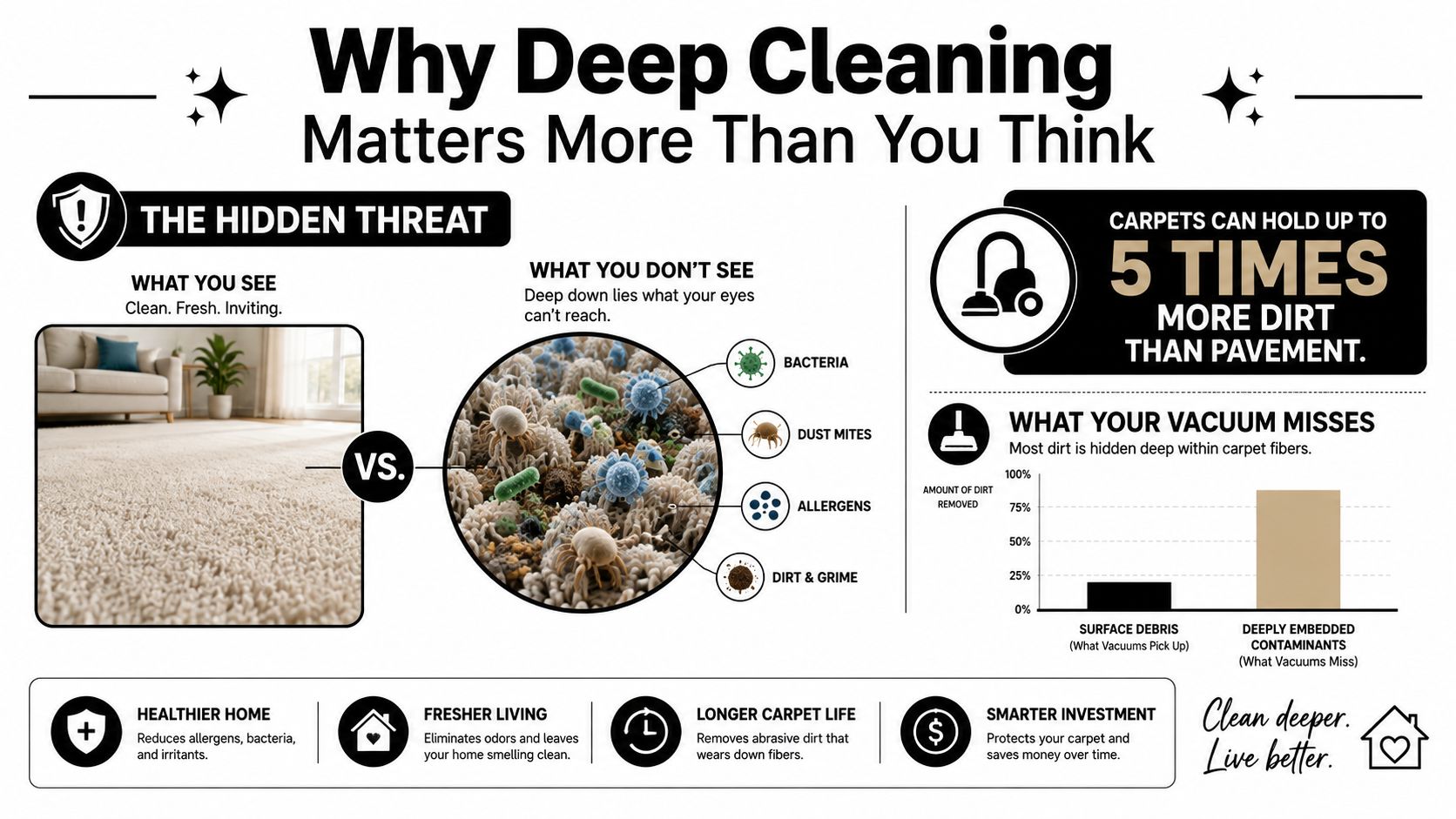
For homes, that hidden load sits under the pile and slowly dulls the carpet even when the surface looks fine. In offices, rentals, student houses and shared buildings, the problem compounds faster because the soil is concentrated in walk paths, entrances, kitchens and desk routes. Surface vacuuming lifts loose debris, but it doesn't reach the embedded residue that keeps attracting more dirt.
The other reason this topic matters is timing. A UK-facing industry source says 90% of carpets have never been deep cleaned and recommends deep cleaning every 3 months for typical household conditions (science behind deep cleaning carpets). That's a much shorter maintenance cycle than is typical, and it's why deep cleaning should be treated as routine care, not an emergency response after a visible spill.
Atticus Cleaning Services carpet care guide
Table of Contents
- Why Deep Cleaning Matters More Than You Think
- Preparing the Room and Pre-Treating Stains
- Running the Extraction Like a Professional
- Drying, Deodorising and Avoiding the DIY Trap
- DIY Versus Professional Carpet Cleaning
- How Often You Should Really Deep Clean
- Aftercare and When to Hand It Over
Why Deep Cleaning Matters More Than You Think
A carpet can look fine and still be holding a surprising amount of soil below the pile. A surface vacuum removes the loose stuff you can see, but the residue underneath is where odour, dullness and repeat soiling start. Fibre behaves like a filter, so it traps what passes through boots, air and everyday foot traffic. That is why a carpet can be described as 5 times dirtier than the pavement outside the front door, and why a clean-looking room can still need proper extraction (UK-facing deep-cleaning science note).
The numbers behind carpet contamination are useful because they shift attention away from visible crumbs and toward what sits deeper in the tufts. A vacuumed carpet can still hold about 200,000 bacteria per square inch, which is a reminder that appearance and hygiene are not the same thing (UK-facing deep-cleaning science note). That does not mean every carpet is a problem. It does mean a carpet can look respectable and still need a proper wash and rinse cycle.
A simple rule helps in the field. If the carpet only looks better after vacuuming, it is not clean yet. It is only less obvious.
That matters in homes, offices, rental properties, student houses and care settings across Manchester, where people walk the same routes day after day and press soil deeper into the pile. Once that embedded layer builds up, the carpet starts to hold grime, flatten in traffic lanes and lose the fresh feel that people expect after a basic tidy. In practice, that means the difference between a room that merely looks acceptable and one that actually feels clean underfoot.
There is also a timing problem that most guides gloss over. Deep cleaning is often treated like an occasional reset, then left too long. In real homes and tenancies, carpets are often left for a 2 to 3 year gap between proper cleans, not the ideal cycle people talk about. That gap gives soil time to settle, marks time to set, and odours time to linger in the backing and underlay.
The trade-off is straightforward. Leave a carpet too long, and the job gets harder, wetter and more likely to need stronger chemistry or more passes. Clean it before the build-up becomes heavy, and the result is easier to extract, quicker to dry and less likely to leave residue behind. For a fuller look at why extraction quality and dry times matter, see Atticus Cleaning Services' carpet cleaning guide.
Moisture is the other part people ignore. In cooler British conditions, a carpet that is left too wet can stay damp for too long, and dampness is where odour, wicking and hidden contamination become real problems. A decent deep clean is not just about getting dirt out, it is about getting the water and loosened soil back out as well. That is why the best results come from a controlled wash, strong extraction and enough airflow to dry the carpet properly.
Preparing the Room and Pre-Treating Stains
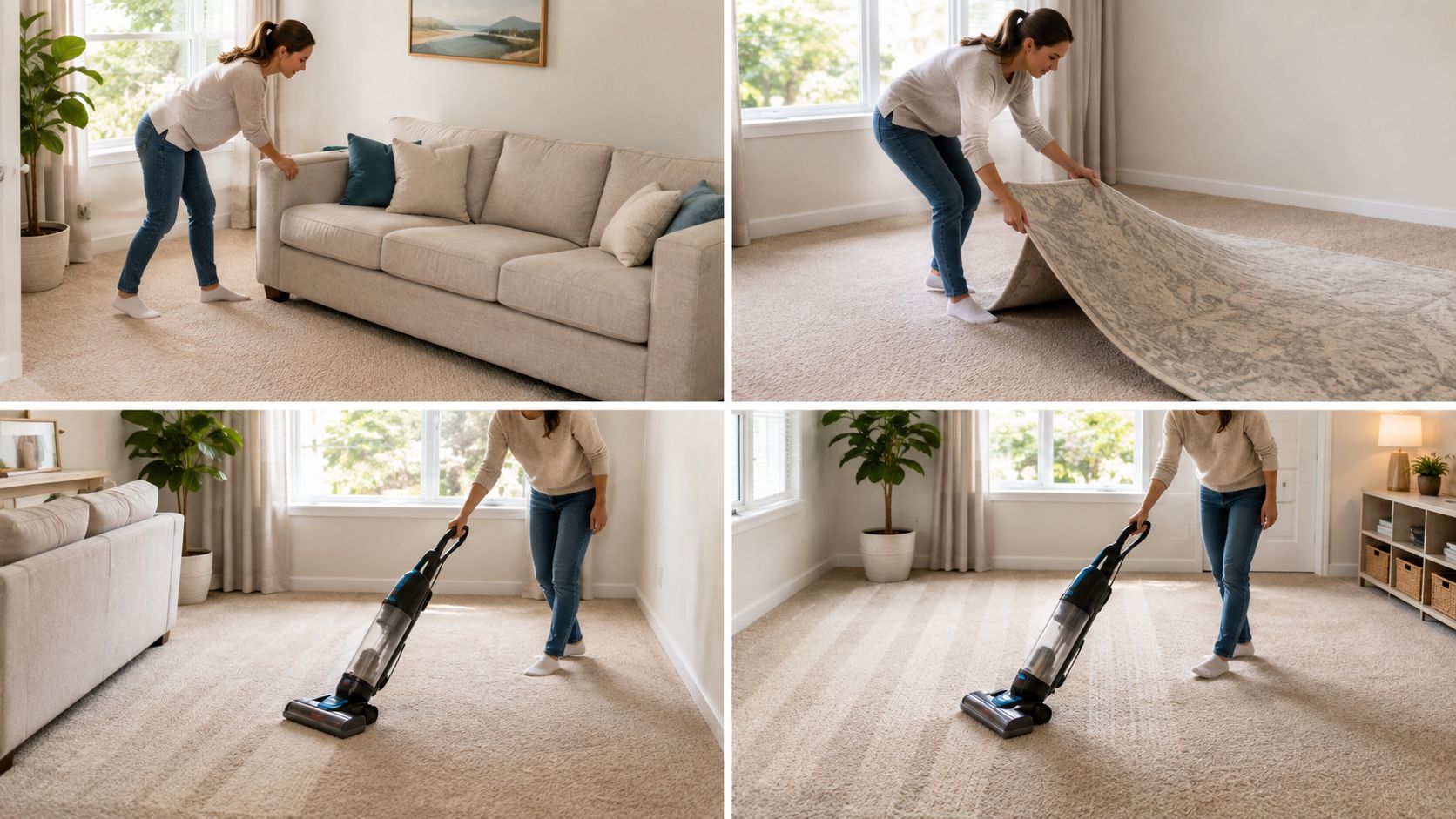
A proper result starts before any wet work begins. Move furniture that can be safely shifted, lift loose rugs, and clear the room so the full carpet can be cleaned in one consistent run. That gives you a clear view of the traffic lanes, the edges, and the spots that usually hide under chairs and tables.
Vacuum like you mean it
Run the vacuum in two perpendicular directions so the pile is lifted, not just brushed one way. That simple change helps the machine pull out more loose grit before water touches the fibres. It also exposes flattened patches, shiny wear, and old discolouration that can be missed on a quick pass.
Use the vacuum pass to identify the stain families you're dealing with. The common ones in UK homes and offices are protein stains like blood, food and pet accidents, tannin stains like coffee, tea and red wine, and oil or grease stains from makeup, cooking splashes or food residue. Each one behaves differently, so treating every mark the same is how time gets wasted and results get patchy.
Treat the stain before you flood the room
Blot, don't rub. Rubbing drives the stain deeper, damages the pile and spreads the edge of the mark outward. A controlled pre-treatment is far better than aggressive scrubbing, because carpet fibres respond to dwell time and rinsing, not friction.
For most spot treatments, give the product 10 to 15 minutes to work before wet extraction starts (UK technical deep-clean workflow). If an old stain has already been heat-set by a previous attempt, stop trying to force it out with more rubbing. A damaged mark may lighten with a targeted treatment, but heavy-handed rework usually distorts the fibres and leaves a larger patch than the original stain.
Stubborn marks need judgement. If they do not respond within the dwell window, they usually need a second pass, a different chemistry, or a proper extraction routine, not more pressure or more water.
The room should now be clear, the pile lifted and the stain map obvious. That gives the wet stage a fair chance of removing soil instead of pushing it deeper into the backing.
Running the Extraction Like a Professional
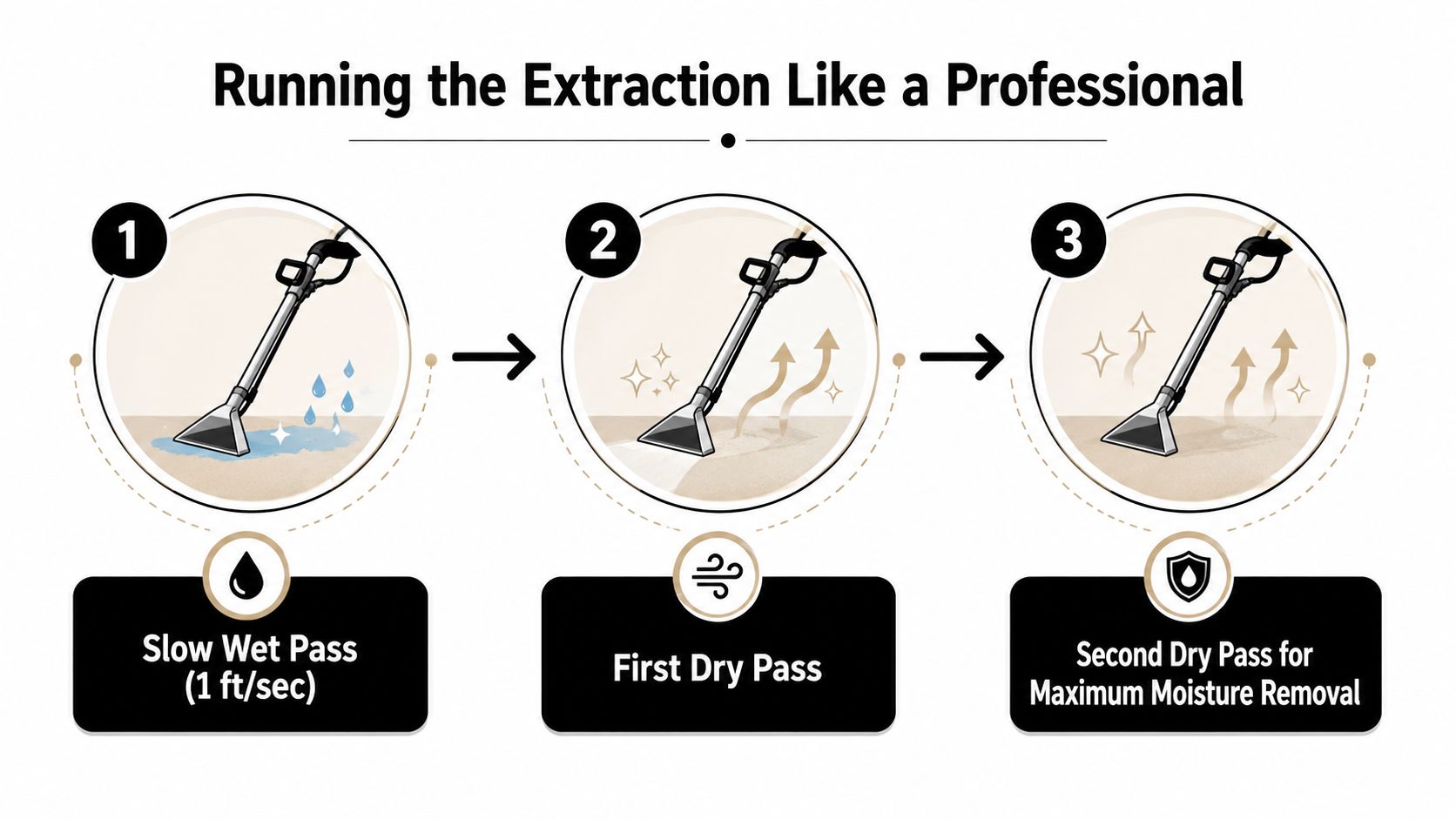
Hot-water extraction only works properly if the wand has time to pull soil from the pile, not just skim over the top. In practice, that means vacuum first, pre-treat spots, then make a slow wet pass at roughly 1 ft/sec, followed by two dry extraction passes over the same lane, with rows overlapped by 1 to 2 inches to keep striping to a minimum.
What the wand should be doing
The wand has to stay flat and under control. A proper extraction stroke lays down solution, gives the fibres a light agitation through the nozzle or head design, and removes that moisture again straight away. If the machine is only moving dirty water around, the carpet can end up looking wetter without being cleaner.
Water temperature matters, but only up to a point. Hot water helps loosen soil, yet overheating and over-wetting both cause trouble when drying conditions are poor. Foam level also needs watching, because excess foam often points to detergent residue, old shampoo or contamination still sitting in the carpet. That is the sort of detail that separates a tidy rinse from a job that still feels sticky underfoot.
The small details that separate good from amateur
The operator needs even rows and a consistent overlap. Uneven passes leave visible cleaning lines, especially on plain, pale or office-grade carpet tiles. Dry passes matter just as much as the wet one, because the second and third strokes pull moisture and loosened soil back out instead of leaving it behind in the backing.
A good vacuum still has a place in this stage. Better dry soil removal means the extraction kit spends less time fighting loose grit and more time lifting embedded residue. I have seen plenty of weak results come from trying to make one machine do every part of the job. The finish usually shows it.
If the tank is filling too fast, stop and empty it. If recovery drops, pause and check the wand, filters and lines. The machine only pulls properly when it is kept in working order between lanes, not after the whole room is already half-done.
Video demonstration for the extraction sequence:
Drying, Deodorising and Avoiding the DIY Trap
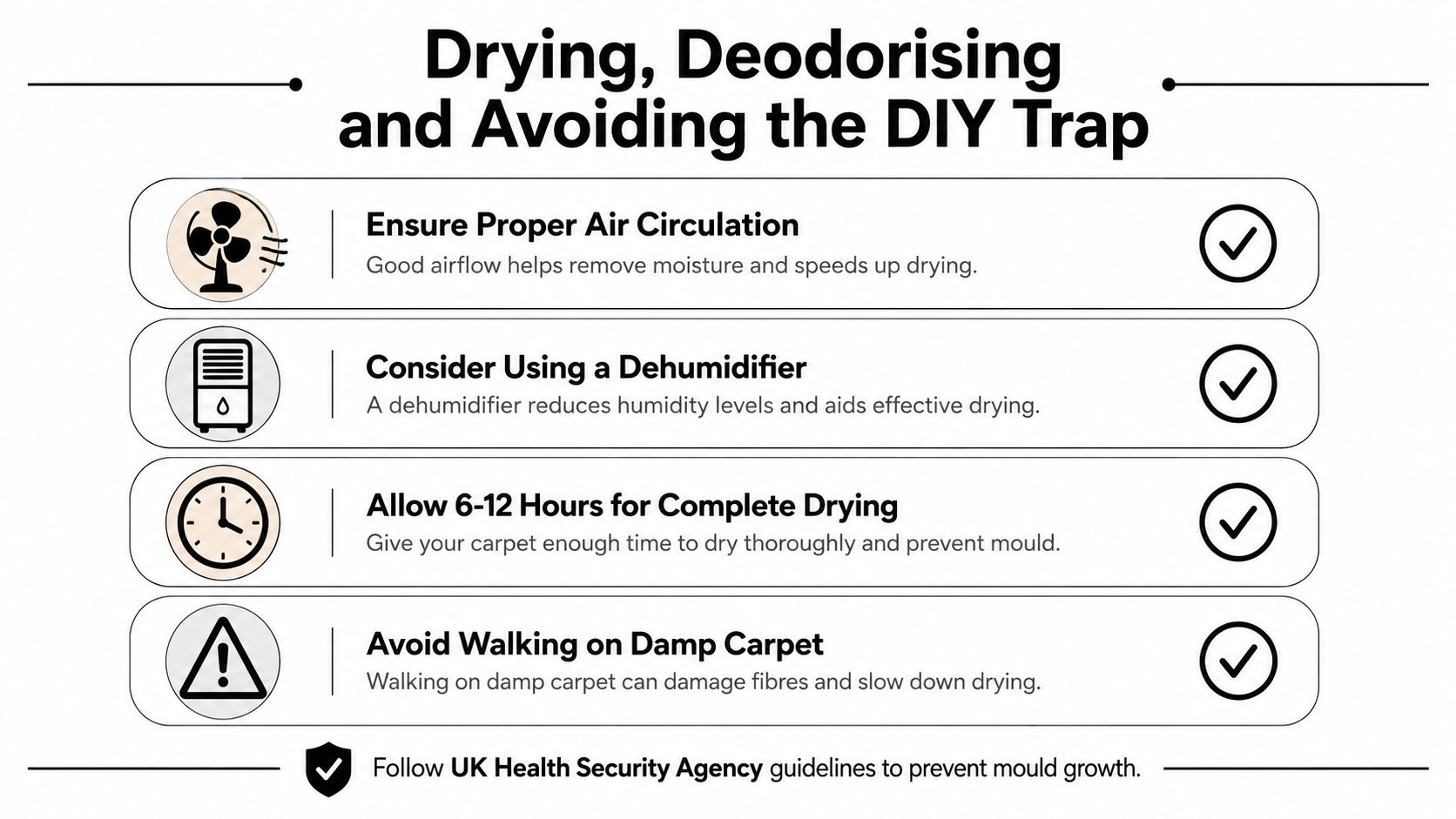
A carpet can look clean and still be wrong underfoot. If the pile feels damp at the backing or the underlay, the job is not finished, even when the surface has a fresh look. Under decent ventilation, a properly extracted carpet usually dries in 6 to 12 hours.
Why moisture control matters in the UK
That drying window gets longer in awkward rooms. North-facing rooms, underfloor voids and unheated bedrooms hold moisture for longer, especially in cooler British conditions. A damp carpet is not just slower to use again, it can also create the kind of conditions that lead to moisture-related problems, which is why over-wetting is never a harmless side effect of cleaning.
UK guidance on damp and mould keeps pointing to the same issue, excess moisture in buildings causes trouble. If a carpet is left too wet or rinsed badly, the cleaning job stops being a hygiene win and starts risking indoor damp. The finish depends less on whether the product was vinegar, soap or a branded shampoo, and more on whether the carpet was rinsed properly and recovered well.
What deodorises, and what only masks
Bicarbonate of soda can help with odours, especially when it is used before extraction so the loose residue comes out of the pile. That is different from heavy sprays that make the room smell better while the source of the odour stays in the fibres. If the smell only improves for a short while, the odour has been covered, not removed.
A lot of over-the-counter carpet shampoos leave a sticky film behind. That residue pulls in dirt faster, which is one reason a freshly cleaned carpet can look dull again sooner than expected. Home cleaning is still useful, but residue control is harder than the recipes make it sound.
The actual test isn't how the carpet smells straight after cleaning. It's whether it still feels clean and non-tacky the next day.
If you're working by hand, keep the moisture light, rinse thoroughly and ventilate hard. If you cannot get that level of control, the better move is usually to let a professional rinse-and-extract system handle it. For a rough price frame before you decide, Atticus publishes a useful carpet cleaning cost overview.
DIY Versus Professional Carpet Cleaning
A carpet that only needs a surface refresh does not call for the same setup as a tenancy handover or a busy office entrance. The decision is whether the soil load, the room use and the drying risk suit a rented machine, or whether the job calls for professional extraction.
What changes between the two approaches
A DIY rental machine usually gives you lighter equipment, weaker recovery and more dependence on the operator to keep the carpet from getting too wet. A professional service brings commercial hot-water extraction gear, stronger moisture removal and better control over the dry-down. The chemistry can also be matched more closely to the fibre and the stain pattern, which is harder to do with a single rental formula.
That difference shows up in the finish and in the time the room is out of use. In a rental property, student room, office or care-adjacent space, a carpet that stays damp for too long becomes a practical problem, especially in cooler British conditions where moisture lingers and residue can hold on to dirt. If you need a price frame before choosing, Atticus publishes a useful carpet cleaning cost overview.
DIY Versus Professional Carpet Deep Cleaning
| Factor | DIY Rental | Professional Service |
|---|---|---|
| Equipment | Domestic or hire machine | Commercial extraction kit |
| Recovery | More limited | Stronger moisture removal |
| Risk | Higher risk of overwetting or residue | Lower risk when done correctly |
| Time | More hands-on time for the customer | Faster for the customer, more controlled workflow |
| Finish | Good for light refreshes | Better for heavy soil and visible traffic lanes |
| Best use | Spare rooms, light maintenance | Rentals, offices, heavy-use rooms, deadlines |
A rental machine can be a sensible choice for a low-traffic bedroom, especially if the carpet only has light marking. Once the carpet has years of embedded soil, visible traffic lanes or a hard deadline on turnover, the professional route usually gives a cleaner finish and a safer dry-down. In Greater Manchester, that is the point where Atticus Cleaning Services is one of the local options using commercial vacuums and hot-water extraction equipment.
How Often You Should Really Deep Clean

The gap between advice and what people do is wider than many guides admit. One UK-facing source says typical households should deep clean every 3 months, while the 2025 State of Professional Carpet Cleaning Survey Report found that many respondents only had carpets professionally or thoroughly cleaned when needed, every 2 to 3 years, or not at all (2025 survey report). That gap matters because soil builds up, and a carpet that looks “fine” can still be carrying grit, residue and allergens below the surface.
A realistic schedule by setting
For family homes, the practical answer usually sits between the ideal schedule and the way maintenance gets done. High-traffic rooms need attention sooner than spare rooms, and homes with pets, children or heavy entrance use move towards more frequent deep cleaning because dirt is brought in every day.
Offices work differently because wear is uneven. Hybrid working has changed footfall patterns, so the dirtiest areas are often entrances, kitchen routes and meeting rooms rather than every square metre of carpet. Targeted extraction is often smarter than cleaning the whole floor on a fixed calendar, especially where some areas see far more use than others.
- End-of-tenancy properties: clean at handover, then again before new occupancy if the gap is long.
- Student accommodation: clean around turnover periods, because traffic and spill risk cluster around move-in and move-out.
- Care settings: clean on a tighter rhythm, with extra attention to hygiene-sensitive and high-contact areas.
- Family homes: use traffic lanes, allergies and visible dulling as the trigger, not the calendar alone.
The trigger points that beat the calendar
A visible traffic lane, an allergy complaint, a tenancy handover, a new tenant moving in or a seasonal reset should override the standard timetable. Those are practical triggers because they reflect use, not theory. For a more detailed timing discussion, see Atticus's guide on how often carpets should be cleaned.
Aftercare and When to Hand It Over
Aftercare is what keeps the result from sliding backwards. Put entry mats back in place, vacuum them often, and deal with new spots quickly rather than waiting until the weekend. In busy areas, a re-clean rhythm closer to six months can make more sense than stretching the carpet to the point where traffic lanes become permanent.
The other honest point is lifespan. A tired carpet near the end of its serviceable life will only improve so far, even with a perfect clean. If it re-soils within days, that's often a sign of residue, not a failed clean, which is why the rinse and recovery stage matters so much.
For readers in Greater Manchester, North Cheshire, Altrincham, Hale and Sale who'd rather hand the job over, Atticus Cleaning Services offers carpet cleaning with Sebo vacuums, hot-water extraction equipment and fully trained cleaners, alongside office, tenancy and specialist cleaning work. If you need a practical result without renting gear or gambling on drying times, a booked service is the straightforward route.
If you want a proper clean that doesn't leave residue behind, Atticus Cleaning Services can handle carpet care alongside offices, end-of-tenancy work and specialist cleaning across Greater Manchester and North Cheshire. Visit Atticus Cleaning Services to request a quote and get the job booked by a team that cleans this way every week.