
Office Cleaning Sale 2026: Compare & Save in Manchester
June 24, 2026
Manchester Office Cleaners: Your 2026 Guide
July 1, 2026
You're probably reading this with boxes half packed, the freezer still full, and a checkout date getting uncomfortably close. In Sale, that last week of a tenancy often feels less about moving and more about trying to remember every cupboard top, skirting board, and oven shelf that might be checked before the deposit is released.
That stress is justified. Cleaning is where a lot of end-of-tenancy arguments start, and it's usually not because someone ignored the whole property. It's because a place looks tidy at first glance but misses the details inventory clerks and landlords check. Older window frames, limescale around taps, grease above the hob, dust in wardrobes, and rubbish left behind can all turn a straightforward handover into a dispute.
A proper end of tenancy cleaning in Sale isn't about making a property look nice for an hour. It's about returning it in the right condition for inspection, with the practical realities of local homes in mind.
Table of Contents
- Secure Your Deposit with Professional Cleaning in Sale
- What a Professional Clean in Sale Actually Includes
- Pricing for End of Tenancy Cleaning in Sale
- Tackling Common Cleaning Hurdles in Sale Properties
- Tenant and Landlord Preparation and Legal Notes
- The Atticus Cleaning Difference in Sale
- End of Tenancy Cleaning FAQs
Secure Your Deposit with Professional Cleaning in Sale
The usual problem starts on moving day. Boxes are out, the van is late, the fridge has only just been emptied, and the flat or house looks better than it did an hour ago. Then the inventory check happens in full daylight, with empty rooms, bare worktops and every missed mark easy to see.
That gap between “clean enough to leave” and “clean enough to pass inspection” is where deposits are often lost. In Sale, I see the same pressure points come up again and again. Oven grease left in side rails, limescale around taps, dust on skirting in empty bedrooms, and fingerprints on internal glass. Period terraces near Brooklands and Ashton upon Mersey often have details that take longer than tenants expect, especially older paintwork, sash windows and tight bathroom edges where grime sits in corners.

A proper end-of-tenancy clean is about meeting the condition the landlord or agent will compare against the check-in record. That means working through the areas that routinely trigger deductions, not doing a quick cosmetic tidy. Empty properties are unforgiving. Once furniture is gone, cobwebs, grease haze, drip marks, radiator dust and buildup above cupboards stand out straight away.
For tenants and landlords booking end of tenancy cleaning services in Sale, the aim is straightforward. Reduce the chance of cleaning-related deductions and hand back a property that is ready for inspection, marketing, or the next occupier without last-minute rework.
A professional clean also saves time where it matters most. Instead of guessing what will be checked, the job is done to a handover standard that reflects how local agents in Sale typically inspect kitchens, bathrooms, windows, switches, sockets and flooring.
Practical rule: If the property only looks clean at a glance, it may not be clean enough to protect the deposit.
What a Professional Clean in Sale Actually Includes
A good tenancy clean is much more than a general domestic tidy. The work has to stand up to inspection, especially in empty properties where marks, dust, grease and missed corners are easier to spot.
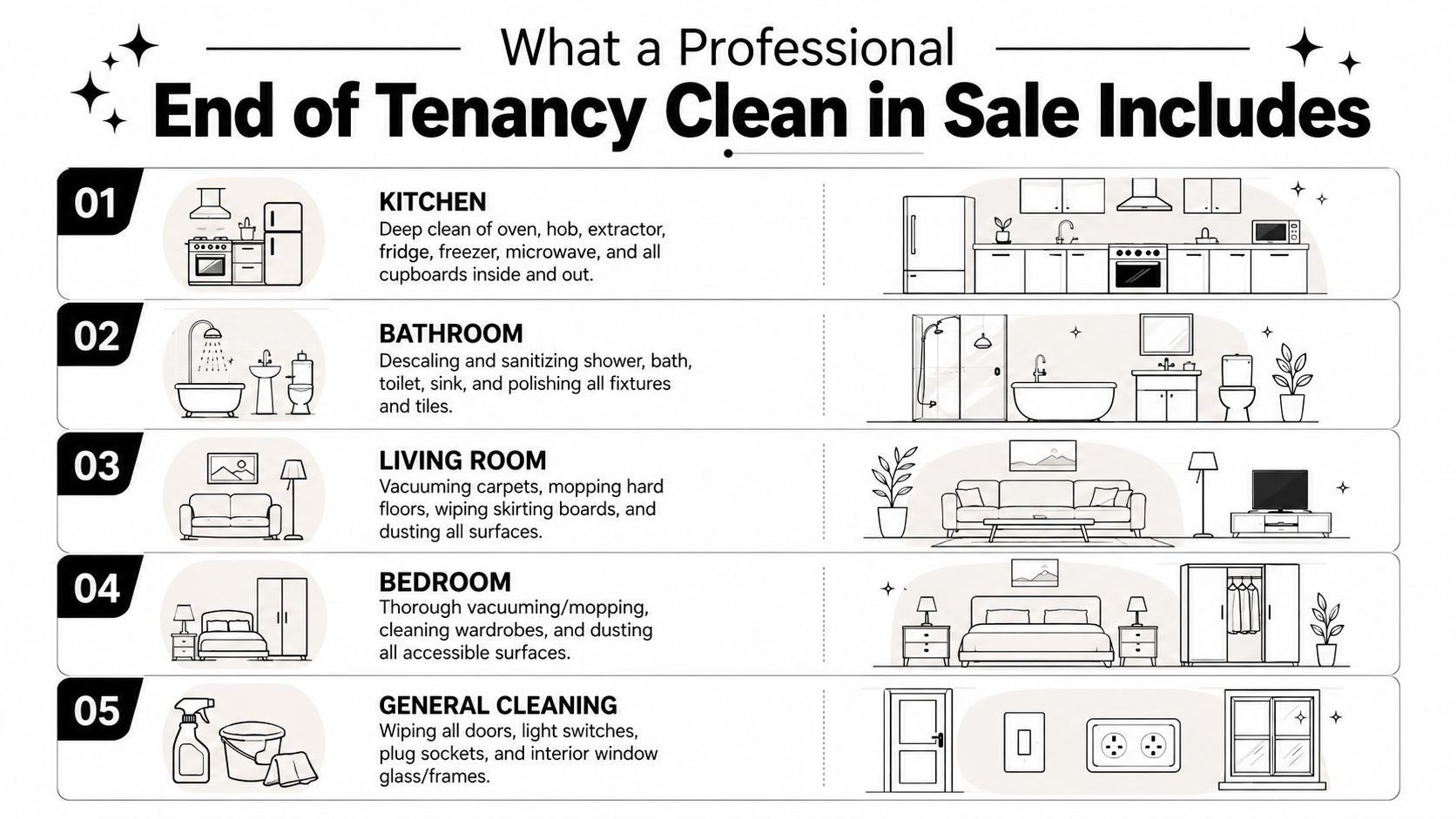
To show the standard clearly, this checklist visual helps:
The standard that matters
In the UK, end-of-tenancy cleaning is defined as restoring the property to the cleanliness standard recorded in the check-in inventory, allowing for fair wear and tear. The benchmark is not paying for a named service type. It is returning the property to a professionally clean condition that matches the original record, as set out in this UK end-of-tenancy checklist guide.
That distinction matters in real jobs. A tenant can do the work themselves if they can achieve that condition. In practice, many don't have the time, tools, or patience to deal with oven carbon, bathroom scale, greasy cupboard tops, and internal glazing to inspection level.
A more detailed explanation of the process is covered in this guide to what end-of-tenancy cleaning involves.
Room by room expectations
The kitchen usually decides whether the rest of the clean feels credible. If the oven is greasy and the extractor is sticky, inspectors tend to look harder everywhere else.
- Oven and hob: Degrease doors, trays, racks, control knobs, seals and splashbacks. The area behind and around the hob matters too.
- Extractor and filter area: Remove built-up grease, especially on the underside and edge trim.
- Cupboards and drawers: Clean inside and out, including handles, top edges and crumbs in corners.
- Fridge, freezer and microwave: Empty, wipe, sanitise and check seals.
- Sink and taps: Remove scale and polish surfaces so marks don't reappear once dry.
Here's a useful walk-through of the expected standard in motion:
Bathrooms need a different approach. They're less about grease and more about mineral buildup, residue, and fine-detail finishing.
- Shower and bath areas: Descale tiles, screens, grout lines and fittings.
- Toilet and basin: Sanitize fully, including bases, behind pipework where accessible, and flush handles.
- Mirrors and chrome: Remove spotting and streaks, then polish.
- Edges and joins: Soap residue often sits along sealant lines and around plugholes.
Living rooms, halls and bedrooms are where missed detail tends to show up after furniture has gone.
- Floors: Vacuum carpets thoroughly or mop hard flooring properly, not just the middle of the room.
- Skirting boards: Wipe dust, scuffs and settled debris.
- Doors and touchpoints: Clean handles, light switches and socket faces.
- Wardrobes and shelves: Dust and wipe inside, especially top shelves and corners.
- Internal windows: Clean glass and frames, because smears show badly in empty rooms.
The places that cost tenants money are rarely dramatic. They're usually the dull, easy-to-miss areas that looked fine until the room was empty.
Pricing for End of Tenancy Cleaning in Sale
Price matters, but so does understanding what a quote includes. A cheap figure can look attractive until you realise it excludes internal windows, appliance interiors, rubbish handling, or carpet work.
What local budgeting looks like
For the UK, the average price for end-of-tenancy cleaning for a medium-sized house is £170 to £250, and North-West England aligns with a national average of £225 to £250, according to Bark's end-of-tenancy cleaning price guide. The same guide says a standard two-bedroom property typically costs around £260 and takes approximately 4 hours, though a deeper clean may take longer.
In Sale, team time often tells you more than a headline number. A standard two-bed flat typically takes 6 to 8 hours in total with 2 members of the cleaning team. That estimate usually changes when the property is heavily soiled, though that isn't the norm.
Here's a useful budgeting table for the area.
| Property Size | Average Price Range |
|---|---|
| Studio flat | £100 to £150 |
| One-bedroom flat | Around £175 |
| Medium-sized house | £170 to £250 |
| Two-bedroom property | Around £260 |
| Five-bedroom house | Up to £450 |
If carpets are part of the handover, it's worth checking bundled pricing. Some providers, including this carpet cleaning pricing page for combined services, offer separate rates or package reductions when carpet cleaning is booked with a tenancy clean.
Why one quote can differ from another
The biggest pricing variables are practical, not mysterious:
- Property size: More rooms mean more surfaces, more internal glass, and more edge work.
- Condition at handover: A well-kept flat cleans faster than one with grease, scale, and rubbish left behind.
- Appliances included: Ovens, fridge freezers and extractors add time.
- Carpet cleaning: This changes the equipment needed and extends the visit.
- Access and timing: Empty properties with clear access are simpler to complete efficiently.
What doesn't work is comparing quotes without comparing scope. One company may price for a light clean. Another may price for cupboards, skirtings, internal windows, and appliance internals. Those are different jobs.
Tackling Common Cleaning Hurdles in Sale Properties
Sale has a mix of flats, semis, and older rental stock, and older homes usually present the trickiest end-of-tenancy issues. The cleaning itself isn't complicated in theory. The problem is that some features collect grime in ways that standard domestic routines don't deal with properly.
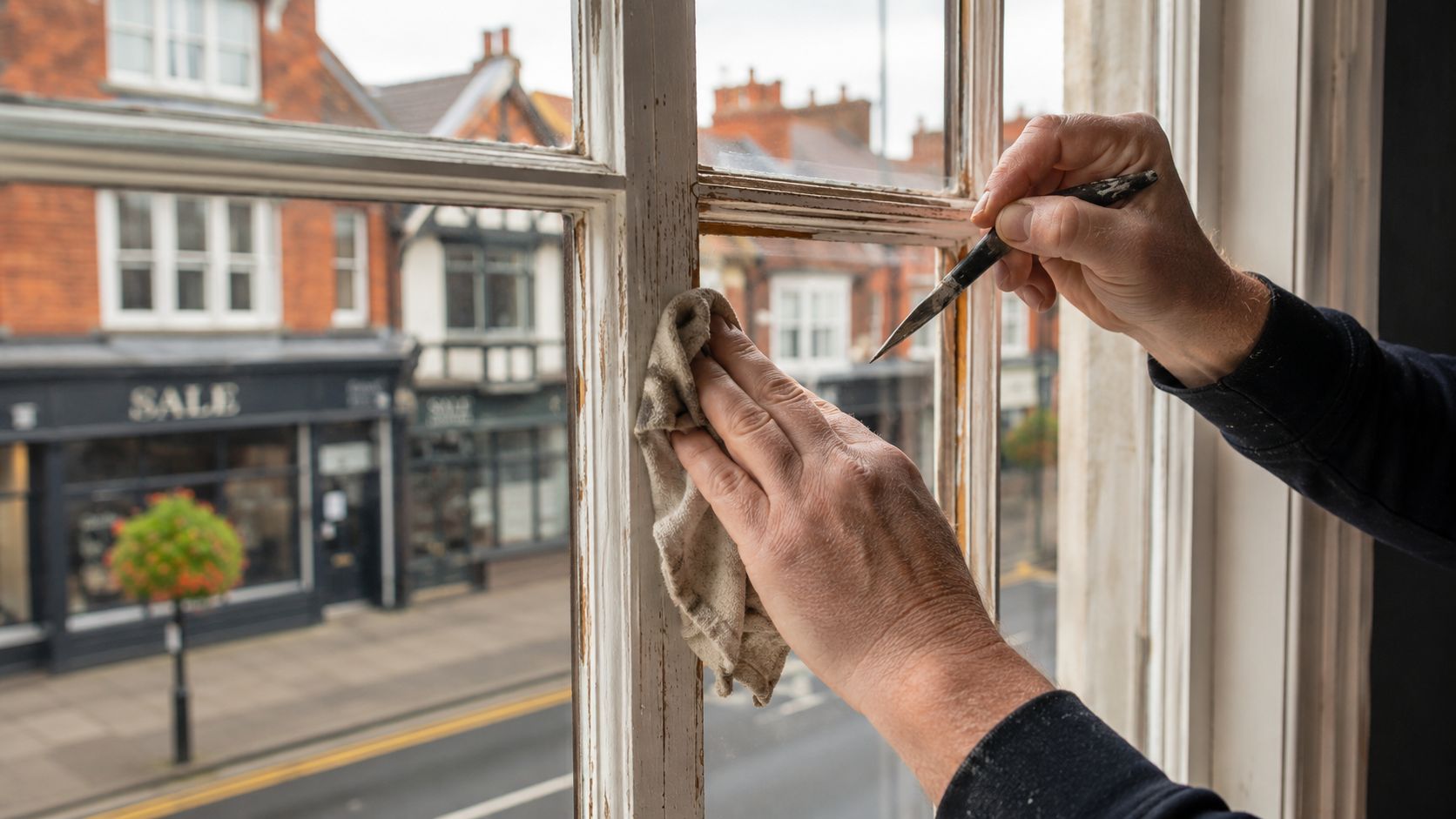
Why sash windows need more than a quick wipe
In Sale, sash windows and their frames require specialist attention because condensation and damp naturally collect in corners, sills, and frames, creating problems that need more than surface cleaning, as noted in this local deep cleaning reference for Sale properties.
That shows up in a few predictable ways. Dust sticks to slight moisture around the lower frame. Paintwork edges trap darker lines of residue. Internal glass may clean easily, but the frame still looks tired if corners and channels haven't been worked properly.
The same applies to older finishes generally. Window ledges, tiled thresholds, and narrow joins around woodwork need slower, more deliberate cleaning than broad modern surfaces.
What stops avoidable handover issues
The main difference between an average result and a handover-ready one is checking. Teams can clean an entire property and still miss the marks that matter most if no one walks it properly before sign-off.
What works is a disciplined final review:
- Open every cupboard again
- Check window frames in daylight
- Look at bathroom chrome once it has dried
- Review kitchen appliances with doors open
- Inspect floors from the doorway, not only from above
Clean first. Then inspect as if you're the inventory clerk seeing the property for the first time.
On difficult jobs, a second pass is often what protects the outcome. The strongest process isn't rushing to finish. It's double-checking the finish before the property is handed back.
Tenant and Landlord Preparation and Legal Notes
The handover day in Sale usually goes one of two ways. The property is empty, access is sorted, appliances are ready to clean, and the inspection is straightforward. Or the team arrives to find food in the fridge, bags in the yard, a freezer full of ice, and no parking plan for a narrow road near the terraces. That second version costs time and often leads to avoidable disputes.
A successful clean starts with a property that is ready to be cleaned, not one that is still half-occupied.
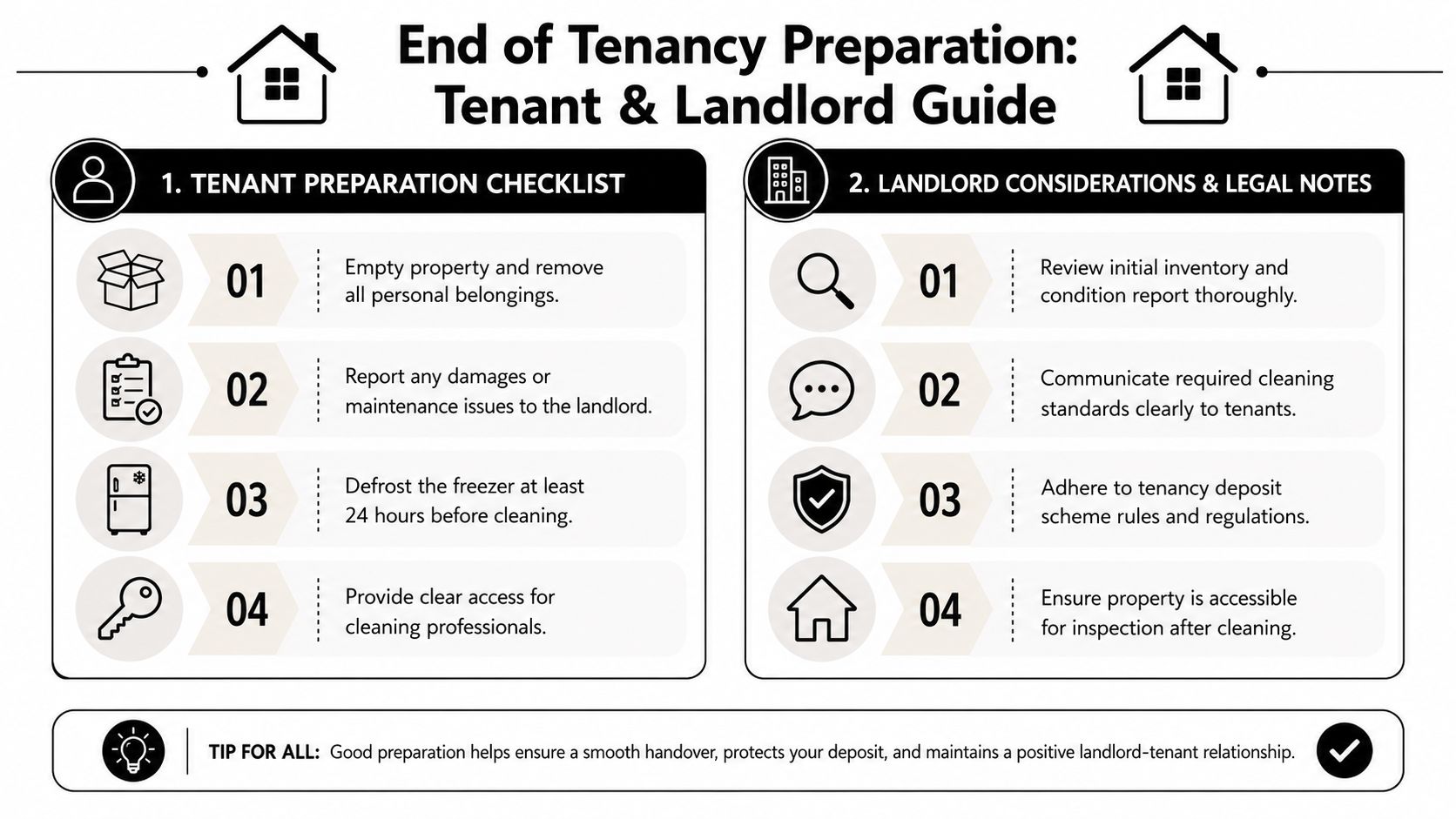
This visual checklist makes the preparation process easier to follow:
What tenants should do before cleaners arrive
Tenants get a better result, and a faster one, when the property is set up properly before the team arrives:
- Empty the property fully: Remove personal belongings, food, and anything left in wardrobes, loft spaces, sheds, cupboards, or cellars included in the tenancy.
- Defrost the freezer early: Give it enough time to thaw and dry so it can be cleaned safely without damaging seals or leaving water on the floor.
- Separate cleaning from repairs: Report broken fittings, leaks, cracked shelves, failed sealant, and other maintenance issues clearly. Cleaning will improve presentation, but it will not resolve disrepair.
- Confirm access in advance: Make sure keys, alarm codes, parking details, and entry arrangements are settled before the booking starts.
Rubbish is often the issue that undermines an otherwise good handover. Black bags in the kitchen, old paint tins in the shed, and loose waste left by the bins can all change the scope of the job. In parts of Sale where access is tight or collection days are missed, that matters even more. We plan for it because we are a fully licensed waste disposal carrier.
What landlords should have ready
Landlords and agents usually get the fairest outcome when they work from records and clear standards.
- Use the check-in inventory: It is the baseline for condition.
- Specify the points that matter: Internal windows, appliance interiors, limescale, flooring, and cupboards are clearer than “clean throughout”.
- Allow sensible inspection timing: Bathrooms, glass, and chrome often look different once they have dried fully, especially in properties with limited ventilation.
Older Sale properties need a bit more judgement here. Sash windows, painted timber, older grouting, and worn flooring can look used even when they are clean. A fair inspection separates age and wear from dirt and neglect.
A fair checkout depends on a fair check-in. If the opening inventory is thin, disagreements are harder to settle.
The legal position in practical terms
The legal point is simple. A landlord cannot demand a professional clean as a blanket condition of ending the tenancy, but they can seek a deduction if the property is returned in a worse state of cleanliness than the inventory shows, allowing for fair wear and tear.
That is why wording alone carries little weight. “Professionally cleaned” in an email or a tenancy clause does not decide a dispute by itself. The inventory and the state of the property do.
In practice, the strongest position for both sides is evidence. Tenants should keep photos, receipts, and any communication about repairs or pre-existing problems. Landlords should rely on dated check-in records, clear checkout notes, and reasonable comparisons, room by room.
For Sale handovers, timing also matters more than many people expect. If the cleaner finishes late afternoon and the inspection happens straight away, condensation on glass, damp bathroom grout, or drying floors can create arguments that disappear an hour later. A short gap between clean and review is often the sensible choice.
The Atticus Cleaning Difference in Sale
When people book end of tenancy cleaning in Sale, they usually want three things. A team that turns up on time, a property cleaned to inspection standard, and no avoidable issues over windows, rubbish, or missed details.

What matters on the day of the clean
The service details that make the biggest difference are often the least glamorous:
- Internal window cleaning included as standard
- A team used to working in empty rental properties
- Professional equipment such as Sebo vacuums and hot water extraction for carpet work where booked
- Waste handled in line with licensing requirements
- A final check before handover
That last point matters most on real jobs. The process used on difficult handovers is to double-check the property before it goes back to the landlord, so the finish meets the cleaning standard expected for return.
Why local service detail matters
A generic clean can work in a straightforward flat. It's less reliable in Sale properties with awkward frames, built-up condensation marks, older woodwork, or a lot of fine edge detail.
Atticus Cleaning Services provides end-of-tenancy cleaning across Sale and the wider Manchester area, with internal window cleaning included on tenancy work, licensed rubbish removal, and optional carpet cleaning booked alongside the main clean. Those practical service elements matter more than broad promises because they affect what gets finished properly on the day.
If the aim is a smooth handover, the useful question isn't “Do they offer end-of-tenancy cleaning?” It's “Will they deal with the details that usually get flagged at checkout?”
End of Tenancy Cleaning FAQs
How long does a standard clean take
For a standard two-bed flat in Sale, allow 6 to 8 hours in total with 2 members of the cleaning team. Dirtier properties can take longer, but that's less common than people think.
Do I need to be at the property
Not always. Many tenants prefer to arrange access, leave the property empty, and return once the clean is complete. What matters is that the team can get in without delays and work through the whole property safely.
Is professional cleaning legally required
Not as an automatic rule. The practical standard is the property's condition against the check-in record, allowing for fair wear and tear, as covered earlier.
What usually causes problems at checkout
Missed kitchens, internal windows, bathroom scale, rubbish left behind, and cupboards or drawers that were emptied but not wiped.
Can carpet cleaning be added
Yes, if carpets need attention it can be booked alongside the tenancy clean. That's often useful where traffic marks or odours would otherwise stand out during inspection.
What if the property has awkward older features
That's common in Sale. Sash windows, frames, corners, and older finishes usually need slower detail work than standard wipe-down cleaning.
If you need a straightforward quote for Atticus Cleaning Services, send over the property size, location, and any extras such as carpet cleaning or rubbish removal. You'll get a clear price, a practical plan for the clean, and a team that understands what landlords and agents in Sale inspect at the end of a tenancy.